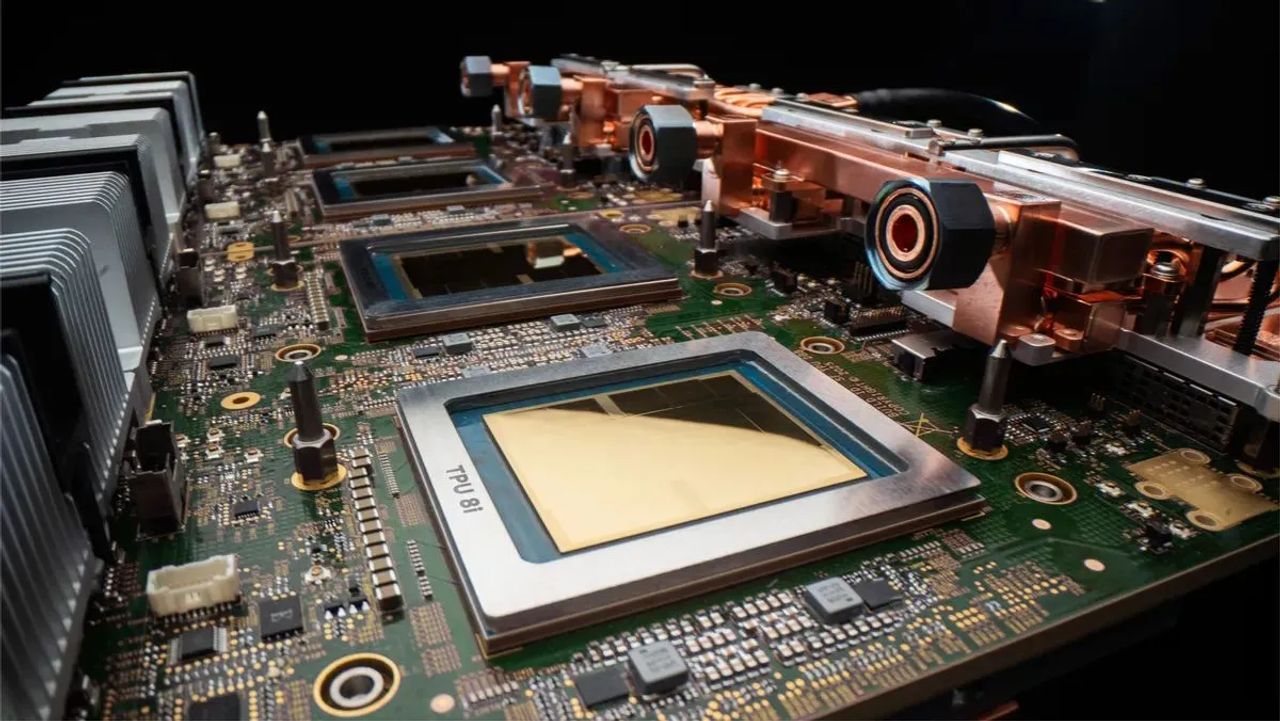
Google is about to fly a handful of TPUs into orbit under Project Suncatcher, a prototype carrying four accelerators that runs in short bursts. Strip away the moonshot framing and the logic is coldly practical: AI compute is increasingly bottlenecked not by silicon but by power and cooling. In space, sunlight is constant and abundant, and radiative cooling replaces the water and grid contracts that terrestrial datacenters fight over. The bet is that if you can survive radiation, latency, and the physics of maintenance-free hardware, you unlock a power envelope Earth can't easily match.
The near-term reality check matters. Four chips running fifteen minutes at a time is a science experiment, not infrastructure. The unsolved problems are brutal: cosmic radiation degrading logic, thermal cycling, the impossibility of swapping a failed board, and moving petabytes to and from orbit over laser or RF links. This is a decade-plus horizon, and it competes for attention with more grounded fixes to the energy crunch, from nuclear restarts to behind-the-meter gas. But Google gains optionality and, just as valuable, narrative control over the 'where does the power come from' question now shadowing every hyperscaler's capex story.
The strategic signal for global executives is that the AI buildout has become an energy and physical-siting problem as much as a model problem. Whoever solves power-per-token cheapest wins the cost curve. Space is one exotic answer; the more immediate ones are cheaper solar, grid reform, and reactor deals. Suncatcher tells you how seriously the constraint is being taken.
For Japan, the resonance is specific. Japanese datacenter expansion already runs into land scarcity, grid limits, and post-Fukushima energy politics, the exact pressures orbital compute tries to escape. But the real opening is in the hardware value chain. Japan's strength in radiation-hardened components, precision optics for laser inter-satellite links, thermal materials, and space-grade connectors positions suppliers like the country's optics and materials firms to sell into any orbital-compute era, whoever builds it. This is a components play, not a hyperscaler play.
For SIers and enterprise IT teams, the practical takeaway is restraint. Orbital datacenters change nothing about your 2026-2030 architecture decisions. What should change is planning assumptions: treat power availability and energy cost as first-class variables in datacenter and cloud-region selection, model carbon and grid risk explicitly, and watch whether hyperscalers start pricing compute by energy source. The far horizon is space; the near horizon is that AI infrastructure strategy is now inseparable from energy strategy, and Japanese firms should build that muscle now.