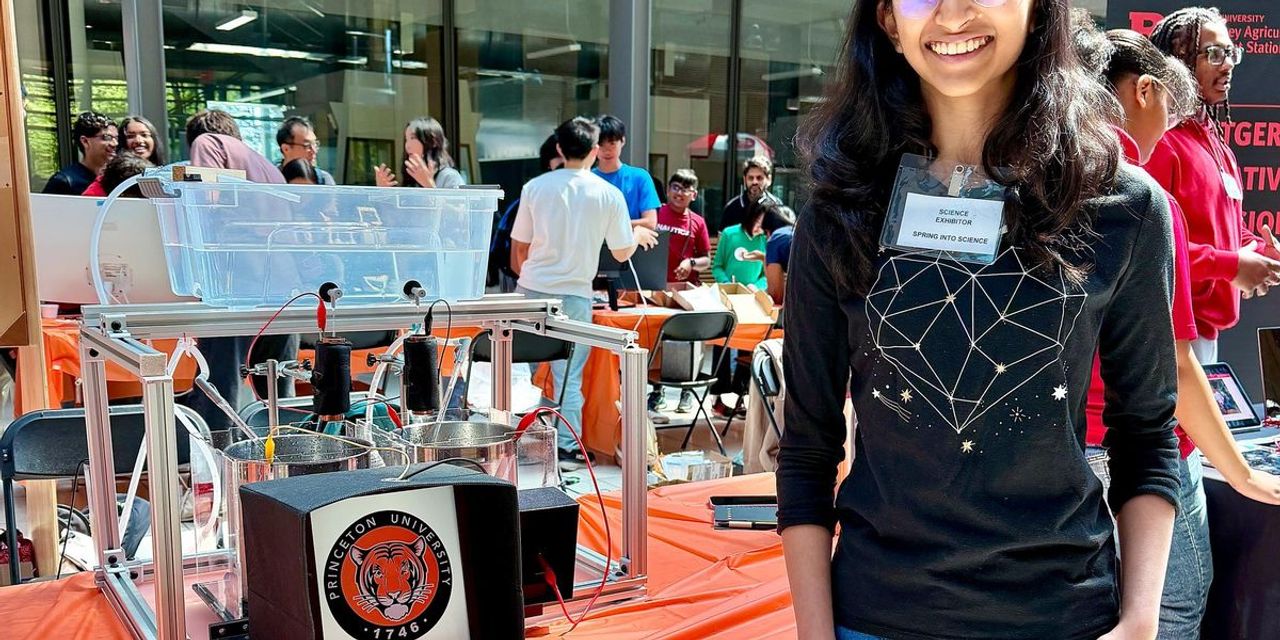
IEEE Spectrum profiles Ruchira Shree, a New Jersey high schooler who volunteered with the Alliance for Indigenous Math Circles, helping Native American students strengthen math skills and earn amateur radio licenses. The headline is a feel-good student story. The strategic subtext is how technical talent pipelines actually get built.
The binding constraint on the next decade of technology is not capital or compute, it is people. The AI and semiconductor buildout is colliding with a shortage of engineers, and the industry's narrow demographic base is a structural risk rather than a diversity footnote. Who enters engineering is decided years upstream, by early exposure, visible role models, and whether a student can imagine the career as theirs. Programs that anchor math in a community's own heritage, here linking Navajo mathematical traditions, the WWII code talkers, and the geometry of hogan construction, tend to outperform generic outreach precisely because they let students see themselves in the work. That is a repeatable model, not a one-off.
For Japan the relevance is direct and urgent. The country faces a well-documented long-term shortfall of IT and engineering workers, driven by demographic decline and concentrated in the very mid-career and junior tiers that SIers depend on. The multi-layer subcontracting structure of the domestic IT industry assumes a steady inflow of trainable junior engineers, an assumption the birthrate no longer supports. Yet Japanese STEM cultivation still skews top-down and exam-centric, with far less of the community-embedded, hands-on ecosystem, local engineering societies, maker and radio clubs, mentorship networks, that this story exemplifies.
For SIers and enterprise IT leaders, the practical read is to treat talent development as infrastructure, not CSR. That means funding regional STEM programs, widening the pipeline for women and non-traditional entrants, and building apprenticeship-style paths rather than competing over the same shrinking pool of mid-career hires. RPA and low-code tooling can absorb some near-term capacity pressure, and AI coding assistants will lift per-engineer output, but neither replaces the human pipeline over a ten-year horizon.
The firms that win the coming talent squeeze will be those that start upstream, cultivating and reaching students before the market does, and framing engineering as accessible and locally rooted. The lesson from a New Jersey teenager is that pipelines are built deliberately, early, and close to the ground.