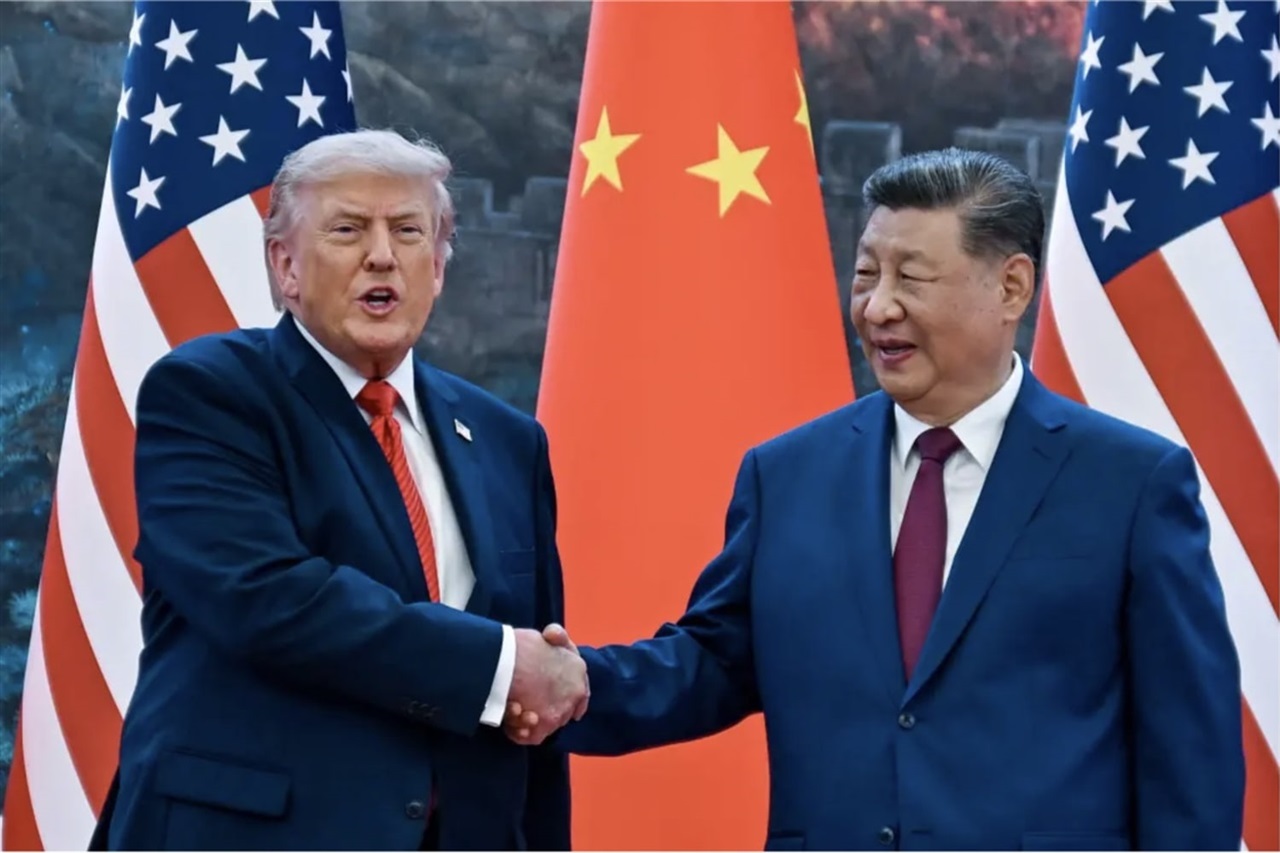
The optics matter more than the agenda. When a chipmaker's chief executive is expected in the room for a state dinner between Washington and Beijing, it confirms a shift that has been building for two years: advanced semiconductors are no longer a commercial category but an instrument of foreign policy. The bargaining chips at a so-called G2 summit are literal chips. That reframes how executives everywhere should read the outcome, because whatever export-control language emerges will function less like trade regulation and more like a treaty term.
The global risk is volatility disguised as detente. The April 2025 tariff spiral above 100% and the subsequent stalemate showed both sides can weaponize and de-escalate within weeks. For anyone planning multi-year compute procurement, that cadence is the real hazard. A single summit can reopen or reclose China access for a given accelerator SKU, stranding inventory or upending capacity commitments. The winners will be firms that build optionality into contracts rather than betting on a stable rulebook.
There is also a governance signal in letting a single vendor shape the terms of its own market access. Concentration of leverage in one supplier means downstream buyers inherit that supplier's political exposure. Diversification of accelerator sourcing, once a cost conversation, is now a geopolitical hedge.
For Japan, the stakes are unusually direct. The country sits upstream of this entire dispute through its equipment and materials makers, and Tokyo has already aligned parts of its export regime with Washington. Any tightening agreed at the summit tends to arrive in Japanese policy shortly after, which means domestic toolmakers and chemical suppliers face demand swings they do not control. Firms like those feeding the lithography and etch supply chain should model both a thaw and a freeze scenario now.
For SIers and enterprise IT teams, the practical exposure is GPU availability and pricing. Japanese integrators building generative-AI platforms for banks, manufacturers, and the public sector are already capacity-constrained; a China-access shock would redirect global accelerator supply and reset lead times overnight. The prudent move is to decouple project timelines from any single cloud region or chip generation, negotiate flexible allocation, and treat sovereign or domestic compute options as genuine contingency rather than a talking point. Reading summit outcomes as procurement intelligence, not just headlines, is the edge here.