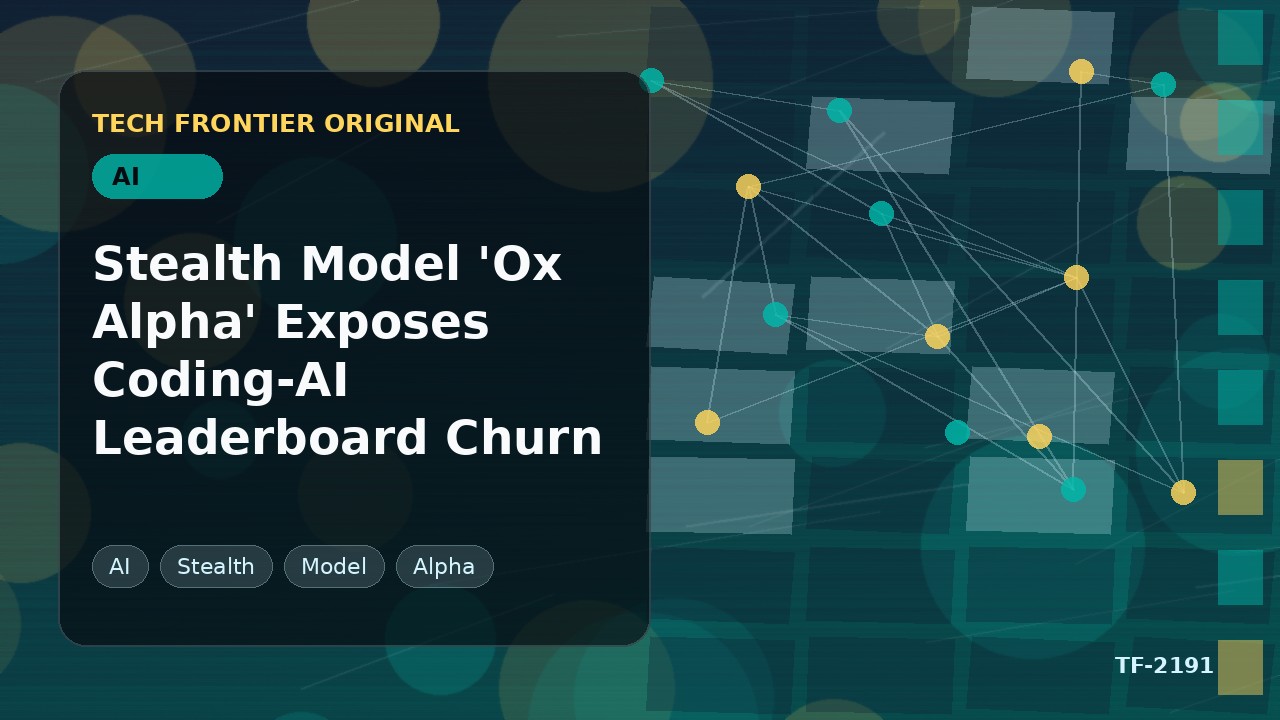
An unidentified model called Ox Alpha, offered free for a week, ended DeepSeek's 56-day run atop the OpenCode ranking and set a single-day usage record, sending the community hunting for its maker.
The real story is not who built it but how it was launched. Shipping a model anonymously through aggregators like OpenRouter, pricing it at zero, and letting a public leaderboard do the marketing has quietly become a standard playbook. Free access buys three things at once: raw usage volume, a top-of-chart credential, and a torrent of real-world coding prompts that sharpen the next release. Benchmark position is now a customer-acquisition channel, not a lab bragging right. The flip side is brutal churn. A 56-day reign at the top used to look durable; today it is a rounding error. When frontier coding capability can be matched and undercut within weeks, technical differentiation at the leaderboard's edge is decaying faster than any single vendor can monetize it.
That compression matters for buyers because it collapses the cost floor. With OpenAI already cutting GPT pricing and anonymous challengers giving capacity away, the price of "good enough" code generation is trending toward zero. The durable moats shift to distribution, tooling integration, and trust, not the model weights themselves.
For Japanese enterprises and SIers, the caution flag is provenance. An opaque model that tops a chart is precisely what a risk-averse procurement process cannot approve: unknown training data, unclear jurisdiction, no accountable vendor, and no audit trail. This lands squarely amid separate reporting that offensive actors are wiring open-source models into attack tooling, which turns "where did this model come from" into a security question, not a curiosity. SIers pitching AI-assisted development to regulated clients in finance, manufacturing, and the public sector should treat leaderboard rank as marketing noise and build their evaluation around documented lineage, contractual liability, and data-handling terms.
The operational takeaway for local dev teams and RPA-heavy shops is to design for interchangeability. Given how fast the top model changes, hard-coding a workflow to today's leader is a liability. An abstraction layer that lets teams swap models by policy—cost, latency, or compliance—converts this volatility from a threat into leverage, letting Japanese buyers ride falling prices without inheriting the governance risk of chasing whatever tops the chart this week.