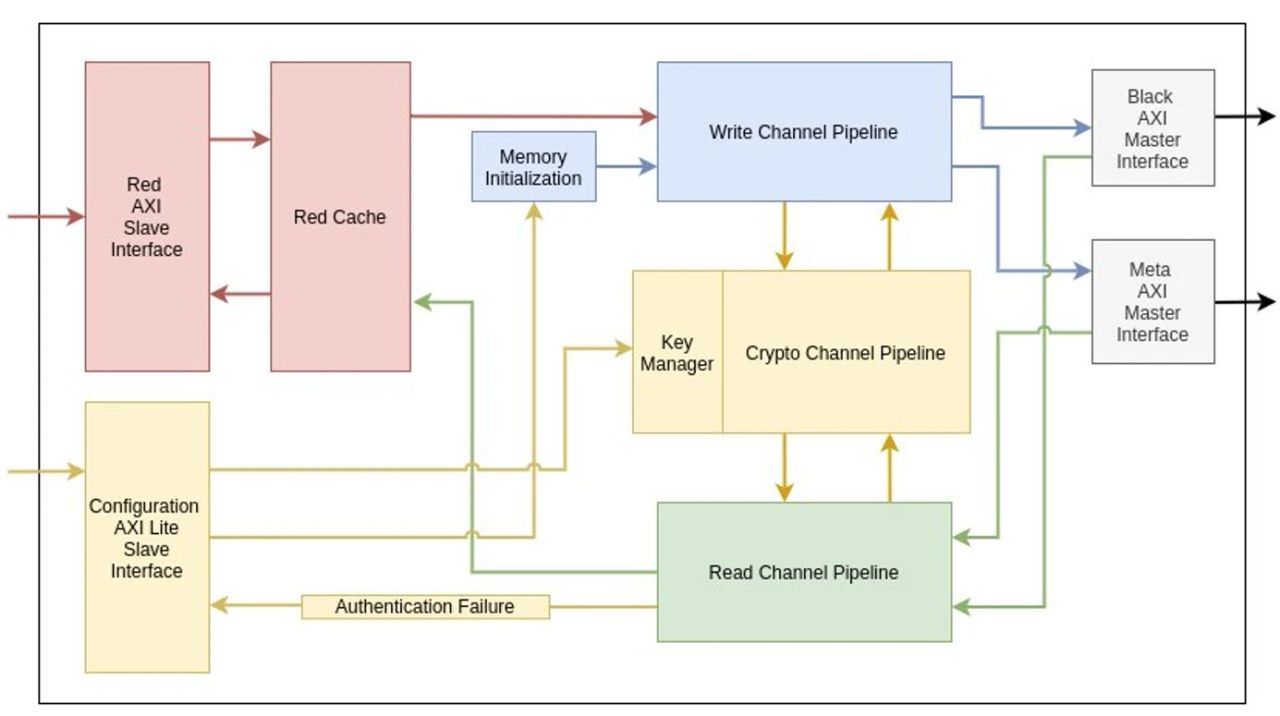
The security perimeter for high-assurance systems has quietly shifted. Data leaving the processor for external DRAM now sits in a zone where confidentiality alone is insufficient; without integrity and authentication, an attacker can tamper, replay, or fault-inject even encrypted memory.
Globally, this reframes a debate that vendors have papered over for years. Inline memory encryption has become table stakes in confidential-computing pitches, but encryption answers only one question: can an adversary read the data. It says nothing about whether the data was altered in transit or swapped for a stale, valid-looking block. For aerospace, defense, and government workloads, that gap is the whole game. The threat model here assumes physical access, probing, and side-channel attacks, not just remote intrusion. Expect procurement standards to increasingly mandate authenticated encryption and implementation resilience as explicit line items, not afterthoughts. The commercial consequence is a widening divide between IP vendors who bolt on encryption and those who can demonstrate end-to-end memory integrity under adversarial physical conditions.
The economics favor consolidation around a handful of security-IP providers, because integrity at memory bandwidth is expensive to design correctly and painful to retrofit. Chipmakers that treated memory protection as a checkbox now face costly silicon respins as certification bars rise.
For Japan, the timing is pointed. The country is rebuilding domestic semiconductor capacity through Rapidus and the TSMC Kumamoto fabs while simultaneously expanding defense procurement and space programs. Firms like Mitsubishi Electric, MHI, and NEC building for government and aerospace customers cannot assume that generic commercial SoCs meet these assurance requirements. Japanese automotive Tier 1s and their SoC partners face a parallel pressure as functional-safety and cybersecurity regulation (UNECE WP.29, ISO/SAE 21434) push toward tamper-resistant memory in ADAS and EV controllers.
For SIers and local development teams, the practical lesson is that hardware root-of-trust decisions now shape what software can safely promise. Integrators bidding on defense, critical-infrastructure, or connected-vehicle projects should treat memory-integrity capability as a qualifying criterion when specifying silicon, rather than discovering the shortfall during certification. Those who build that expertise early gain a durable advantage as Japan's high-assurance market expands.