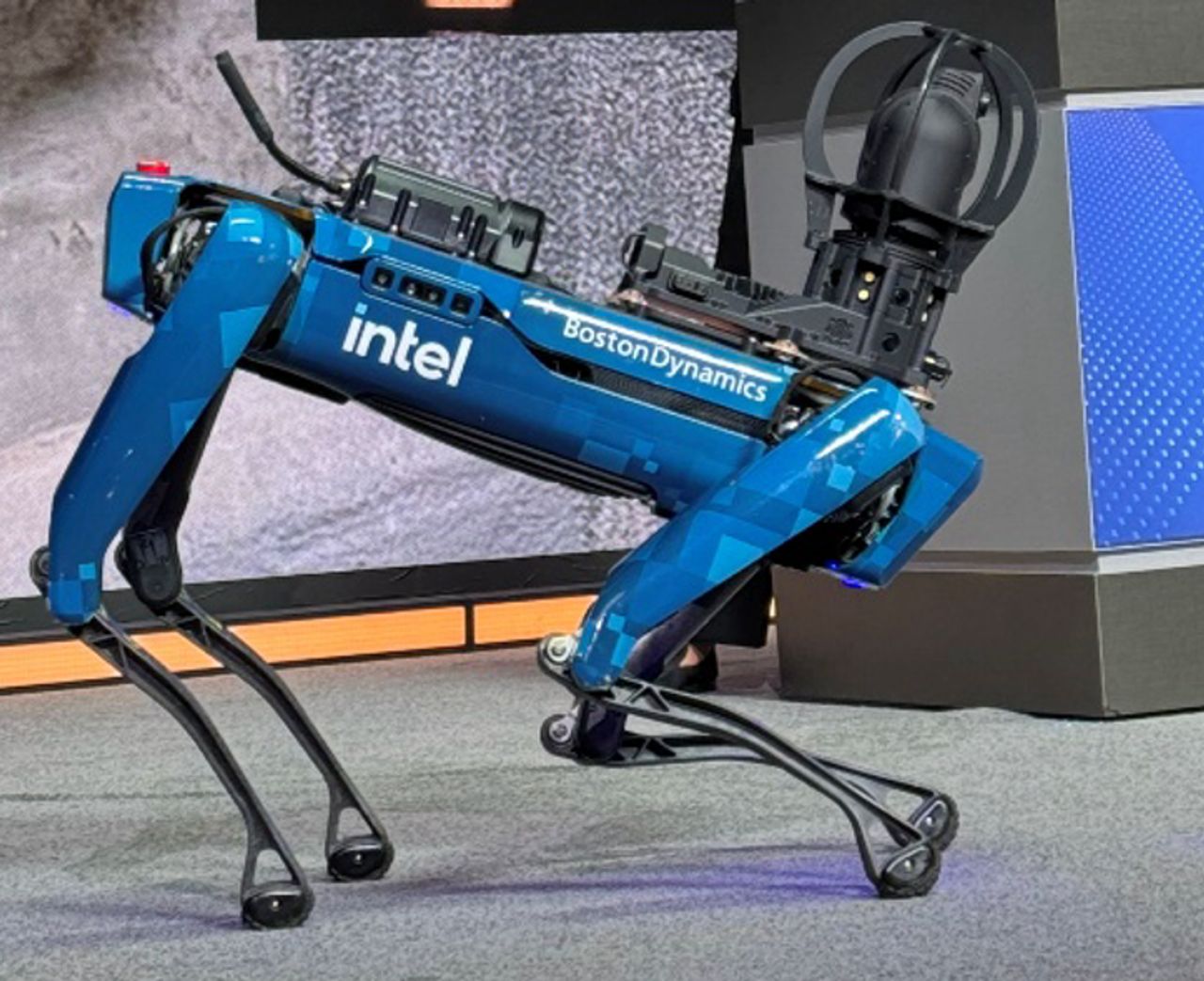
Advanced equipment control and in-fab robotics are quietly shifting from operational plumbing to strategic differentiator, delivering repeatability, tool uptime, and yield that increasingly separate winners from laggards at leading-edge nodes. The framing matters: as lithography economics hit physical and cost ceilings, the marginal gains in a modern fab come less from a single hero tool and more from orchestration — how wafers move, how tools self-correct, and how control loops close in real time.
Globally, this reframes where value accrues. The same investor appetite driving robotics-data unicorns to billion-dollar valuations months out of stealth reflects a broader thesis: physical AI runs on proprietary operational data, and the fab is one of the richest, highest-stakes environments to generate it. Every robotic handoff and control decision produces telemetry that trains the next generation of predictive maintenance and adaptive process control. The strategic risk is concentration — whoever owns the control layer and its data owns the productivity curve, and that layer is stickier than any individual piece of hardware.
For Japan, this is closer to a home game than most global tech stories. Japanese firms hold structural strength across fab automation — process and metrology tools, material-handling systems, and industrial robotics — precisely the layers this shift elevates. As TSMC's Kumamoto operations scale and Rapidus pushes toward leading-edge production in Hokkaido, demand for intelligent equipment control and robotic material handling lands squarely in the wheelhouse of Japan's equipment and factory-automation base. The opportunity is to move up the stack from selling tools to owning the orchestration and data layer that ties them together.
For Japanese SIers and enterprise dev teams, the opening is in the integration gap. Fabs and their equipment vendors need software that unifies MES, equipment control, and robotics telemetry into closed-loop, AI-assisted systems — work that blends OT reliability with modern data engineering. RPA-centric integrators should read this as a signal to pivot from back-office task automation toward physical-process orchestration, where domain knowledge of manufacturing is the moat. The teams that treat control-layer data as a first-class asset, not exhaust, will capture the recurring value.
The caution for executives is dependency and governance. Concentrating yield-critical decisions in autonomous control systems raises the same oversight questions surfacing elsewhere in AI: how these systems are monitored, bounded, and audited when they act without a human in the loop. Buying the productivity gain is easy; retaining control over the systems that deliver it is the harder discipline.