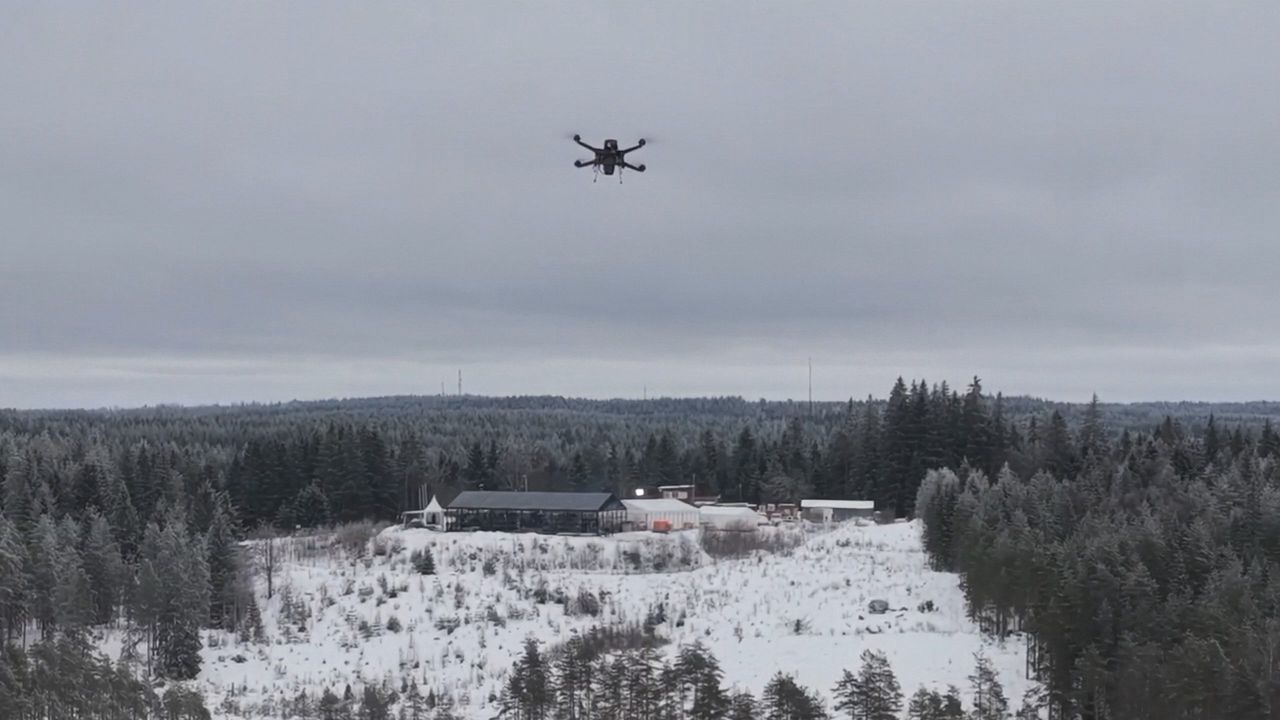
A student team at ITESO in Guadalajara built RoboMeshA, a self-contained mobile platform that delivers robotics and AI learning through a web browser, no dedicated lab or software install required. The device targets schools that have talent but lack facilities.
The strategic signal here is architectural, not academic. The interesting move is that hands-on robotics education is being decoupled from fixed capital infrastructure. Historically, teaching applied robotics required a physical lab, licensed software, and IT support to maintain it, a cost structure that priced out most schools outside wealthy districts. A browser-accessed, network-in-a-box model collapses that dependency the same way SaaS collapsed on-prem enterprise software. Globally, this matters because the constraint on technical talent development has never been student interest; it has been the deployment and maintenance overhead of the tools. Whoever makes advanced learning environments zero-config and portable expands the addressable base of future engineers, and that has downstream consequences for every economy competing on AI and automation talent.
There is also a supply-chain-of-talent angle for investors. Edtech has repeatedly failed at pure-software robotics instruction because it strips away the tactile, integrative experience of real mechatronics. RoboMeshA's bet, combining mechanical design, embedded systems, computer vision and control into one tangible unit, points toward a more defensible category: physical-plus-software learning appliances. Expect commercial edtech and hardware vendors to watch this space, because the modular, multi-unit coupling approach suggests a path from single classroom demos to networked cohort learning.
For Japan, the relevance is real but indirect, and worth stating plainly rather than overselling. Japan's persistent engineering-talent shortage is a well-documented structural drag on its SIers and enterprises, who compete for a shrinking pool of developers comfortable with embedded systems, control, and applied AI. A low-maintenance, portable model for teaching integrated hardware-software skills speaks directly to that pipeline problem, particularly for regional schools and vocational institutions outside major metro areas where lab investment is hardest to justify.
For Japanese SIers and development teams specifically, the deeper lesson is about deployment philosophy. The RoboMeshA design principle, minimizing internal dependencies so independent components run and scale together, mirrors exactly the modular, loosely-coupled architecture that Japanese integrators struggle to adopt when modernizing legacy client systems. The takeaway is not the robot; it is that reducing configuration and dependency overhead is what actually unlocks scale and access. That is a principle worth importing regardless of the classroom context.