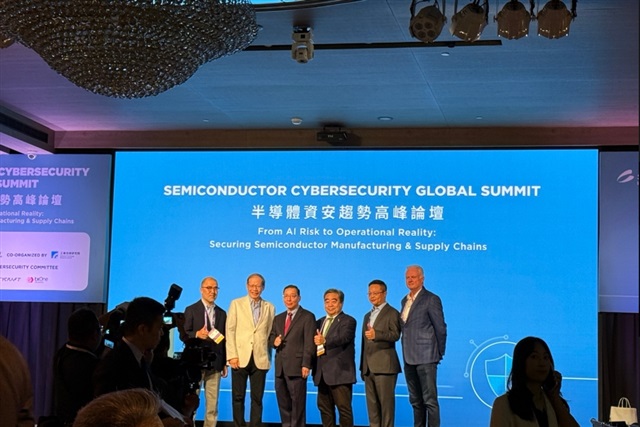
The shift toward autonomous, lights-out fabs quietly rewrites the threat model for chipmaking: when machines make more decisions than people, cybersecurity stops being an IT concern and becomes a direct input to yield, uptime, and safety.
Globally, the strategic point is that fabs were built on trust by proximity. Air-gapped tools, closed vendor protocols, and human operators who could smell when something was off. Autonomy dissolves all three. As equipment negotiates recipes machine-to-machine and pulls from shared data lakes, the attack surface moves from the perimeter to the data itself. A poisoned sensor feed or a tampered process parameter doesn't trip an alarm; it silently degrades wafers across an entire run before anyone notices. That reframes zero trust from a compliance checkbox into a manufacturing-integrity requirement, and it explains why trusted-data provenance and interoperable standards now sit alongside throughput as board-level metrics. Expect this to reshape procurement: tool vendors that can't attest to firmware integrity and signed telemetry will lose bids to those that can.
The harder truth is organizational. Most fabs run OT security and IT security as separate kingdoms with separate budgets and incompatible instincts. Autonomous operation forces a merger, and the firms that win will be the ones that treat the fab network as a single trust domain rather than two bolted-together ones.
For Japan, this lands at a pivotal moment. With TSMC's Kumamoto operations ramping and Rapidus building toward advanced-node production in Hokkaido, the country is standing up new fabs precisely as the automation-security paradigm shifts, an unusual chance to design zero trust in from day one rather than retrofit it. That is a real advantage over legacy fabs elsewhere carrying decades of implicit-trust wiring.
For Japanese SIers and manufacturing-systems integrators, the opportunity is concrete but demands a skills pivot. The traditional strength here is deep OT and factory-floor integration; the gap is cloud-native security, identity, and data-integrity engineering. Teams that pair their equipment-level fluency with zero-trust architecture will own the fab-modernization pipeline. Those still selling perimeter firewalls and RPA scripts layered over brittle legacy control systems will find that model increasingly obsolete, since automating an insecure process only scales the risk. The message for local dev and integration teams is direct: security-by-design and verifiable data lineage are now the product, not the add-on.