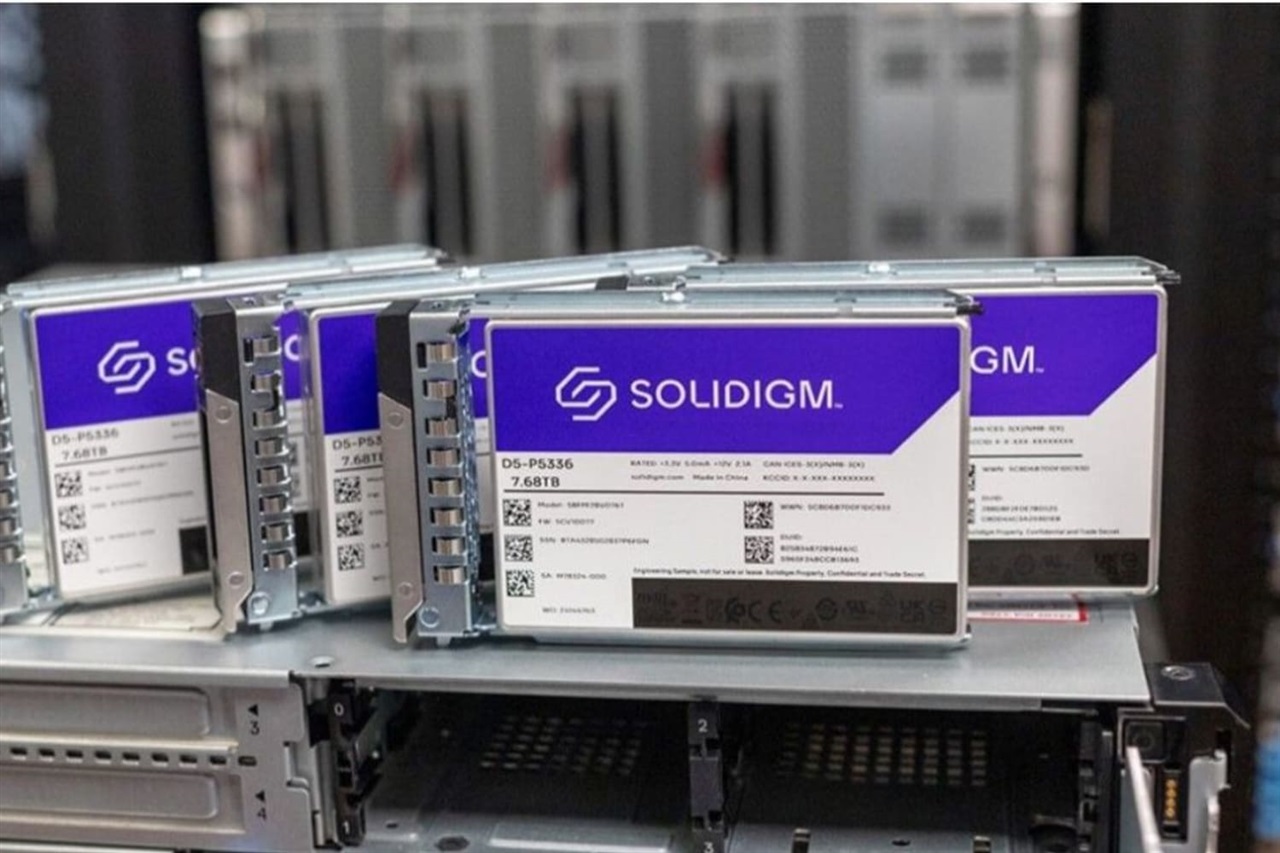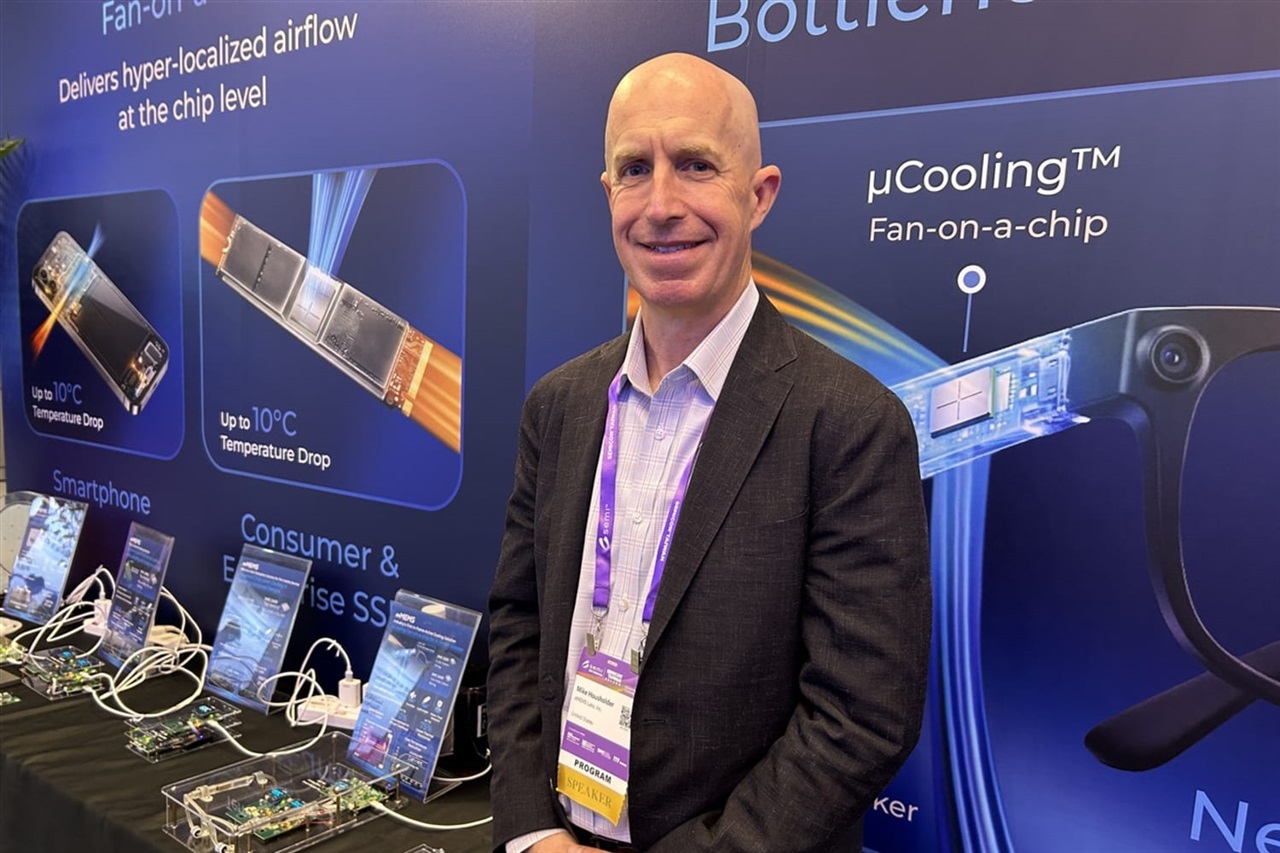
The industry narrative on data center cooling has collapsed into a single story: liquid to the GPU. That framing is useful but incomplete. Direct-to-chip cold plates and immersion tanks are engineered around the highest-wattage silicon, because that is where the ROI is obvious. What they do not solve is the long tail of localized heat—voltage regulators, optical modules, memory, and edge sensors that run hot in pockets air can no longer reach once dense racks are sealed for liquid. Calling these components 'thermal orphans' is a sharp piece of positioning, because it reframes cooling from a rack-level plumbing problem into a component-level airflow problem that plumbing was never designed to touch.
The strategic read is that thermal management is fragmenting into layers, not converging on one method. Liquid handles the bulk load; solid-state and micro-mechanical air movers handle the spot load. If that thesis holds, the winners are not the vendors selling the biggest cooling loop but the ones who own the interface points—the millimeter-scale zones where a $40,000 accelerator's reliability quietly depends on a $2 regulator staying in spec. The extension to 2027 smartphones and smartglasses is the more interesting tell: as consumer silicon and on-device AI push thermal envelopes in fanless form factors, the same micro-cooling primitives become a mobile play, not just a server one. Component thermal is becoming a platform category.
For Japan, this lands squarely in a zone of genuine strength. Japanese suppliers dominate large parts of the thermal-materials and precision-component stack—interface materials, heat-spreading substrates, and micro-fabricated parts—and this shift rewards exactly that expertise rather than the systems-plumbing layer where U.S. hyperscalers set the pace. The risk is that Japanese firms remain component subcontractors to foreign cooling architectures, capturing thin margins while the design authority and roadmap sit offshore.
For Japanese SIers and data center builders, the practical implication is that 'liquid-ready' cannot be the design endpoint. As domestic AI-datacenter capacity scales, procurement and thermal design specs written around cold plates alone will leave reliability gaps in the orphaned zones—raising failure rates and maintenance cost precisely in mission-critical enterprise deployments. SIers that build hybrid thermal competence now, and treat spot-cooling as a first-class design requirement, can differentiate on uptime and total cost rather than competing purely on build price. For device-side teams, the 2027 mobile angle is a signal to watch component thermal roadmaps early, since it will constrain what on-device AI features are physically shippable in thin hardware.