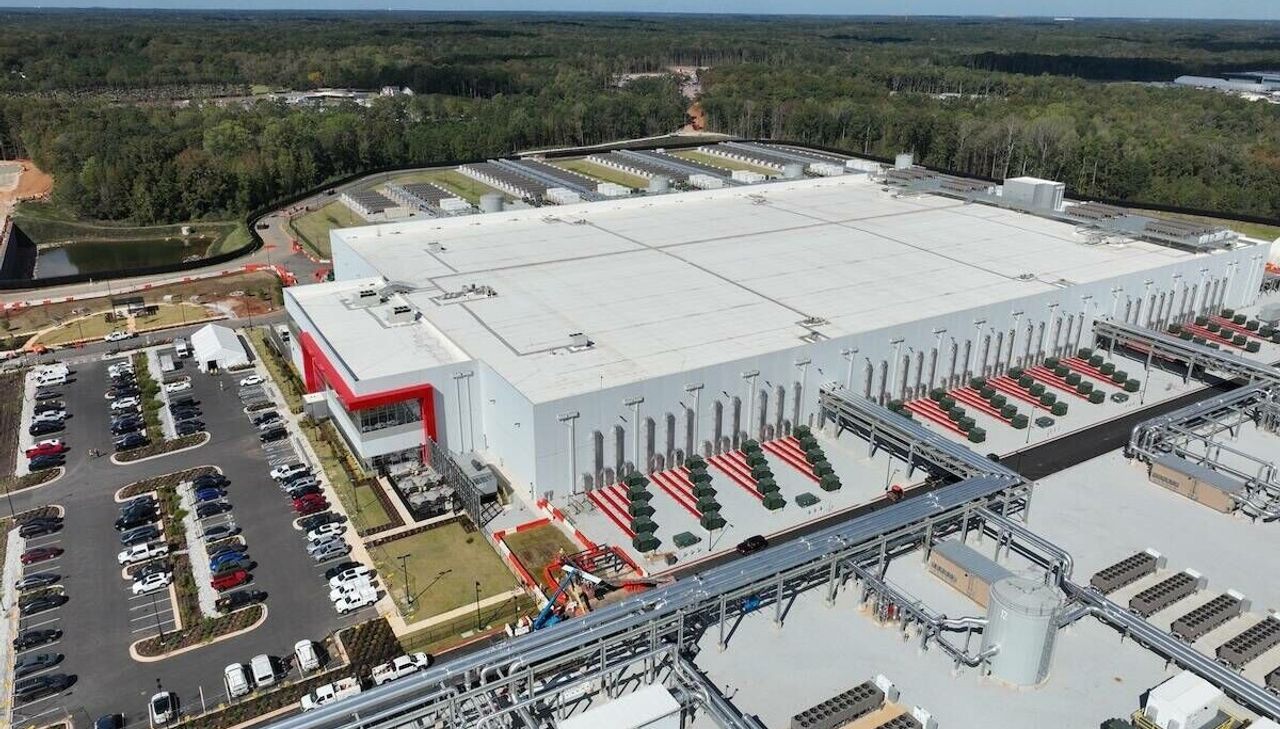
The prevailing scorecard for AI infrastructure has been crude: how many GPUs, how fast the concrete pours. The more interesting question is whether facilities built for record time-to-first-token can survive years of continuous, thermally brutal operation. As clusters push toward gigawatt scale, the binding constraint shifts from acquiring accelerators to keeping them cool, powered, and online. Redundancy in cooling loops, power feeds, and failover design stops being an engineering footnote and becomes the difference between advertised capacity and delivered capacity.
The capital flooding in reinforces the point. Nscale's reported pursuit of $3.5B in pre-IPO financing on the back of a $45B Anthropic commitment, and Tata Consultancy Services' roughly $7.4B one-gigawatt facility in India, show that money for compute is no longer the scarce input. Grid interconnects, water access, and thermal reliability are. Investors underwriting these deals are effectively betting on operational resilience they cannot easily see on a spec sheet. The winners of the next phase will be operators who can prove uptime and thermal headroom, not just peak FLOPs at ribbon-cutting.
For Japan, this reframes a market often treated as a latecomer to hyperscale AI. Japan's real advantage sits in the resilience layer: precision liquid-cooling, power-electronics, and construction discipline that domestic firms already export. Companies with strength in immersion and direct-to-chip cooling, and grid-tied backup systems, are positioned to supply the exact bottleneck the global race is hitting. The strategic move is to sell reliability, not chase raw megawatts.
Domestic datacenter operators and telcos backing large builds face a harder calculus. Japan's power costs and constrained grid mean the brute-force American playbook does not transplant cleanly. Efficiency and redundancy per watt matter more here than anywhere, which favors operators who design for sustained load from day one rather than retrofitting resilience later.
For SIers and enterprise IT teams, the lesson is procurement discipline. When negotiating AI capacity, contracted uptime, thermal throttling behavior, and failover guarantees deserve as much scrutiny as GPU generation. A cluster that derates under summer load is a liability no headline FLOPs figure will offset. Buyers who write resilience into service-level terms now will avoid paying for capacity that quietly disappears when the cooling can't keep up.