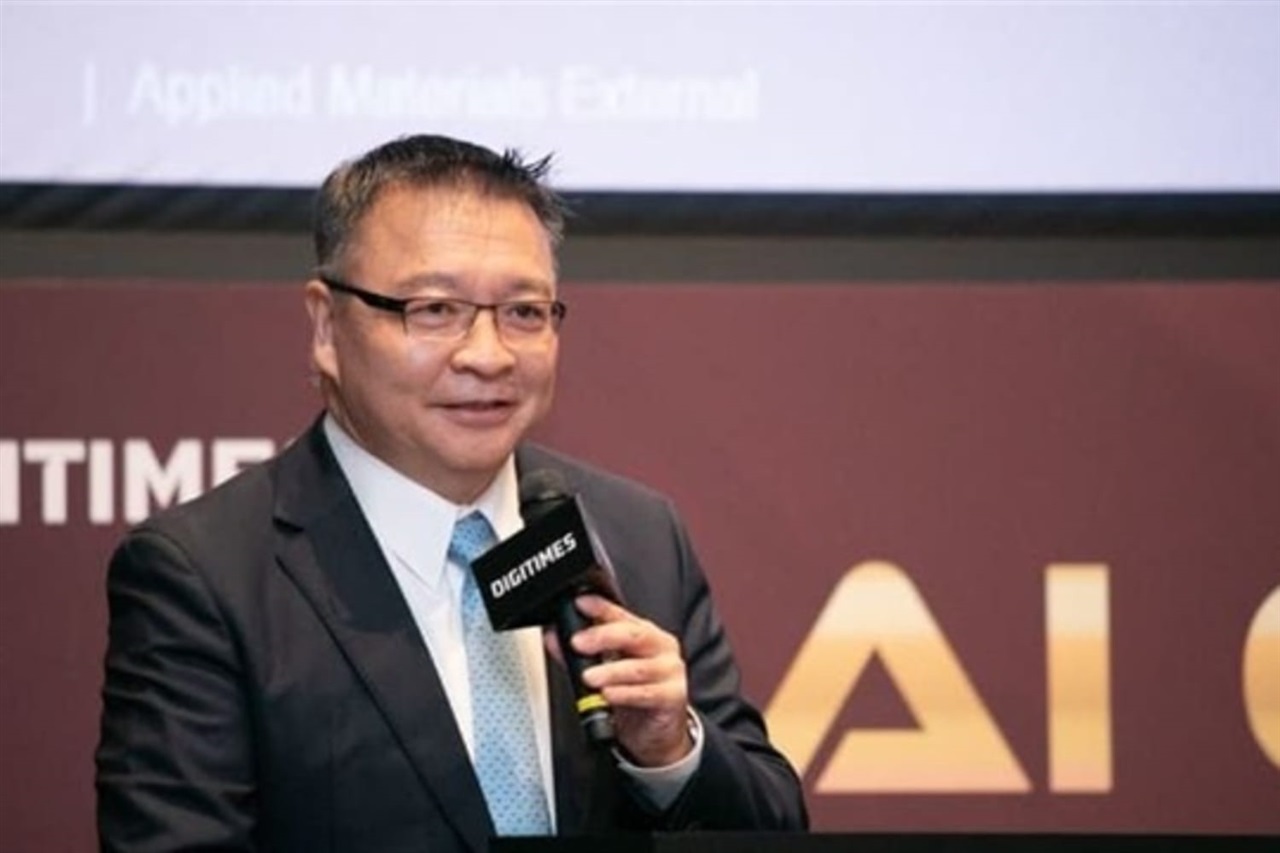
An Applied Materials executive in Taiwan argues that AI-era semiconductor competition can no longer be defined by raw performance or transistor counts, and that delivering more computation per unit of energy becomes the central axis of the next innovation cycle.
That reframing matters because it moves the industry's scarcest resource from silicon to electricity. The same week, TerraPower's leadership is describing hyperscaler AI demand driving fresh nuclear deals for datacenters — a signal that compute expansion is now capacity-planned against the power grid, not just the fab. When training and inference clusters are gated by megawatts rather than wafer starts, the value of every efficiency gain compounds. A chip that does the same work at lower voltage is no longer a nice-to-have spec; it is what determines whether a new datacenter can be energized at all. This is why materials innovation — new gate dielectrics, advanced packaging, backside power delivery — is quietly becoming the strategic layer that hyperscalers care about, even if they never touch a deposition tool.
The competitive implication is a widening gap between players who can co-optimize across materials, architecture, and power, and those stuck buying commodity performance. Nvidia, TSMC, and the equipment makers upstream capture more of the value when the bottleneck is physics, not demand. For enterprises, the cost floor for AI becomes a function of energy prices as much as GPU pricing, which makes location, cooling, and power-purchase agreements first-order business decisions.
For Japan, this is an unusually favorable framing. The country's core semiconductor strength has always been in the materials and equipment layers — photoresists, silicon wafers, specialty chemicals, and deposition and etch tools. If the next decade of AI chip progress is won on efficiency-enabling materials rather than pure lithography scaling, Japanese suppliers sit closer to the center of gravity than they have in years. The materials-and-equipment ecosystem stands to benefit directly as customers pay premiums for compute-per-watt gains.
Japanese enterprises and SIers should read the energy angle as a planning constraint, not a distant abstraction. Domestic datacenter buildout faces tighter grid and siting limits than the US, so power efficiency and cooling design move from procurement footnotes to architectural requirements. SIers advising on AI adoption will need to price total cost of ownership around energy, and local teams betting on ever-cheaper inference should assume that any savings from falling model prices can be offset by power and infrastructure costs. The firms that treat electricity as a design input, not an operating afterthought, will build the more defensible AI roadmaps.