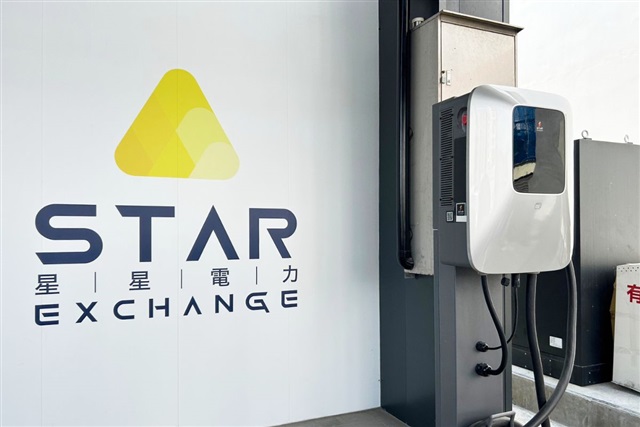
Star Trade, a unit of HD Renewable Energy, will debut at Semicon Taiwan 2026 with power trading and energy management services aimed at semiconductor and AI infrastructure. The more interesting signal is not the product but the market it implies: electricity has quietly become a gating input for the entire AI supply chain.
For years the industry treated compute as the scarce resource. That framing is now incomplete. Advanced fabs and hyperscale data centers consume power at a scale that outpaces grid expansion in most regions, and the marginal cost of a training run increasingly reflects local electricity prices, interconnection queues, and firm-capacity availability rather than silicon alone. When a renewable-energy group builds a dedicated trading desk for chip and AI customers, it is a market telling us that megawatt procurement is becoming as strategic as wafer allocation. Expect power purchase agreements, on-site generation, and grid-balancing services to move from facilities line items to board-level competitive levers.
The knock-on effects are structural. Chipmakers face pressure to co-locate near cheap, firm, low-carbon power, which reshapes where capacity gets built. Customers with carbon-reporting obligations will scrutinize the energy mix behind their compute, turning clean power into a procurement filter. And volatile wholesale pricing makes energy hedging a genuine risk-management discipline for anyone running large clusters — a capability few IT organizations currently possess in-house.
For Japan the stakes are acute. The Kumamoto TSMC/JASM cluster and the Rapidus project in Hokkaido are betting on domestic advanced-node capacity, but both sit in a country with high industrial electricity costs, a constrained grid, and limited renewable headroom. Power availability, not government subsidy, may prove the binding constraint on how far this buildout scales. Trading houses and utilities that can package firm renewable supply for fabs and data centers stand to capture a durable new revenue layer.
There is a clear opening for Japanese SIers and enterprise IT teams here. Energy management for AI infrastructure — demand forecasting, load shifting, PPA optimization, and integration between building systems and cluster schedulers — is squarely an integration problem, the kind of complex, multi-vendor work where domestic SIers already earn trust. RPA and monitoring vendors can extend into automated energy-cost operations. The teams that treat power as a first-class variable in system design, rather than an outsourced utility bill, will build the more defensible AI platforms.