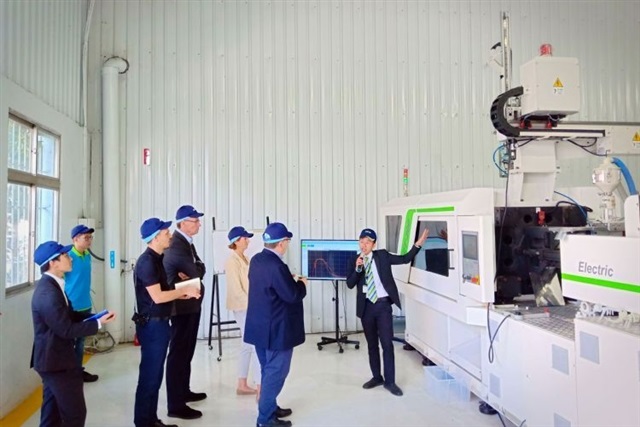
FS plans trial production and shipments of high-end MLPC stacked solid-state capacitors by the end of 2026, extending from plastic injection molding machines into passive components aimed at AI and GPU supply chains.
The strategic signal here is bigger than one company's diversification. Passive components — capacitors, inductors, resistors — are the unglamorous plumbing of every server board, and AI accelerators are enormously hungry for them. A single high-end GPU baseboard can carry thousands of capacitors to smooth the violent power transients that H100- and B200-class silicon demands. That has turned a commodity into a bottleneck, and bottlenecks attract entrants. When a firm whose core business is injection molding sees enough margin and demand certainty to build a capacitor line, it tells you the AI hardware cycle is dragging capital into every adjacent tier of the stack, not just the wafer fabs everyone watches.
The global risk for incumbents is a slow erosion at the specialized, high-value end rather than a sudden collapse. New capacity rarely displaces leaders overnight — qualification cycles for server-grade parts run long and customers are conservative. But every credible second source weakens pricing power and gives hyperscalers and ODMs the multi-vendor leverage they crave after the 2021 shortage scars.
For Japan, this lands directly on a crown jewel. Murata, TDK, and Taiyo Yuden collectively anchor the world's high-end MLCC and passive supply, and that dominance has been a quiet, durable source of Japanese trade strength and pricing discipline. A new AI-focused entrant does not threaten that position in 2026, but it marks the direction of travel: buyers want geographic and supplier diversification, and Taiwan-linked AI supply chains are the natural place they will fund it. Japanese leaders should read this as pressure to defend the top of the pyramid — the ultra-miniaturized, high-capacitance parts that are hardest to replicate — rather than the mid-range, where challengers will crowd in first.
For Japanese SIers and enterprise hardware buyers, the practical takeaway is procurement, not manufacturing. Firms building on-prem AI clusters or negotiating server contracts should treat passive-component sourcing as a real supply-chain variable in 2026-2027 planning, not an afterthought, and press vendors on lead-time and multi-source guarantees the way they already do for GPUs and HBM. The parts that fail quietly under AI power loads are exactly the ones worth diligence.