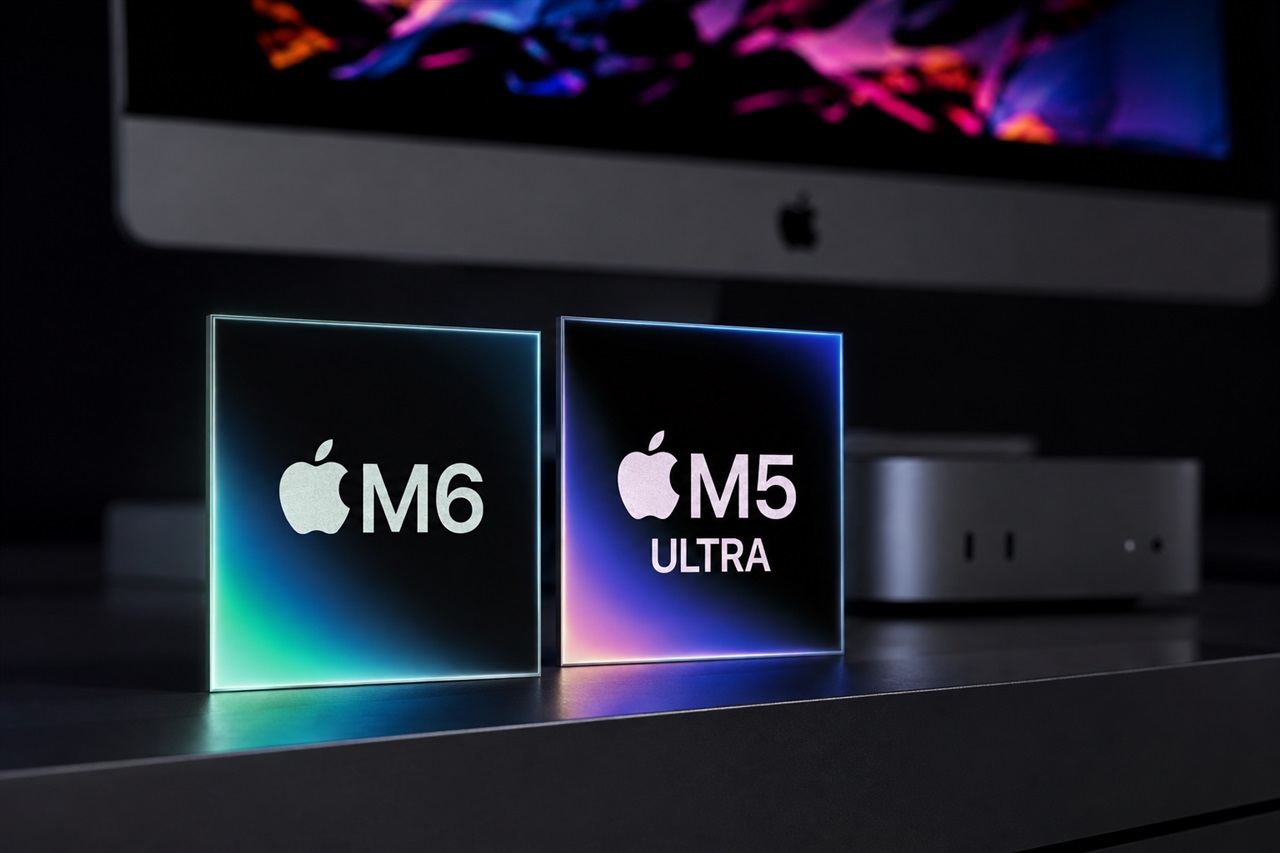
Apple introduced M6 and M5 Ultra in a refreshed Mac mini and Mac Studio, with M6 quietly carrying the label that matters most: Apple's first 2-nanometer silicon. The headline is not clock speed. It is sequencing. For a decade the iPhone claimed every new node first, because volume amortized the risk. Handing 2nm to the Mac inverts that logic.
The global read is about yield economics and demand mix. Early 2nm wafers from TSMC are scarce and expensive, and defect rates on a fresh node punish large dies less forgivingly at iPhone volumes. Leading with the Mac lets Apple absorb premium wafer costs against higher-margin, lower-unit products while the process matures. It also tells us where Apple believes the near-term compute pressure sits: sustained on-device AI workloads, memory bandwidth, and local inference, not the thermally constrained phone. Apple is optimizing for the workstation as an AI edge node, and pricing the iPhone transition for a later, cheaper wafer.
For Nvidia and the broader accelerator race, this is a reminder that the most valuable 2nm capacity is being contested between phone SoCs, AI datacenter parts, and now premium personal computers. TSMC's allocation calculus just got more crowded, and every buyer of leading-edge capacity should assume tighter supply and firmer pricing through the next cycle.
For Japan, the implications run along the supply chain more than the product shelf. TSMC's Kumamoto fabs anchor mature and specialty nodes, not 2nm, so the leading-edge story stays in Taiwan for now. But Japanese materials and equipment suppliers, from photoresist and specialty chemicals to precision components, sit directly upstream of every 2nm wafer Apple buys. Rising advanced-node volume is a demand signal for exactly the segment where Japanese firms hold durable share.
For Japanese enterprises, SIers, and development teams, the practical takeaway is that the high-performance AI workstation is becoming a legitimate deployment target. As on-device inference capacity grows, more model work can stay local, easing the cloud-cost and data-residency pressures that shape Japanese enterprise IT procurement. SIers building generative-AI systems for regulated clients in finance, healthcare, and manufacturing should factor a hybrid pattern into their reference architectures: sensitive inference on capable local hardware, scale-out in the cloud. Planning for that split now is cheaper than retrofitting it after a compliance review forces the question.