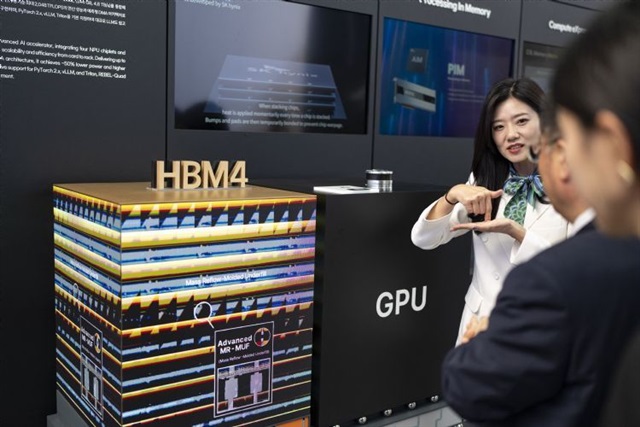
China's industrial planners have, for the first time, written high-bandwidth memory (HBM) and high-bandwidth flash (HBF) into the 15th Five-Year Plan for electronic information manufacturing as priority research targets. The wording matters more than the technology roadmap: it converts memory from a commercial pursuit into a declared national objective.
The global read is straightforward. HBM is the chokepoint of the AI boom, and today it sits almost entirely with SK Hynix, Samsung, and Micron. By elevating HBM alongside HBF—a newer class of memory aimed at feeding accelerators from denser, cheaper flash rather than pricey DRAM stacks—Beijing is signaling it will fund the parts of the stack where it is weakest and where U.S. export controls bite hardest. Expect subsidized capacity, aggressive talent recruitment, and a longer-term attempt to build indigenous advanced-packaging capability. The near-term effect is unlikely to dent incumbent pricing; the multi-year effect is a second, politically insulated supply pool that fragments the memory market along geopolitical lines. HBF is the more interesting tell. If China leans into flash-centric memory for inference, it hedges around the DRAM and TSV packaging bottlenecks it cannot yet clear, and it pressures the assumption that HBM is the only road to AI bandwidth.
For Japan, this cuts two ways. Japan does not make HBM at scale, but it owns much of what any HBM or HBF program cannot function without: photoresists and specialty chemicals (Shin-Etsu, JSR, Tokyo Ohka), deposition and etch tools, test and dicing equipment (Advantest, DISCO, Tokyo Electron). A Chinese build-out is incremental demand for these suppliers—until export-control tightening forces them to choose sides, at which point revenue exposure becomes political risk. Kioxia is the sharper case: as a flash specialist, it sits directly in the conceptual lane HBF occupies, and a credible Chinese flash-memory-for-AI effort is both a competitive threat and validation of a market Kioxia could lead.
For Japanese enterprises and the SIers serving them, the takeaway is procurement, not fabrication. A bifurcating memory supply chain means AI infrastructure sourcing—GPUs, memory modules, the accelerators inside on-prem and sovereign-cloud deployments—will increasingly carry origin and compliance questions. SIers building AI platforms for regulated clients should start treating memory provenance and export-control exposure as design constraints, not afterthoughts. The comfortable assumption of a single, fungible global memory market is quietly ending, and the firms that map their hardware dependencies now will absorb the next supply shock better than those still treating chips as commodities.