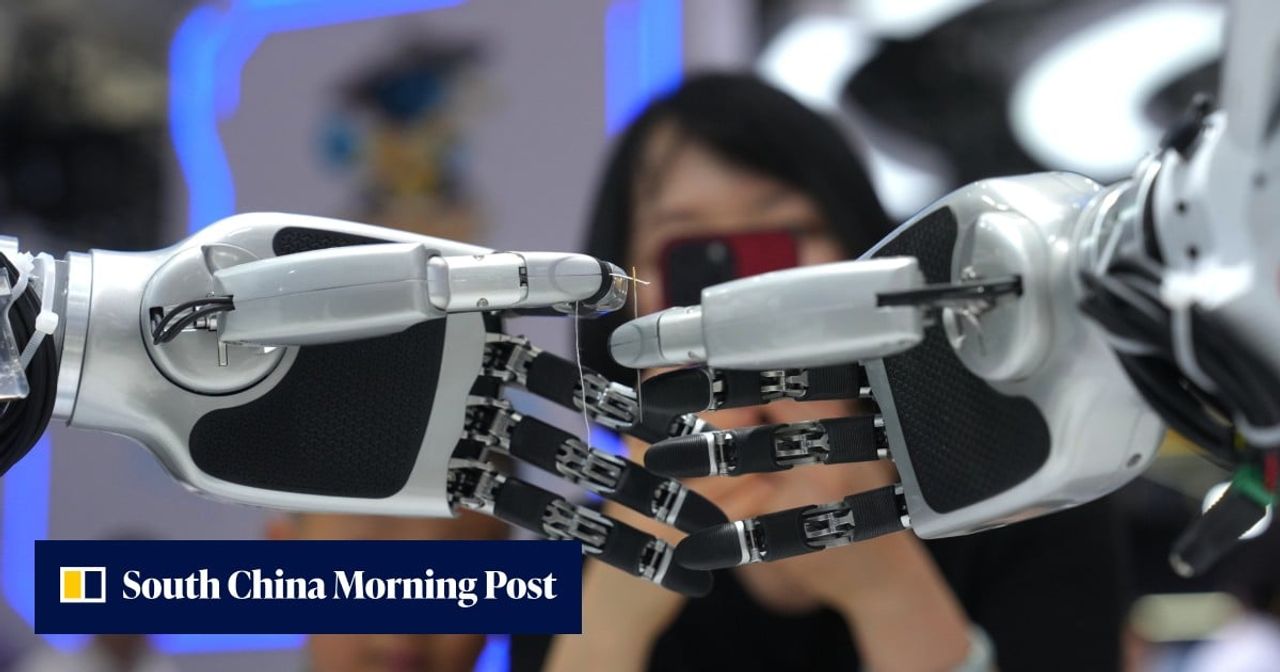
The signal from Beijing is easy to misread. Humanoids still draw the crowds, and the parallel Humanoid Robot Games with over 2,000 machines and 666 teams reinforces the theatrics. But the more consequential move is quieter: makers are foregrounding wheeled and task-specific designs built to leave the demo floor and enter warehouses, factories, and service settings. That is the difference between a capability showcase and a business.
Globally, this reframes the humanoid narrative that Western investors have anchored to. The bipedal form is a research and marketing asset, expensive, hard to certify, and slow to reach unit economics that work. Wheeled platforms sidestep the balance and safety problems that make humanoids a liability in real environments, and they hit payback periods faster. China's advantage compounds here: a dense component supply chain, actuators and motors produced at scale, and manufacturers willing to compete on cost rather than novelty. The strategic risk for US and European entrants is that while they chase the humanoid moonshot, Chinese firms quietly own the practical middle of the market and drive prices down beneath anyone's margins.
There is also a timing dimension. Robotics deployment is scaling just as AI server and memory costs climb worldwide. Compute-heavy, cloud-tethered robots face rising operating costs, which favors designs that push more autonomy to affordable edge hardware. Practical, sensor-light wheeled machines fit that constraint far better than compute-hungry humanoids.
For Japan, this is a direct competitive alarm and an opening at once. Japan's robotics heritage, FANUC, Yaskawa, and a deep base of industrial automation, has always leaned toward exactly this practical, deployable philosophy. The danger is that China now matches that pragmatism while beating Japan on component cost and iteration speed. Japanese makers can no longer assume precision engineering alone defends the category.
For SIers and enterprise IT teams, the shift changes the integration playbook. The near-term opportunity is not building humanoids but integrating fleets of practical robots into logistics, elderly care, and manufacturing, exactly the labor-shortage pressures Japan faces most acutely. SIers that pair robotics with RPA and orchestration software, connecting physical automation to back-office workflows, will capture more value than those waiting for a humanoid breakthrough that may never pencil out. The mandate for Japanese firms is to treat robots as a systems-integration and cost problem now, not a science project later.