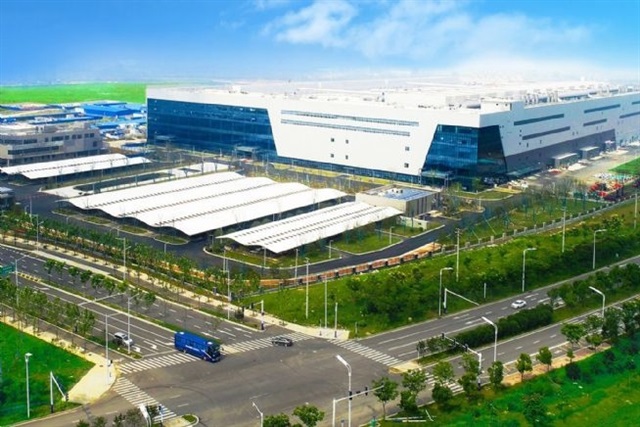
CXMT's 2027 recruitment drive spans circuit design, mass-production engineering, and AI, with postings anchored in Hefei, Beijing, Shanghai, Xi'an, and, notably, overseas markets including Japan. The overseas footprint is the strategic signal, not the hiring volume.
Memory is a discipline where process know-how lives in people, not patents. CXMT has closed much of the DDR4 gap through sheer capital and iteration, but DDR5 and LPDDR5 demand yield engineering and packaging maturity that take years of tacit experience to accumulate. Recruiting outside China is how a fast follower buys time it cannot manufacture internally. It also raises the temperature on Washington's export-control regime: talent flows are far harder to police than tool shipments, and every experienced hire narrows the technology lead that sanctions were designed to preserve. For incumbents Samsung, SK Hynix, and Micron, the near-term threat is not CXMT's leading edge but its ability to flood commodity DDR5 and mobile LPDDR, compressing margins in exactly the segments that fund next-generation R&D.
Japan is a deliberate target, and the reason is historical. CXMT's DRAM lineage traces through Elpida, the Japanese maker Micron absorbed in 2013, and Hiroshima remains a live memory cluster around Micron's fab. A generation of Japanese DRAM veterans, plus mid-career engineers weighing their options, represents precisely the tacit knowledge CXMT lacks. That makes this a quiet test of Japan's own semiconductor revival. Tokyo has poured subsidies into Rapidus, TSMC Kumamoto, and materials leadership, yet talent retention has received less attention than fab construction. If Chinese firms can out-compensate for scarce engineers, Japan risks funding capacity while exporting the expertise that makes capacity productive.
For Japanese enterprises the second-order effects matter more than the hiring headline. Equipment and materials suppliers such as the lithography, etch, and photoresist players stand to gain near-term orders from any CXMT expansion, but they also inherit the compliance burden of selling into an entity that sits squarely in the US-China crosshairs. Procurement and enterprise IT teams should plan for a bifurcated memory supply chain, where cheaper China-sourced DDR5 carries geopolitical and second-sourcing risk that must be priced into hardware roadmaps. This is less an SIer or RPA story than a boardroom sourcing-strategy one: memory pricing, supply security, and talent policy are converging into a single competitive question for Japan's tech sector.