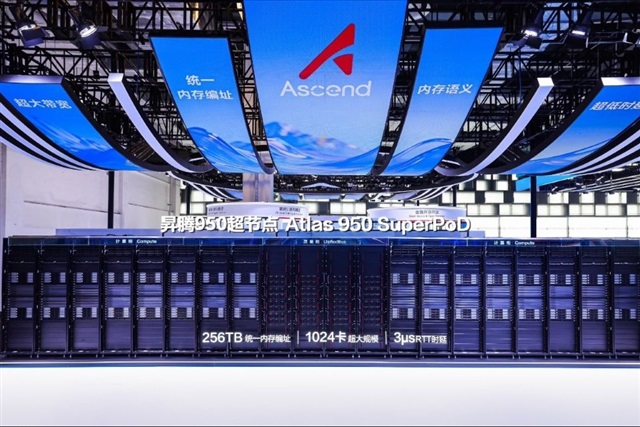
The core signal is simple but consequential: China's would-be Nvidia challengers are raising prices on current and next-generation accelerators as high-bandwidth memory grows scarce and expensive.
The strategic read is that HBM, not the logic die, is now the binding constraint on AI compute. Domestic Chinese silicon was supposed to be the cheaper path around export controls, yet the same three-vendor HBM oligopoly that supplies the West gates China's ambitions too. When the memory that feeds the accelerator is rationed, a nominally sovereign chip program inherits an imported bottleneck. Rising prices from these vendors are less a sign of pricing power than of thin supply and weak yields being passed straight to buyers. The wider implication is that HBM allocation, tightly booked by hyperscalers through 2025 and beyond, becomes a geopolitical instrument as potent as any lithography restriction. Whoever controls the memory queue controls the pace of AI deployment.
For buyers everywhere, the takeaway is that compute cost curves are not bending downward on schedule. Expect accelerator scarcity and price inflation to persist wherever HBM is the gating component, reshaping capex assumptions for every frontier-model and inference build-out.
For Japan, the angle cuts two ways. On the upside, this is a materials and equipment story, and Japanese suppliers sit deep in the HBM stack, from advanced packaging chemistries and photoresists to bonding and test tooling. Tighter HBM demand and the shift toward more complex stacked memory strengthen demand for exactly the process materials where Japanese firms hold structural positions, and it reinforces the logic behind domestic foundry and packaging investment.
On the downside, Japanese enterprises and SIers building AI infrastructure face the same memory-driven cost inflation with less procurement leverage than the hyperscalers who have pre-booked supply. For system integrators scoping generative-AI and RPA modernization projects, this means GPU-server lead times and unit costs should be treated as volatile inputs, not fixed line items. The practical hedge is to design for compute portability, prioritize inference efficiency and model right-sizing over raw accelerator counts, and lock capacity commitments early. The teams that win the next 18 months will be the ones that treated memory scarcity, not chip scarcity, as the real planning variable.