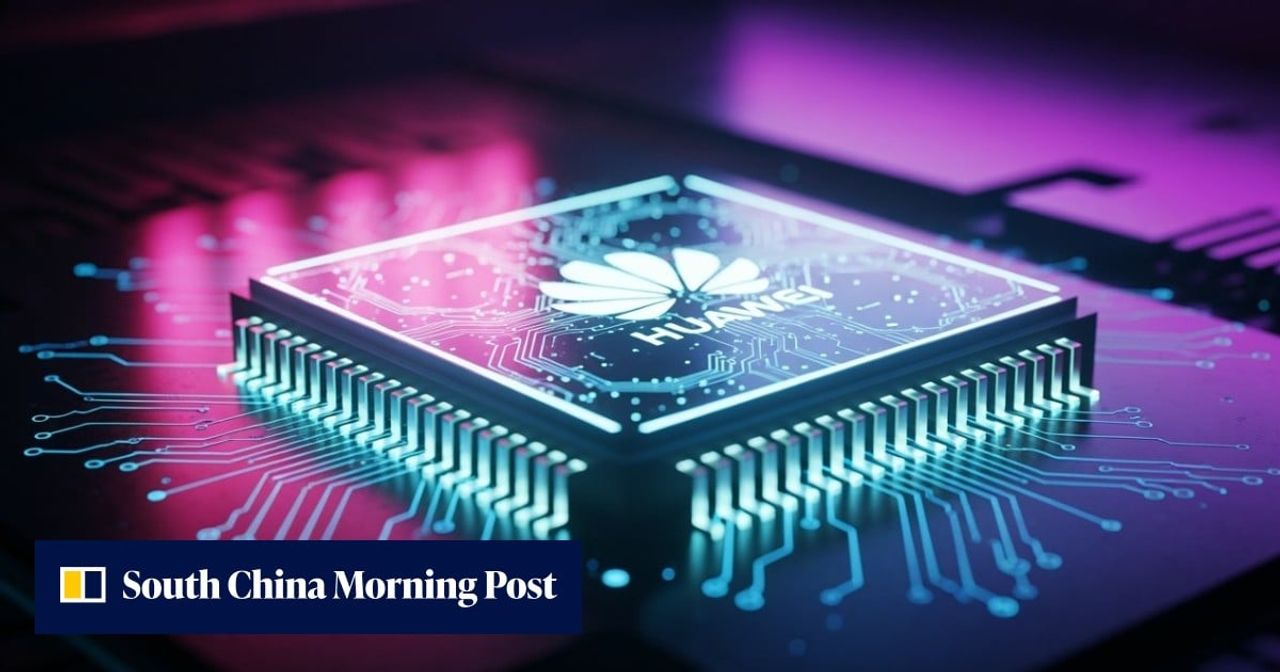
Huawei has published research, credited to semiconductor chief He Tingbo, arguing its Tau Scaling Law architecture sidesteps the thermal bottleneck that critics said would doom vertically stacked logic circuits, clearing a technical obstacle for its anticipated Kirin 2026 chip.
The strategic message matters more than the physics. Cut off from the newest lithography, Huawei cannot simply shrink transistors to gain performance. Stacking logic vertically is the obvious alternative path, but heat density has always been the wall that path runs into. By publishing a defense of its thermal approach rather than staying silent, Huawei is signaling to partners, regulators, and investors that architectural cleverness can substitute for process-node leadership. Whether the claim survives contact with mass production is the open question, and a research paper is not a shipping yield curve.
Globally, this reinforces a bifurcation that executives should already be planning around. One track chases ever-smaller nodes; the other extracts gains from packaging, stacking, and system-level design. If Huawei demonstrates competitive performance without leading-edge tooling, it validates a design philosophy that other constrained players will copy, and it pressures the assumption that export controls alone can freeze a rival's roadmap. The center of gravity in chip differentiation keeps drifting from the transistor toward the package.
For Japan, this is quietly favorable rather than threatening. The country's strongest position in the semiconductor stack is not cutting-edge foundry capacity but the materials, chemicals, bonding, and advanced-packaging equipment that any stacking-heavy roadmap depends on. A world that competes on how chips are assembled and cooled, not only how finely they are printed, plays directly to Japanese suppliers' entrenched strengths. The more designers lean on 3D integration, the more that upstream leverage compounds.
Japanese enterprises and SIers should read the second-order effect. A durable Chinese domestic chip supply narrows Huawei's dependence on Western silicon and hardens the split into parallel technology blocs. For system integrators building for clients with China exposure, that means designing procurement and software stacks that tolerate divergent hardware baselines, and treating hardware sovereignty as a live variable in multi-year architecture decisions rather than a settled assumption.