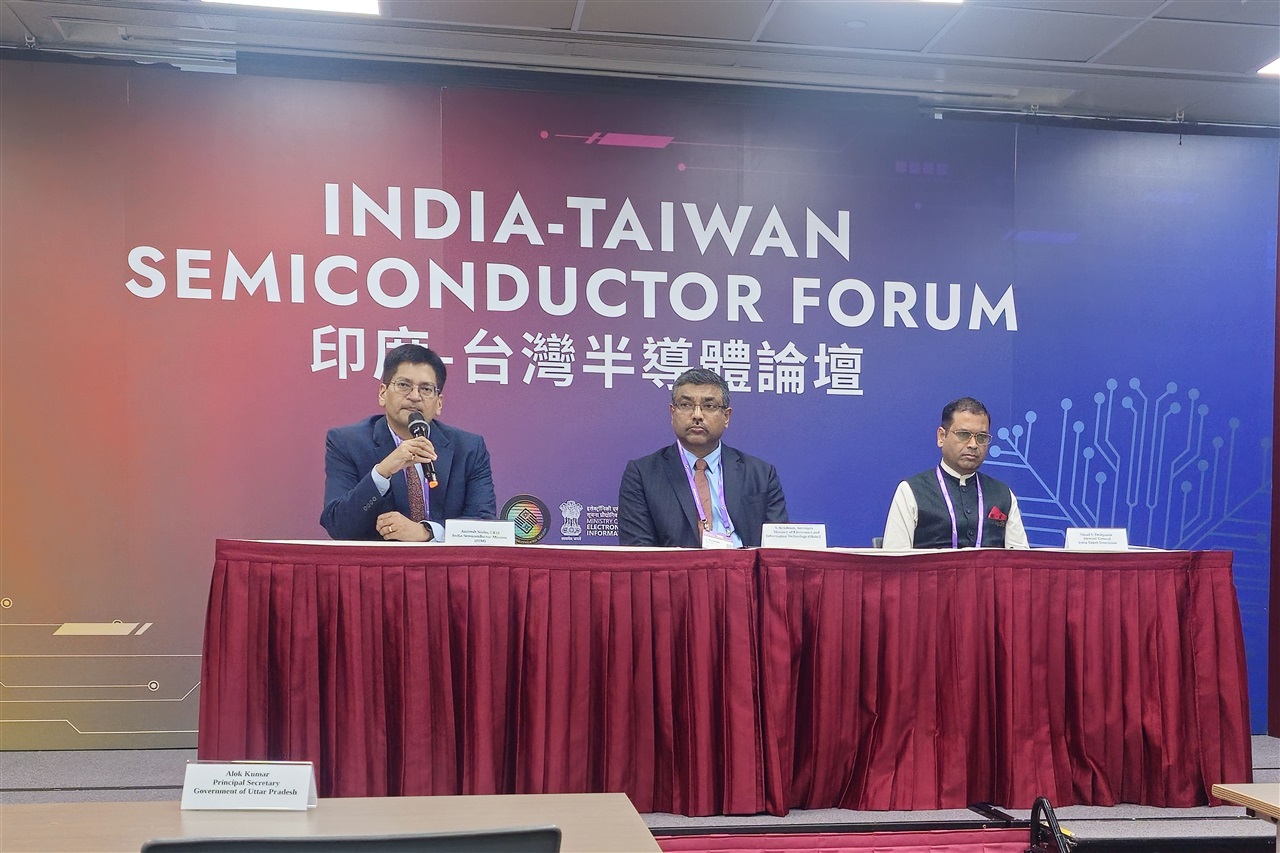
At a Taipei briefing on 4 September, India's IT ministry secretary S. Krishnan said New Delhi must "be realistic" about the role of Chinese firms in its chip and electronics supply chain, and is easing restrictions accordingly. The framing matters more than any single policy tweak.
The global takeaway is that "China+1" was always a marketing term, not an engineering reality. India can assemble more phones and stand up fabs, but the components, materials, tooling, and process engineers that make those lines run still trace back to Chinese suppliers. What looks like diversification on a procurement slide is, at the molecular level, still a China-anchored chain. Krishnan's candor is itself a strategy: signaling to foreign investors that India will prioritize output over ideological purity, and quietly conceding that walling China out would stall the very buildout it is trying to sell abroad.
This reframes the derisking narrative that has driven capital allocation since 2020. Relocating final assembly does not relocate dependency; it relocates the map pin. Executives who booked "supply chain resilience" on the strength of an India footprint may be carrying more concentration risk than their board decks suggest. The honest question is not "are we out of China" but "how many tiers deep does China remain, and can we see it."
For Japanese firms, this is a direct challenge to the last five years of India-as-hedge thinking. Electronics makers, auto-component suppliers, and the sogo shosha channeling investment into Indian plants need to model second- and third-tier exposure, not just the assembly site. A factory in Tamil Nadu fed by Chinese subcomponents does not satisfy an economic-security mandate, and it will not survive scrutiny if Japan's own supply-chain screening tightens.
Japanese SIers and manufacturing-IT teams have a concrete opening here. The competitive edge shifts from where you build to how deeply you can trace what you build. Supply-chain visibility platforms, multi-tier supplier mapping, and component-origin data pipelines become strategic infrastructure rather than compliance overhead. For SIers advising clients on India expansion, the value is no longer standing up ERP in a new geography, but instrumenting the chain well enough to prove where dependency actually lives.