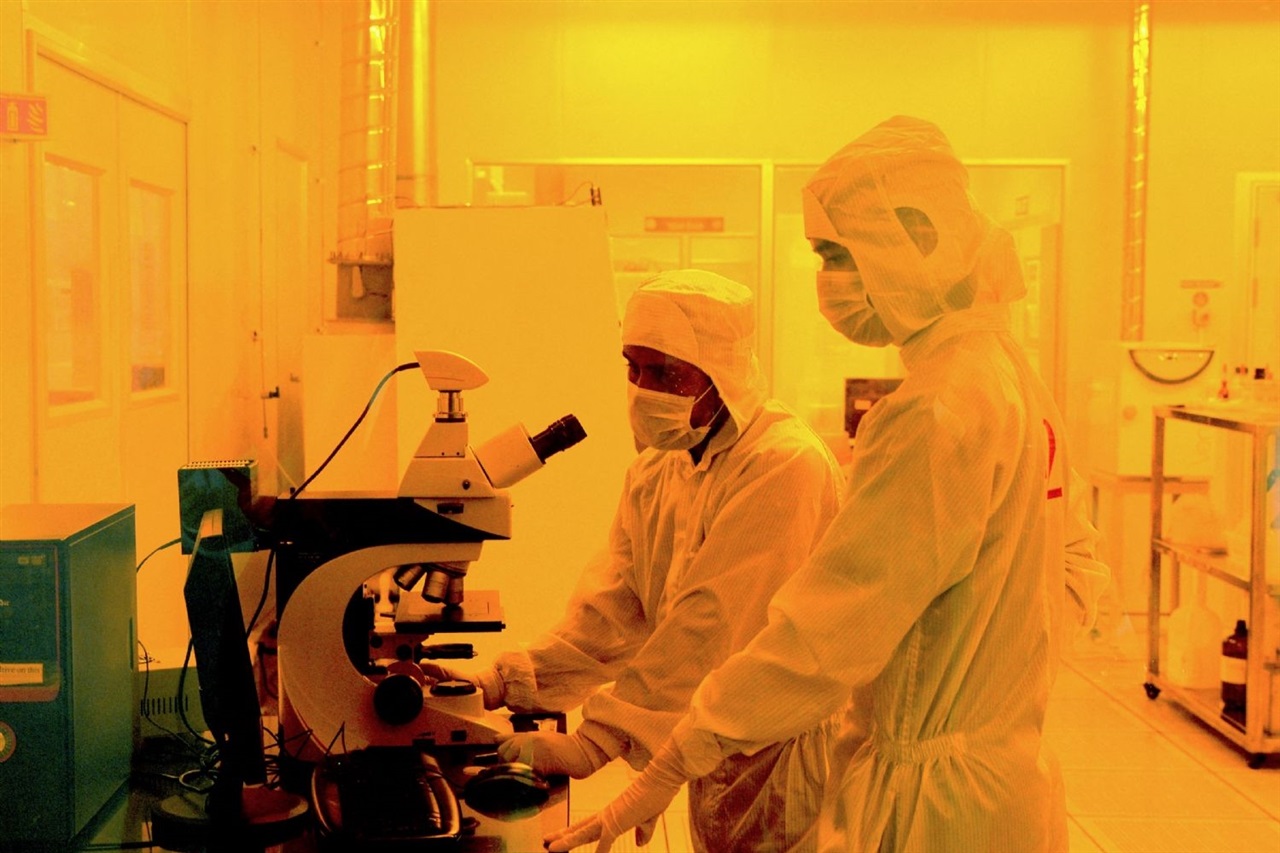
India has brought its fifth semiconductor project into commercial production, as Suchi Semicon's OSAT plant in Surat and CDIL's packaging unit in Mohali went live, joining Micron, Kaynes Semicon, and CG Semi. The pattern is the real story: nearly every one of these is back-end—assembly, test, and packaging—rather than front-end wafer fabrication.
That distinction is strategic, not incidental. Building a leading-edge fab requires tens of billions in capital, a mature supplier ecosystem, ultrapure water, and a decade of yield learning. Packaging and test are far more attainable entry points, and they happen to sit where a growing share of chip value now accrues. As transistor scaling slows, advanced packaging—chiplets, 2.5D/3D integration, heterogeneous stacking—has become the frontier of performance gains. India is planting itself in the segment that is expanding fastest, letting it participate in the global supply chain without waiting a decade for a competitive foundry. For buyers pursuing 'China-plus-one' resilience, a credible second source for OSAT capacity is genuinely useful, even if it does not touch the most advanced logic nodes.
The near-term ceiling is real, though. OSAT margins are thinner than fab economics, the work depends on imported wafers and substrates, and India still lacks the dense materials-and-equipment cluster that makes Taiwan and South Korea so hard to displace. This is a foundation-laying phase, and executives should read it as capacity diversification rather than technological catch-up.
For Japan, the opportunity is more concrete than for most. Japan's strength has never been volume chipmaking—it is the upstream layer that every packaging line depends on: Tokyo Electron and Disco in assembly and dicing tools, Shin-Etsu and SUMCO in wafers and photoresists, Ibiden and Shinko in advanced substrates. A wave of new Indian OSAT lines is, in effect, a new customer base for Japanese equipment and materials vendors, and it complements the government-to-government semiconductor cooperation the two countries have already signaled.
Japanese SIers and enterprise IT teams sit further from this, but not outside it. As firms like Rapidus and JASM rebuild domestic capacity, the emergence of an Indian back-end tier gives Japanese OEMs and their integration partners a more distributed sourcing map to design procurement and BCP strategies around. The practical takeaway for planners: treat India as a maturing node in the packaging supply chain worth qualifying early, while keeping expectations calibrated to what OSAT can and cannot deliver.