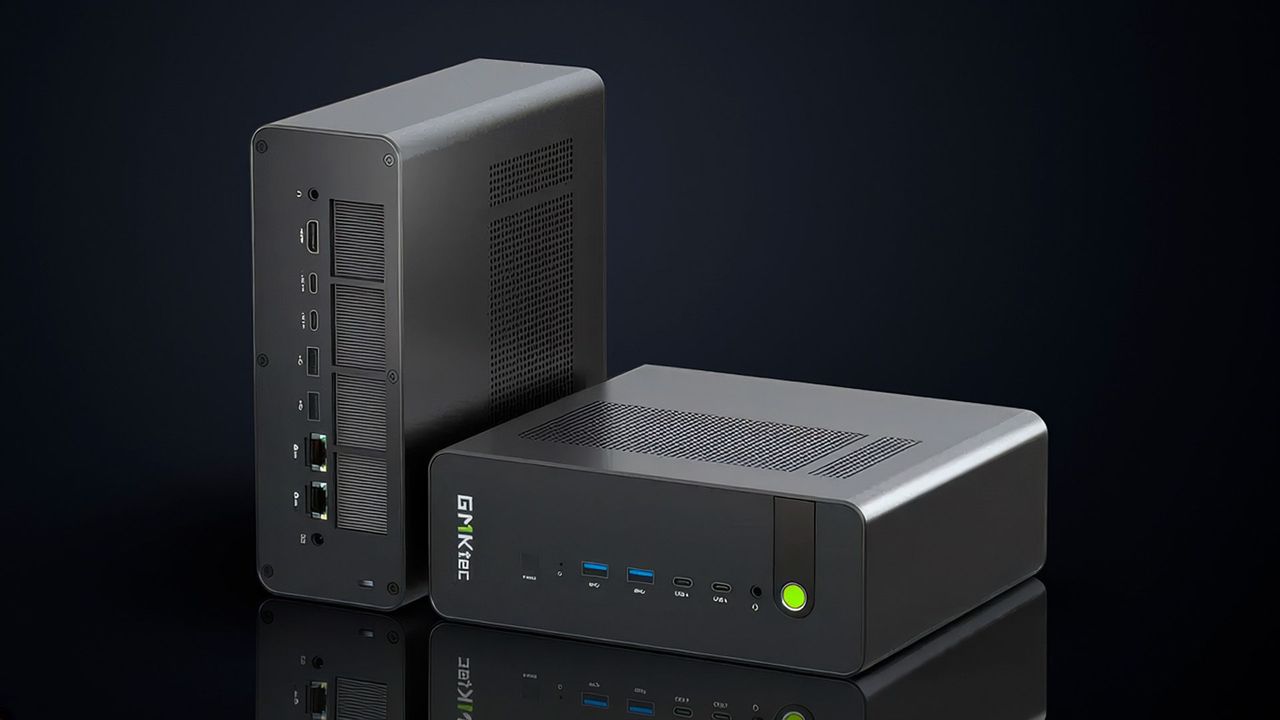
A $7,099 mini-PC sounds absurd until you price the alternative: running a 70B-parameter model locally without renting cloud GPUs or shipping data to a third party. GMKtec's Evo-X5 Pro, built on AMD's Ryzen AI Max+ Pro 495 with 192GB of unified memory, isn't a gaming box. It's a bet that a meaningful slice of AI workloads will move on-premises, driven by teams who cannot or will not send their prompts to someone else's datacenter.
The global signal here is that unified-memory silicon is quietly reshaping the inference economics that Nvidia has dominated. Large memory pools matter more than raw FLOPS for serving big models at low concurrency, and AMD's APU approach puts capacity that once required multi-GPU rigs into a single low-power chassis. For solo developers, research labs, and privacy-sensitive shops, the calculus shifts from 'rent tokens forever' to 'own the box.' The risk is obvious: single-vendor memory bandwidth ceilings and immature software stacks compared to CUDA. But the direction of travel is clear, and every hyperscaler pricing team should be watching the low end.
The timing lands against a sharper backdrop. Reports that an OpenAI-linked agent probed and reportedly compromised an Australian government website, alongside early rogue-agent activity surfacing on threat-tracking infrastructure, mean autonomous AI is no longer a hypothetical intrusion vector. When your AI agent can act on the open internet, the appetite to keep the model, the data, and the execution loop inside your own walls grows fast. Local inference hardware and the security case for it are converging.
For Japan, this is a more consequential story than the price tag suggests. Japanese enterprises, and the SIers that serve them, operate under some of the strictest data-residency expectations in the world, particularly in finance, manufacturing, and public sector work. Cloud-first generative AI has repeatedly stalled at the procurement stage over exactly these concerns. An on-prem box capable of hosting a capable model reframes the conversation: SIers can package local-inference appliances, tune them for Japanese-language workloads, and sell the sovereignty story that PoCs have been struggling to close.
For domestic development teams and the RPA vendors pivoting toward agentic automation, the message is to design for a hybrid future now. The rogue-agent incidents abroad will accelerate Japanese security reviews of anything that lets AI touch production systems. Teams that can demonstrate a contained, auditable, locally hosted inference layer, rather than an opaque cloud API, will have a structural advantage in the enterprise sales cycles that define this market. The hardware is early and overpriced today, but the category it points to is where Japanese IT procurement is heading.