The US Army's decision to buy 15 portable microreactors from Radiant under the Janus program is a small contract with an outsized signal. The strategic story is not military resilience alone but the collapsing distance between two industries that rarely spoke: nuclear engineering and compute infrastructure. Defense wants power that travels and survives grid failure. Hyperscalers want power that arrives faster than the decade it takes to permit a transmission line. Both are converging on the same answer, and government procurement is now underwriting the manufacturing learning curve that private datacenter demand could not justify on its own.
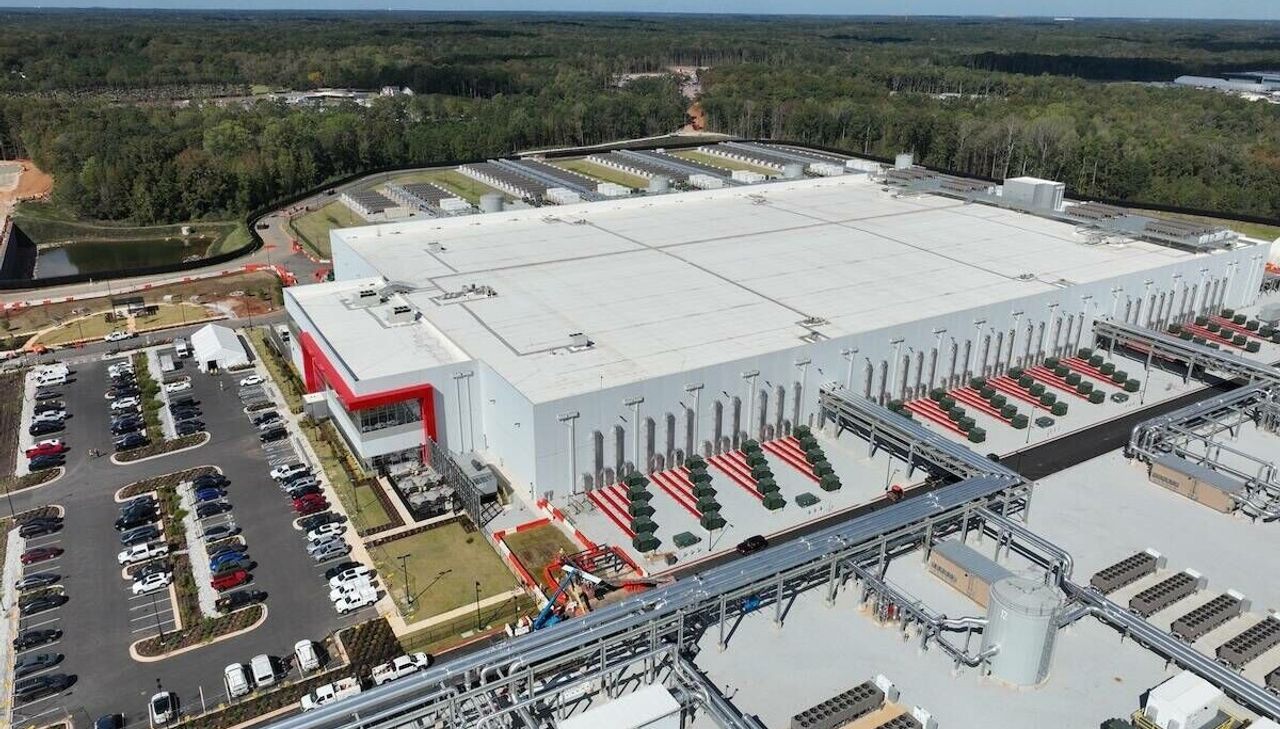
The global implication is a reordering of who controls AI's real bottleneck. Compute scarcity has quietly become a power scarcity problem. Frontier training clusters are being sized in gigawatts, and the constraint is no longer GPUs but interconnection queues and firm baseload. A validated portable-reactor supply chain, even at defense scale first, de-risks the technology for commercial buyers and pulls forward a market where energy generation becomes a line item hyperscalers own outright rather than rent from utilities. Expect the winners to be firms that can prove serial production, not just a working prototype. Scaling from a contract to a fleet is where most reactor startups historically stall.
For Japan, this lands on a raw nerve. The country is trying to attract AI datacenter investment while running one of the developed world's tightest power positions, with limited nuclear restarts since 2011 and a grid poorly suited to concentrated multi-hundred-megawatt loads. Global AI infrastructure will migrate to where firm, cheap electricity exists, and today that is not Japan. Portable or small modular reactors offer a plausible route around grid congestion, but Japan's regulatory posture and public sentiment make near-term deployment far harder than in the US.
The opportunity for Japanese industry is on the supply side, not the demand side. Mitsubishi Heavy Industries, Hitachi, Toshiba, and IHI carry deep reactor and precision-manufacturing capability that maps directly onto a components market a US-led microreactor buildout will need. The strategic risk is ceding the systems-integration and siting expertise to American players while Japan remains a parts supplier.
For SIers and enterprise IT teams, the practical takeaway is to treat power sourcing as an architecture decision, not a facilities afterthought. As domestic datacenter capacity tightens, expect AI workloads to be pushed offshore or into power-purchase-linked colocation. SIers that can advise clients on energy-aware placement, hybrid-cloud latency tradeoffs, and long-horizon capacity contracts will differentiate. The firms treating electricity as someone else's problem will find it becomes theirs first.