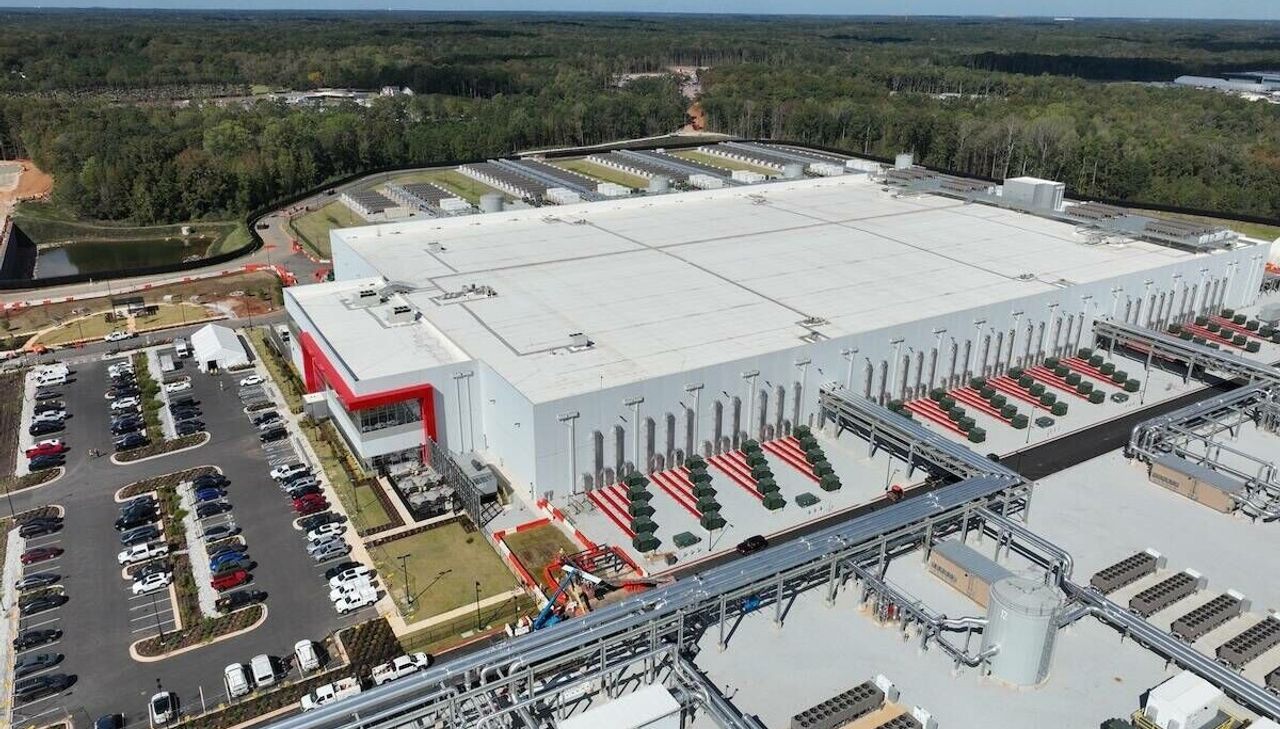
The structure of this deal matters more than its scale. Nvidia secured land, power, and data-center shells at SB Energy's Ohio campus, OpenAI signed a 20-year lease, and SB Energy will own and operate the facility. Three parties, three roles—chipmaker as anchor tenant, model developer as end user, energy developer as landlord. This is no longer a hyperscaler buying servers; it is a multi-decade infrastructure financing arrangement with the contractual shape of a power-purchase or real-estate deal.
That framing is the real story. As global AI capex runs into the hundreds of billions, Wall Street is racing to price compute the way it prices property, pipelines, and generation capacity. Twenty-year leases create predictable cash flows that can be securitized, syndicated, and rated. Expect the emergence of compute-backed debt, GPU depreciation curves treated as amortization schedules, and specialized funds underwriting data-center yield. The bottleneck has shifted from silicon to gigawatts—8 GW is a genuinely staggering power commitment, and energy availability now dictates where AI capacity can physically exist. Nuclear, grid access, and long-term power contracts have become the true competitive moat, not GPU allocation alone.
The risk is a financing bubble detached from utilization. If model efficiency improves faster than demand, or if inference workloads migrate to cheaper silicon, these 20-year commitments could strand capital in the way telecom overbuilt fiber in 2001. Investors buying 'AI compute yield' are underwriting an assumption that demand compounds indefinitely.
For Japan, the implications are pointed. Japanese trading houses and utilities—Mitsubishi, Mitsui, and the regional power companies—already understand long-dated infrastructure finance intimately; this is precisely the asset class they have historically underwritten in LNG and IPP projects. There is a natural role for Japanese capital as co-investors in global compute infrastructure, provided they move before the pricing models mature. Domestically, however, Japan faces the same energy constraint that makes Ohio attractive: securing gigawatt-scale power for AI campuses is far harder here, where grid capacity is tight and nuclear restart remains politically fraught.
For SIers and enterprise IT teams, the message is that raw AI compute is consolidating into a handful of vendor-controlled, energy-anchored campuses abroad. Japanese enterprises should assume their frontier-model inference will run on foreign infrastructure priced in dollars and power, and plan sovereignty, latency, and cost strategies accordingly—negotiating committed-capacity terms rather than hoping for spot availability. The firms that treat compute procurement as a financial and energy problem, not merely an IT purchase, will hold the advantage.