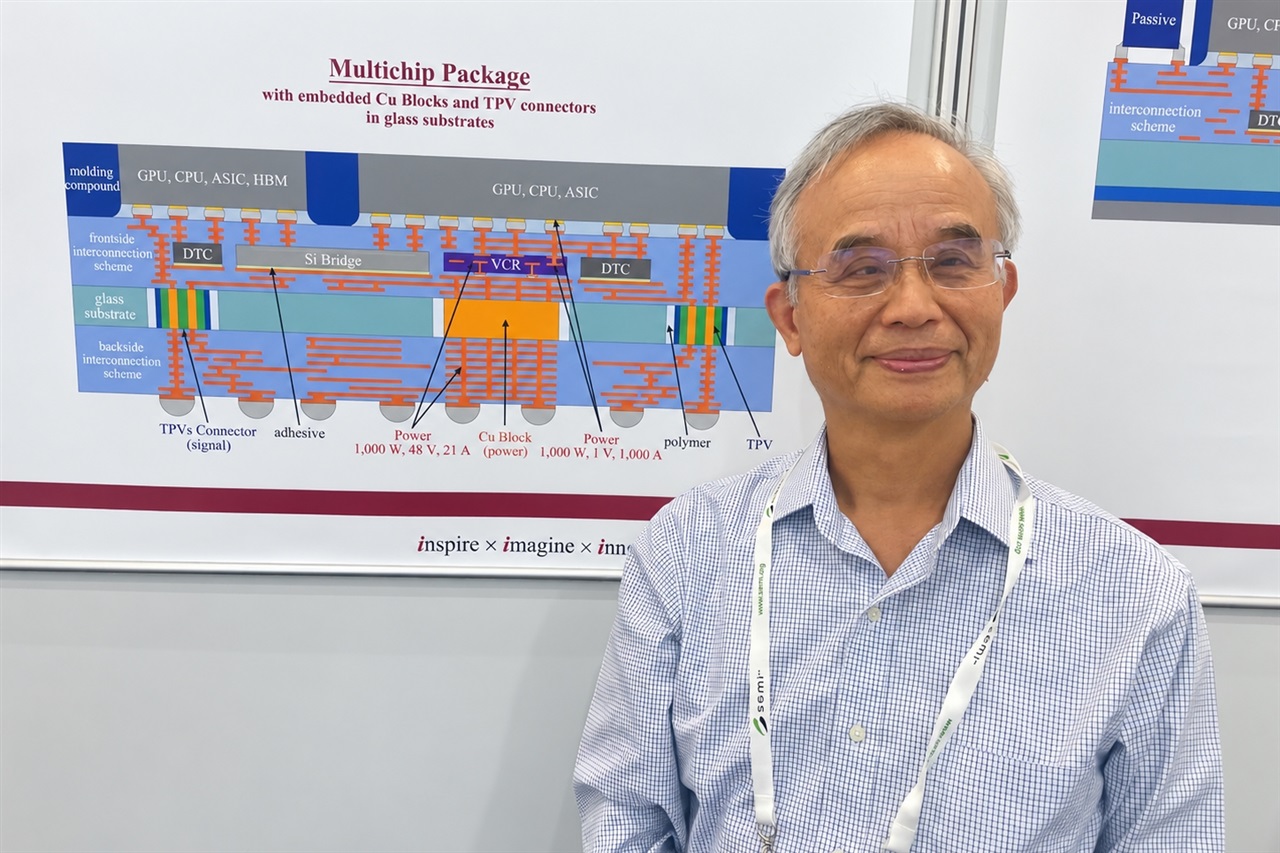
A veteran TSMC executive, Mou-Shiung Lin, credits Jensen Huang with opening the age of AI while describing the engineering behind it in one word: violent. The subtext of the 1,000-watt chip is that Nvidia's lead rests less on delicate design finesse than on a willingness to push power, heat, and packaging density past where the industry once thought sane.
That framing matters because it redefines where competitive advantage actually lives. When a single accelerator draws toward a kilowatt, the bottleneck migrates away from the transistor and toward everything wrapped around it: advanced packaging like CoWoS, high-bandwidth memory stacks, liquid and eventually immersion cooling, power delivery, and the physical datacenter itself. Brute force is a strategy that only works if the surrounding supply chain can absorb the thermal and electrical violence. This is why the buildout race is increasingly a race for gigawatts and cooling capacity, not just wafers.
The strategic risk for buyers is that performance-per-watt improvements are being outrun by absolute-watt growth. Total cost of ownership is quietly shifting from silicon acquisition to energy and facilities. Operators who optimized for chip price will find their economics dictated by electricity contracts and heat rejection. The winners in the next phase may be the unglamorous suppliers of cooling, substrates, and power infrastructure that make brute force survivable.
For Japan, this is a rare structurally favorable moment. The country sits deep in exactly the layers this approach stresses: Shin-Etsu and SUMCO in wafers, JSR and TOK in photoresist and packaging materials, and a strong base in precision cooling, power semiconductors, and thermal components. As TSMC's Kumamoto fabs scale and Rapidus pursues advanced nodes, the domestic materials and equipment ecosystem stands to capture value that pure design players cannot.
Japanese SIers and datacenter operators face a sharper adjustment. Designing facilities around kilowatt-class racks means retrofitting for liquid cooling, negotiating power against a constrained grid, and rethinking site selection toward regions with stable, affordable electricity. RPA and enterprise dev teams planning on-prem AI clusters should assume that facilities engineering, not GPU procurement, becomes the gating constraint. The firms that build cooling and power expertise now will win the integration contracts as brute-force AI infrastructure lands in the enterprise.