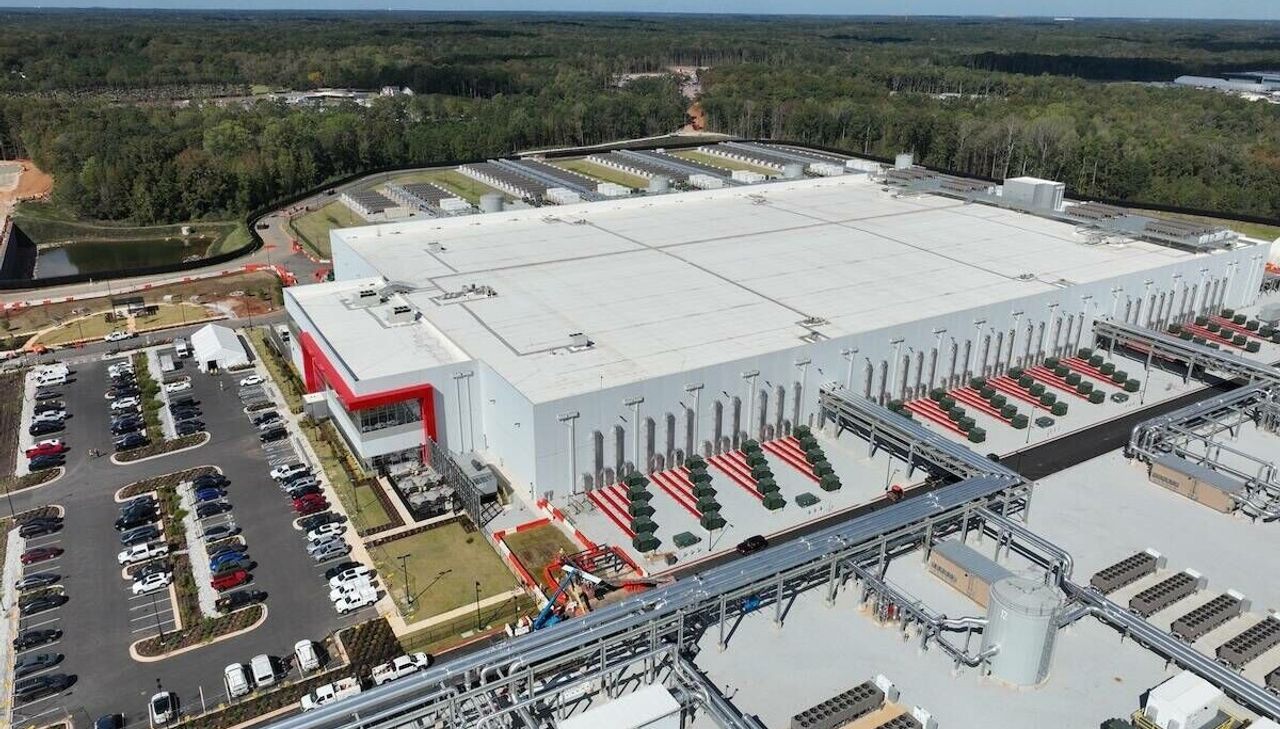
Oracle has committed to procuring roughly two gigawatts of renewables to match the emissions of its OpenAI Stargate data center, yet the facility itself will keep running on gas. That gap between the accounting and the physics is the entire story.
The global signal here is that frontier AI has outgrown the grid's ability to serve it cleanly. Renewables are intermittent; a training and inference campus needs firm, round-the-clock power. So the operating model becomes gas turbines on-site for reliability, paired with offsetting green megawatts purchased elsewhere. This is emissions matching on an annualized basis, not hourly decarbonization, and sophisticated buyers of corporate climate claims will increasingly discount it. Expect scrutiny to shift from headline procurement numbers to additionality: did the clean power actually get built, or was existing generation simply re-papered? For hyperscalers and their financiers, the risk is that voluntary pledges collide with tightening disclosure regimes and local opposition to gas permits, turning a PR gesture into a permitting and reputational liability.
There is also a competitive dimension. Compute capacity is now gated by power access, not chips alone. Operators who can secure firm low-carbon supply, whether nuclear, geothermal, or long-duration storage, gain a structural cost and siting advantage over those leaning on gas-plus-offsets. The premium on genuinely clean baseload will rise.
For Japan, this dynamic is acute. Domestic grid constraints, high industrial power prices, and limited siting for large campuses already push hyperscale AI buildout toward Inzai, Osaka, and Hokkaido, where transmission and cooling are bottlenecks. Japanese operators cannot easily replicate the US gas-turbine shortcut given fuel import dependence and decarbonization commitments, so the offset-heavy playbook Oracle is using here will face harder economics locally. That reshapes procurement math for anyone planning sovereign or on-prem AI infrastructure.
For SIers and enterprise IT teams, the practical implication is that AI workload placement is becoming an energy-sourcing decision, not just a cloud-region choice. SIers advising clients on generative AI rollouts should treat power provenance and carbon reporting as first-class architecture constraints, especially for firms with TCFD or CDP obligations where offset-based claims may not survive audit. RPA and dev teams optimizing inference costs should factor in that Japanese compute pricing will carry an energy premium, favoring workload efficiency, model right-sizing, and hybrid designs that avoid parking idle GPU capacity on expensive grids.