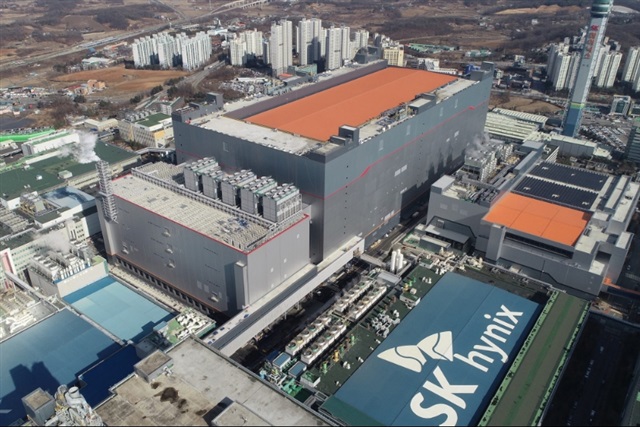
South Korea is converting a semiconductor-driven tax windfall into record technology spending, steering capital toward chips, Nvidia's Vera Rubin platform, AI data centers, robotics, and the power and water infrastructure they require.
The strategic signal here is bigger than the budget line. Seoul is treating semiconductor prosperity as a flywheel rather than a dividend—taking cyclical chip profits and hardwiring them into the physical substrate of AI: grid capacity, cooling water, and accelerator supply. This is the emerging playbook for any economy that wants to host frontier compute rather than merely rent it from US hyperscalers. The binding constraint on the global AI race has quietly shifted from GPUs to megawatts and cooling, and governments that pre-fund power and water are effectively buying option value on future datacenter siting. Korea's move also deepens its dependency profile: committing to Vera Rubin-class hardware ties national infrastructure to Nvidia's roadmap and to the same overheated accelerator supply chain everyone else is chasing.
For Japan, this is a competitive wake-up call more than a threat. Japan runs a structurally similar setup—Rapidus and TSMC Kumamoto anchoring a chip revival, plus METI subsidies—but the funding logic differs. Korea is monetizing existing memory and logic dominance to self-finance the next layer; Japan is still rebuilding the base. The risk is a widening gap in AI-datacenter density across the region just as domestic demand for sovereign compute rises.
Japanese enterprises and SIers should read the infrastructure angle carefully. The bottleneck for large-scale AI deployment in Japan is increasingly power availability and datacenter lead times, not model access. SIers positioned around datacenter engineering, liquid cooling, grid interconnection, and facility operations stand to capture demand that pure software integrators will miss. RPA and app-layer vendors, by contrast, face commoditization as agentic AI absorbs routine automation—the durable margin is moving down the stack toward the compute and power layer that Korea is now aggressively funding.
The practical takeaway for Japanese decision-makers: treat power, cooling, and siting as first-class items in AI strategy, not procurement afterthoughts. The economies that co-locate fiscal policy with physical infrastructure will set the terms for where regional AI capacity actually lands.