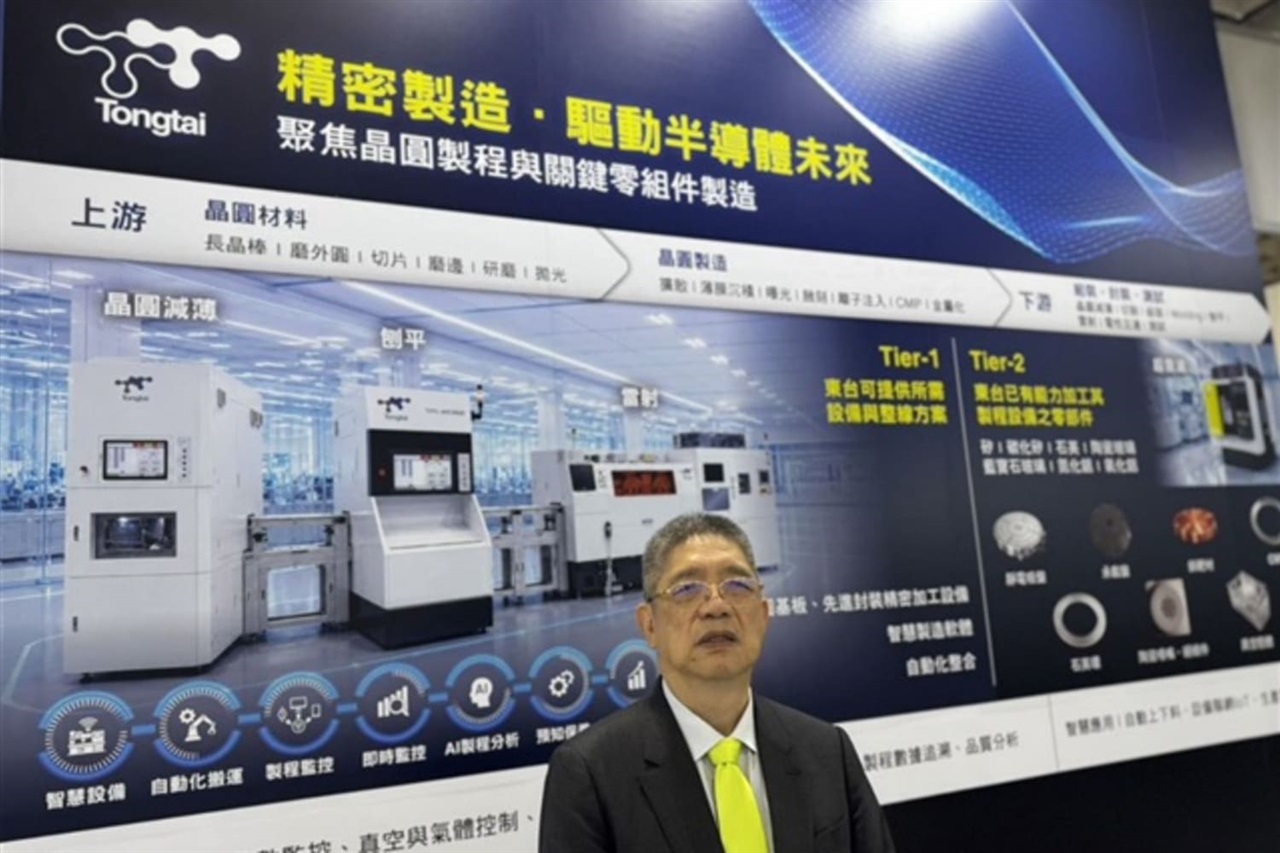
Tongtai's decision to extend its machine-tool heritage into hard-and-brittle material processing, advanced packaging, and smart-manufacturing lines is a small signal pointing at a large structural shift. The AI compute cycle is no longer just a story about GPUs and hyperscale capex. Demand is propagating down the supply chain to the unglamorous layer of grinders, dicers, and precision handling systems that make advanced packaging feasible. When a mid-tier toolmaker doubles its order book on AI-driven demand, it confirms that the bottleneck is migrating from wafer fabrication toward back-end packaging and the equipment that enables it.
The more consequential dynamic is localization. Tongtai's explicit import-substitution posture reflects a broader determination across Taiwan to reduce dependence on foreign equipment suppliers, hedging against both cost and geopolitical exposure. This is the same logic driving datacenter sovereignty moves elsewhere, from Indian gigawatt campuses to European sovereign compute. The equipment tier is now a strategic front, not a commodity backwater. Buyers want optionality; regions want indigenous capability.
For Japan, this is the passage that matters. Japanese firms have long owned the high end of both semiconductor equipment and precision machine tools, with particular strength in the hard-and-brittle grinding and dicing processes that advanced packaging leans on. A Taiwanese entrant explicitly targeting import substitution is aiming directly at that franchise. The near-term threat is modest given the technology gap, but the medium-term erosion risk is real if local players climb the value chain on the back of guaranteed domestic demand.
The smarter Japanese response is not defensive. It is to lean into the smart-manufacturing production-line layer where integration, reliability, and process know-how still command premiums. This is also where Japan's manufacturing SIers and factory-automation integrators have an underappreciated opening. As packaging lines grow more complex, the value shifts from selling individual machines toward orchestrating full production systems, tying equipment to MES, quality analytics, and predictive maintenance. Japanese firms that reframe themselves as line-level solution partners rather than component vendors will defend margins better than those defending market share on tool specs alone.
Executives should read this as an early indicator: the AI infrastructure boom is quietly rewriting competitive maps in the equipment tier, and incumbency in precision manufacturing is no longer a moat that defends itself.