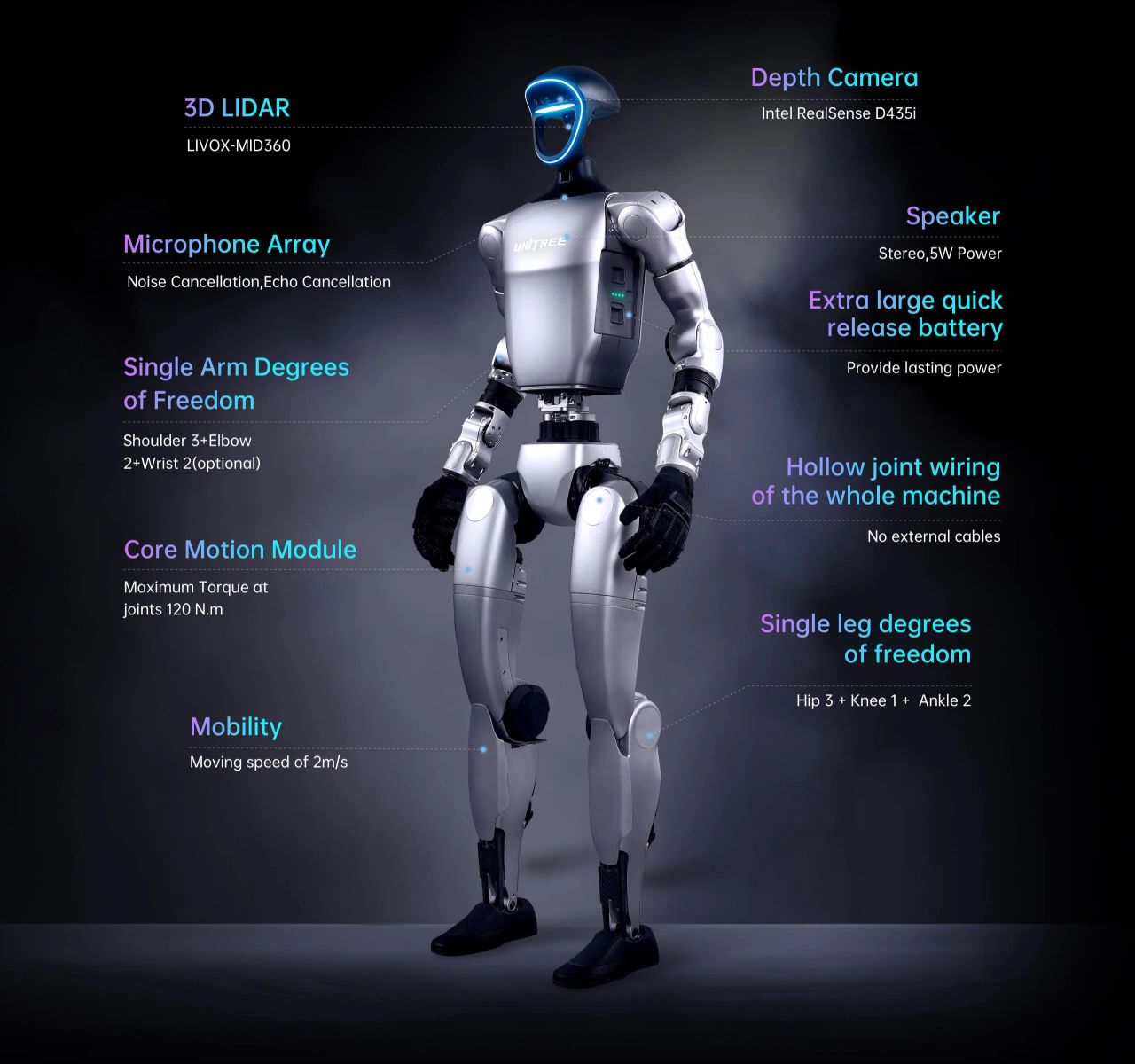
Unitree's Shanghai debut, following a $905 million raise at reportedly 8,000x oversubscription, is less a company milestone than a market signal. Capital is stampeding into humanoid robotics with the same reflexive enthusiasm that once chased EVs and generative AI. The valuation math here is not grounded in near-term cash flows—commercial humanoids remain years from broad economic utility—but in a bet that China can do to robotics what it did to solar panels and lithium batteries: compress the cost curve until the West cannot compete on price.
That is the real story for global executives. The humanoid race is bifurcating along two axes. The US owns the AI reasoning layer and the highest-profile demos (Tesla, Figure). China is quietly building the manufacturing and supply-chain moat—actuators, harmonic drives, rare-earth magnets, and now public-market capital. Whoever controls the hardware bill of materials will dictate margins for the entire category. An 8,000x oversubscription tells you Beijing's retail and institutional capital is aligning behind a national industrial thesis, not a single startup.
For Japan, this is uncomfortably familiar. Japanese firms—FANUC, Yaskawa, Harmonic Drive Systems—still dominate the precision components that every humanoid depends on. That is genuine leverage. But Japan has repeatedly owned the components while ceding the platform and the brand, as it did in solar and consumer batteries. The danger is that Unitree-style players commoditize the finished robot, absorb the value, and eventually vertically integrate the actuator supply chain that is currently Japan's crown jewel.
For Japanese enterprises and SIers, the practical implication is timing. Labor-shortage economics make Japan one of the most rational end-markets for humanoids—logistics, elder care, facility maintenance. SIers that build integration expertise now, treating humanoids as a new endpoint to orchestrate alongside RPA and existing factory automation, will capture the deployment layer regardless of whose hardware wins. The mistake would be waiting for a 'safe' market leader to emerge; by then the integration playbooks will already belong to faster movers.
My read: expect a valuation correction in this cohort within 18–24 months as demos meet unit economics. But the underlying industrial shift is real. Japanese manufacturers should defend the component moat aggressively while placing platform bets, and Japanese IT services firms should start piloting humanoid integration before the category's economics force their hand.