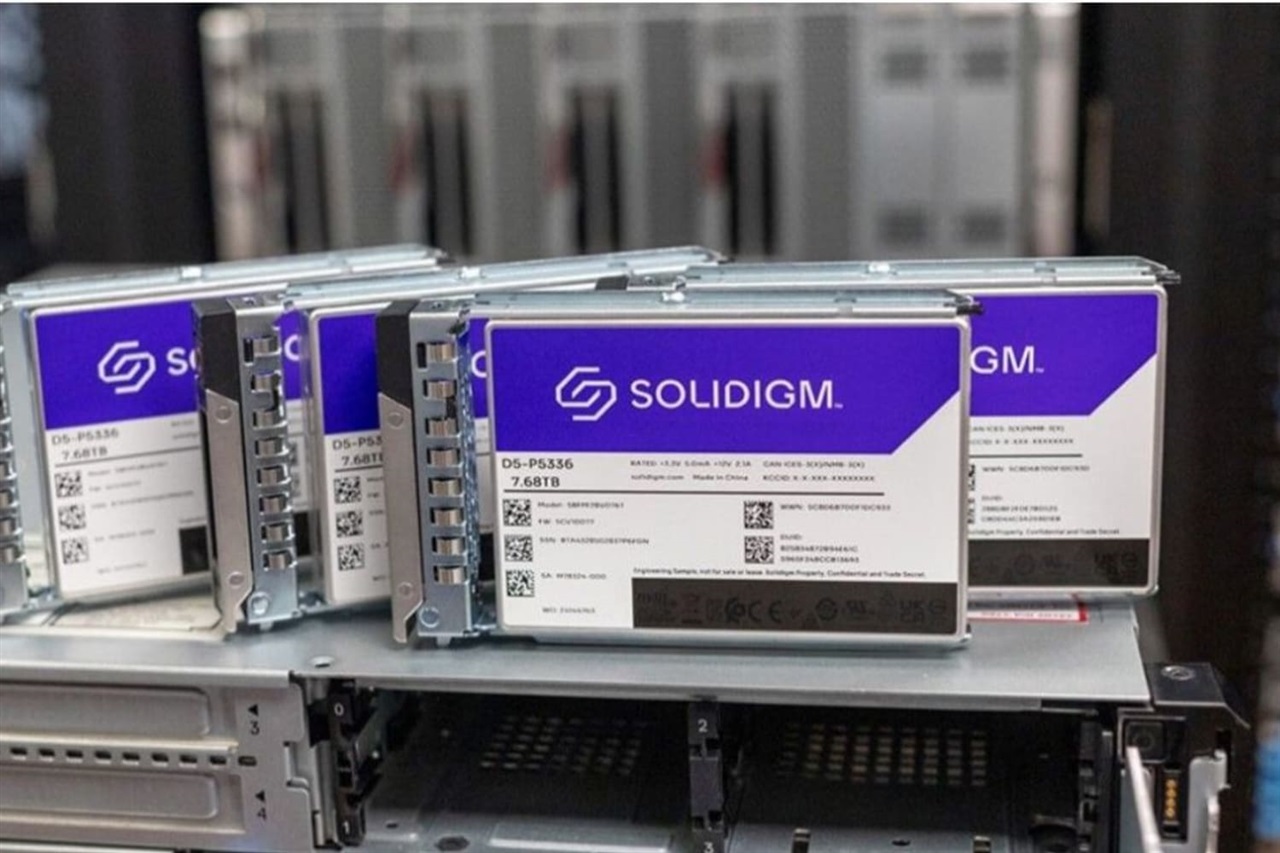
GigaDevice's first-half profit surge—driven by tight supply and rising prices in niche DRAM and NAND—is not an isolated earnings beat. It is a symptom of a structural realignment in the memory market. The mechanism is straightforward but underappreciated: Samsung, SK hynix and Micron are aggressively reallocating wafer capacity toward HBM, DDR5 and high-layer NAND to serve AI datacenter demand, deliberately starving legacy DDR4 and SLC NAND lines. Morgan Stanley's projection of a 50% DDR4 price jump in Q3, alongside continued DDR5 spot increases, confirms this is a supply-driven squeeze rather than a demand blip. The reported ~500% run in memory prices over twelve months captures the severity.
The global implication is a bifurcated market. HBM winners capture the AI-server value, while everyone dependent on mature-node memory—industrial equipment, automotive ECUs, networking gear, consumer electronics, IoT—faces cost inflation on components they cannot easily redesign out. Niche players like GigaDevice, Winbond and Nanya are the unexpected beneficiaries, monetizing the legacy capacity the giants abandoned. Expect their pricing power to persist through 2026, and expect margin compression for anyone building physical hardware without memory-cost pass-through leverage.
For Japan, the exposure is acute and multi-layered. Automotive and industrial electronics—the strongest part of Japan's semiconductor demand base—rely heavily on exactly the legacy DDR4 and low-layer NAND now being starved. Tier-1 suppliers and set makers in the Toyota, Denso and Panasonic orbit will feel bill-of-materials inflation on long-lifecycle products where redesigning around DDR5 is neither trivial nor fast. Kioxia, conversely, sits on the winning side of the NAND shift and should benefit from the pricing environment.
Japanese SIers and enterprise IT buyers should treat this as a hard budget signal. On-premises server refreshes, edge appliances, and any hardware-heavy system integration project will see rising component costs flow through to quotes over the next several quarters. Procurement teams accustomed to steady or declining memory prices need to revise assumptions now, lock supply where possible, and factor memory volatility into multi-year contracts. For firms weighing on-prem versus cloud, escalating hardware costs strengthen the case for cloud migration—though hyperscalers will eventually pass their own memory inflation downstream. The strategic takeaway: memory has shifted from a commoditized deflationary input to a scarce, price-volatile resource, and planning should reflect that reversal.