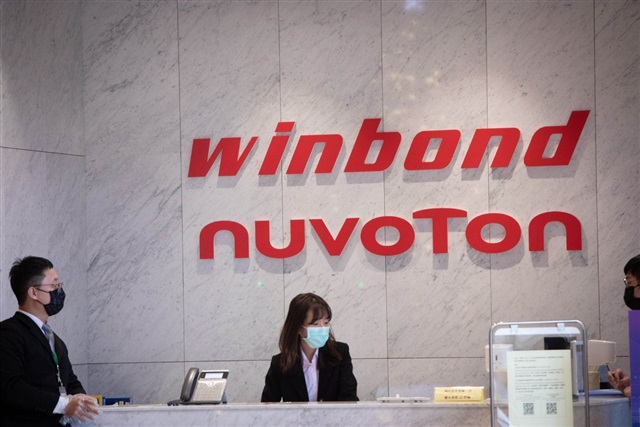
Winbond will pay US$1.12 billion in cash for Infineon's NOR Flash and F-RAM businesses, a deal that vaults it to the top of automotive NOR and deepens its footing in AI server and data center supply.
NOR Flash rarely makes headlines because it is unglamorous plumbing: the code-storage layer that holds boot firmware and executes-in-place instructions in servers, network gear, and automotive controllers. But that invisibility is precisely why this deal matters. As IDMs like Infineon reallocate capital toward power devices, microcontrollers, and analog for EVs and AI infrastructure, they are shedding legacy memory lines they no longer want to fund. Specialty players like Winbond are consolidating those assets, and the result is a more concentrated supplier base for parts that every AI rack and every ECU quietly depends on. F-RAM, a low-power non-volatile memory prized in industrial and automotive endurance applications, adds a defensible niche that hyperscalers and Tier-1 auto suppliers cannot easily second-source.
The strategic read is that memory is bifurcating. The capital-intensive, cyclical race lives in HBM and leading-edge DRAM for AI training. Below it sits a quieter, higher-margin tier of specialty non-volatile memory where scale, qualification depth, and long product lifecycles create pricing power. Winbond is betting on the second tier, and controlling automotive NOR at a moment when vehicles are becoming software-defined computers gives it recurring, design-locked demand that outlasts any single AI cycle.
For Japan, the implications run straight through the automotive and industrial base. Toyota, Denso, Renesas customers, and the broader Tier-1 supply chain rely on NOR and F-RAM for functional-safety-critical firmware, and consolidation narrows their negotiating leverage on parts that carry multi-year qualification cycles. Japanese automakers already burned by pandemic-era chip shortages should treat this as a signal to revisit second-source strategies and long-term supply agreements before pricing tightens.
For Japanese SIers and embedded development teams building automotive, factory-automation, and industrial IoT systems, the shift raises component and BOM risk in projects with five-to-ten-year lifecycles. Procurement and firmware teams would be prudent to lock qualified memory early, validate F-RAM alternatives, and price supplier concentration into roadmaps rather than assuming the commodity abundance of the last decade persists.