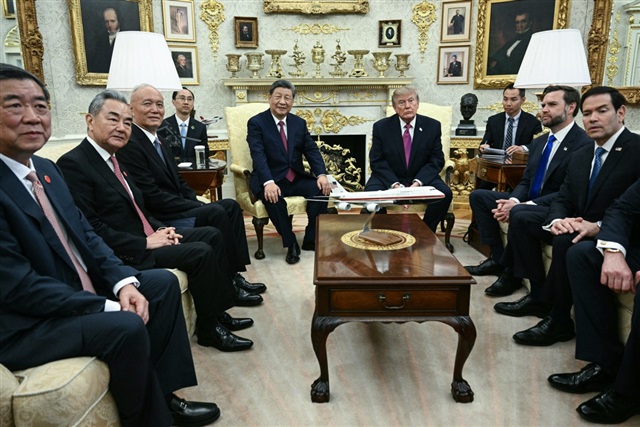
The headline metals in the US-China rare-earth standoff are usually neodymium and dysprosium, tied to magnets and EVs. Yttrium sits further down the supply chain and rarely draws attention, which is precisely why its emergence as an unresolved item after the Trump-Xi summit matters. Yttrium oxide underpins the yttria and yttria-stabilized zirconia coatings that protect etch and deposition chamber components inside semiconductor manufacturing tools. When those coatings degrade or become scarce, the effect is not a dramatic shortage of finished chips but a slow erosion of tool uptime, maintenance cycles, and yield stability. Beijing's leverage here is subtle and durable: it does not need to ban exports outright, only to make licensing unpredictable enough that buyers cannot plan capacity confidently.
Globally, this reframes the semiconductor security debate. Washington and its allies have poured capital into fab construction and leading-edge lithography, treating those as the strategic bottlenecks. Consumable materials that keep tools running have received far less policy attention, yet they are harder to substitute quickly. A fab can be world-class and still stall if the coatings, gases, and specialty compounds that sustain its equipment become contingent on geopolitical goodwill. Expect materials sourcing to migrate from a procurement footnote to a board-level supply-chain risk over the next two to three years, alongside pressure to build allied refining and coating capacity outside China.
For Japan, the exposure is acute and specific. The country hosts a dense cluster of semiconductor equipment, materials, and coating specialists, and its fabs and tool makers are deeply integrated into global supply. Uneven yttrium access means Japanese equipment suppliers and their downstream customers face the same planning uncertainty as US counterparts, but with less domestic refining fallback. This is the kind of dependency where Japan's materials-science strength becomes a strategic asset: firms with capability in rare-earth refining, recycling, or coating chemistry have a genuine opening to move up the value chain rather than remain price-takers.
SIers and enterprise IT teams serving Japanese manufacturers should read this as a signal to invest in supply-chain visibility rather than treating materials risk as someone else's problem. The practical work is unglamorous but valuable: mapping multi-tier dependencies, instrumenting inventory and lead-time data across suppliers, and building the analytics that let procurement teams model disruption scenarios before they hit production. Manufacturers that can see three or four tiers deep into their consumables supply will absorb shocks that blindside competitors. That is a concrete, fundable project for integrators, and a more durable differentiator than another RPA deployment on top of fragile, opaque sourcing data.