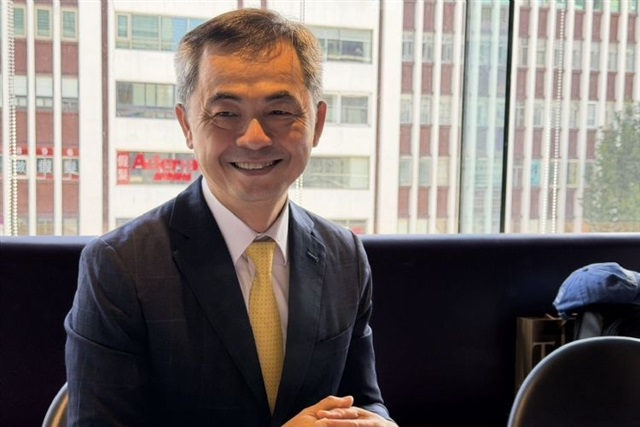
Gudeng's chairman expects the company's advanced packaging business to grow at double-digit rates from 2027, driven by sustained AI and HPC demand. The signal worth reading is the timing, not the number.
By pointing to 2027 rather than the current quarter, a supplier of packaging enablers is telling the market that the CoWoS and HBM surge of the past two years is being digested, and that the next leg of expansion is a distinct, second-wave buildout tied to HPC scaling beyond the initial GPU rush. Advanced packaging has quietly become the binding constraint on AI compute. Leading-edge lithography gets the headlines, but chiplet integration, interposers, and high-bandwidth memory stacking are where capacity actually gates output. When a firm deep in the handling and carrier layer of that stack commits to a multi-year growth curve, it is a confidence vote that the datacenter capex cycle is structural, not a spike. For investors, it reframes the packaging supply chain as a durable secondary play on AI rather than a cyclical accessory to wafer fabs.
For Japan, this is where the story stops being abstract. Japan does not lead in advanced logic fabrication, but it dominates the materials and precision-equipment layer that a packaging upcycle disproportionately rewards. ABF substrate film, IC substrates, dicing and grinding tools, photoresists, and bonding materials are concentrated among Japanese suppliers. A sustained packaging expansion translates more directly into order flow for these firms than a comparable node-migration cycle would.
The strategic implication for Japanese electronics and materials companies is to treat packaging as the domain where the country retains genuine leverage, and to invest capacity ahead of a 2027 inflection rather than react to it. For the TSMC Kumamoto (JASM) and Rapidus ecosystems, back-end packaging is the logical place to build differentiated local value rather than chasing the front-end lead. The risk is complacency: chokepoint positions erode when Korean and Taiwanese suppliers move up the materials chain, so the window to lock in multi-year supply agreements is now, not after demand confirms.
For Japanese enterprises and their SIers, the direct exposure is limited, but procurement and infrastructure teams planning AI buildouts should note that packaging capacity, not just GPU allocation, will shape hardware availability and pricing through the decade.