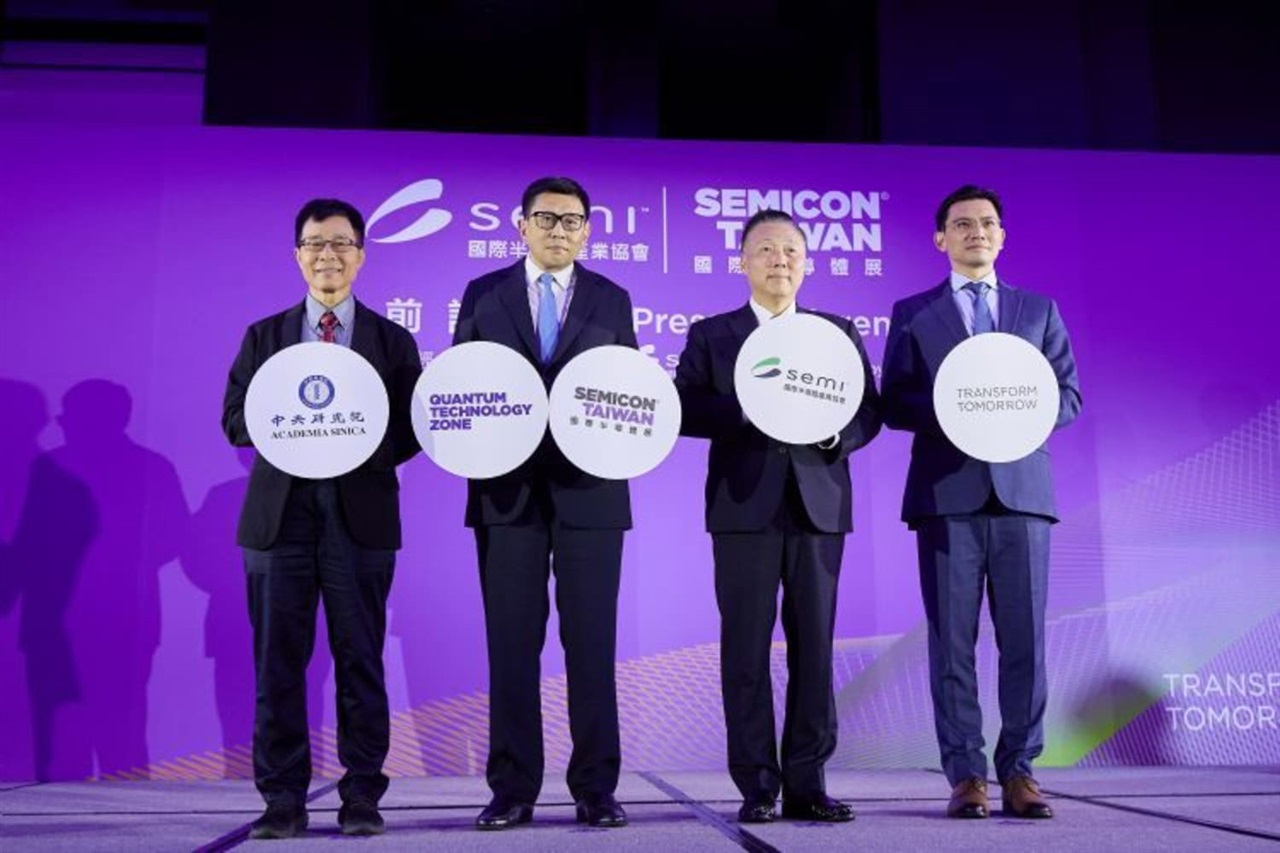
Ahead of SEMICON Taiwan 2026, SEMI framed the year around AI accelerating upgrades in advanced processes, heterogeneous integration, and quantum computing. The framing matters more than the event: it confirms the industry's center of gravity is moving.
For a decade the competitive story was node shrink. That story is now sharing the stage with packaging and interconnect. As transistor scaling gets slower and costlier, AI accelerators are extracting performance from advanced packaging, HBM stacks, and chiplet architectures instead. This reshuffles who captures value. Foundries still anchor the system, but a growing share of the margin and the engineering difficulty is migrating to back-end integration, test, and the materials that make dense 2.5D and 3D structures manufacturable. Taiwan's positioning around this shift is a signal that the packaging bottleneck, not just leading-edge lithography, will gate how fast AI compute can scale over the next several years.
The strategic risk for buyers is concentration. Advanced packaging capacity is thin and geographically clustered, which means hyperscalers and chip designers face the same allocation constraints on integration that they already face on wafers. Anyone planning multi-year AI infrastructure spend should treat packaging capacity, not just GPU allocation, as a gating variable.
For Japan, this is a rare tailwind. The country's real leverage in semiconductors was never volume fabrication; it is upstream materials and specific equipment niches. Heterogeneous integration is materials-intensive and back-end-heavy, which plays directly to Japanese strengths in photoresists, specialty chemicals, silicon substrates, bonding, and dicing and test equipment. As the value mix tilts toward packaging, Japanese suppliers stand to capture a larger slice of each AI accelerator's cost, and the domestic fab push around leading-edge and foundry investment gives them a nearer-term customer base to sell into.
Japanese enterprises, SIers, and internal dev teams should read this as a demand signal rather than a components story. Sustained AI hardware supply expansion underpins the on-premise and hybrid AI infrastructure many regulated Japanese firms prefer over pure public cloud. SIers positioned to design, procure, and operate that infrastructure, and to integrate it with existing systems, have a clearer multi-year pipeline. The teams that treat compute capacity, power, and packaging-driven supply timing as planning constraints will avoid the delivery slips that hit those who assume hardware is always available on demand.