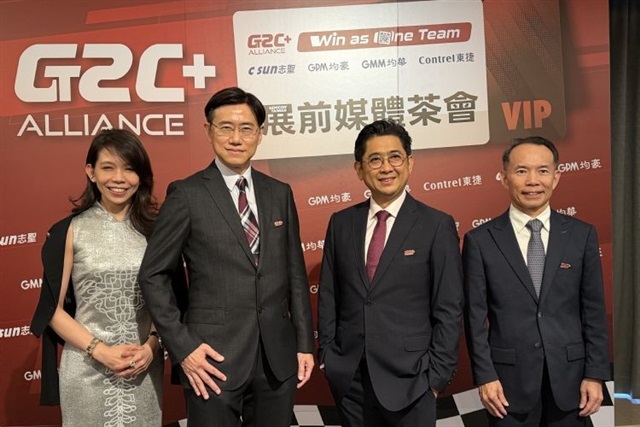
Four Taiwanese equipment firms have formed a strategic alliance to attack the advanced packaging market as a single front, betting that AI chips have permanently shifted where semiconductor value is created. That framing matters more than the alliance itself.
For a decade, the money in chipmaking sat in front-end lithography and deposition. AI has changed the physics of the problem. When a single accelerator stitches together multiple dies, HBM stacks, and interposers, yield and performance are increasingly decided in the back end, at bonding, molding, dicing, and inspection. Packaging is no longer the afterthought stage; it is a bottleneck that gates GPU shipments. Whoever owns the tooling for CoWoS-class and panel-level packaging captures a structurally growing share of capex. Taiwan pooling capability here is a direct move to keep the equipment margin onshore rather than importing it, tightening the loop around TSMC's packaging expansion.
The strategic wrinkle is verticalization risk. A Taiwan-based equipment bloc sitting next to the world's dominant foundry creates a co-location advantage that pure-play tool vendors elsewhere cannot easily match: faster iteration, shared roadmaps, and local service. That is a competitive signal to every incumbent that has treated back-end tooling as a fragmented, low-glamour niche.
This lands most directly on Japan, which quietly dominates much of the advanced packaging supply chain: dicing and grinding, bonders, molding, ABF substrates, and packaging materials. Japanese suppliers have enjoyed near-default positions in exactly the segments this alliance targets. A coordinated Taiwanese challenger changes the calculus from selling isolated tools to defending integrated capability, and it pressures Japanese firms to bundle equipment, materials, and process knowledge rather than compete line-item by line-item.
For Japanese enterprises and their SIer partners, the actionable layer is the "AI smart manufacturing" piece. Advanced packaging fabs run on data-heavy inspection, defect classification, and yield analytics, precisely the MES modernization, computer-vision, and factory-data integration work domestic SIers can win if they move beyond legacy RPA-style automation. The opportunity is not building bonders; it is owning the software and analytics layer that makes back-end lines competitive. Japanese manufacturers who treat packaging as a data problem, not just a hardware one, will be the ones who hold their supply-chain position.