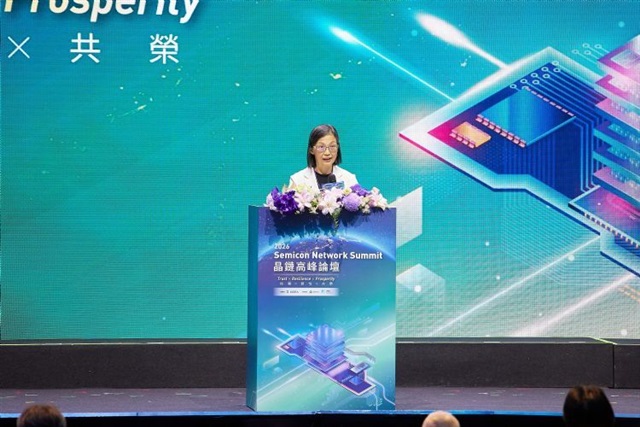
The signal worth extracting from GlobalWafers chair Doris Hsu's comments is that the wafer business is shifting from a cyclical commodity narrative to a structural growth one. That distinction matters more than it sounds. For a decade, silicon wafers were treated as the low-margin foundation beneath the glamorous logic and memory layers—priced like a utility, planned around inventory cycles. AI is quietly rewriting that assumption. Advanced packaging, larger die sizes, higher layer counts, and the migration toward new substrate materials all consume more silicon and more specialized wafer types per unit of compute. The upstream layer is being pulled up the value chain.
This dovetails directly with Dell's raised outlook and the broader datacenter capex surge. When AI-server demand runs hot enough to move a hardware bellwether's annual guidance by tens of billions, that demand cascades backward through the supply chain—through packaging, through substrates, and ultimately into wafer starts. The important nuance for executives is that wafers are a lagging, capital-intensive part of the chain. Capacity takes years to bring online, and suppliers are structurally cautious after past overbuild cycles. If AI demand is genuinely structural rather than a spike, the risk shifts from oversupply to a wafer bottleneck that constrains the entire buildout. Pricing power moves upstream.
For Japan, this is unusually consequential. The country holds a commanding position in the silicon-wafer and semiconductor-materials layer—Shin-Etsu and SUMCO together supply a large share of global 300mm wafer output, and Japanese firms dominate adjacent materials like photoresists, specialty gases, and packaging substrates. In other words, if AI is elevating the strategic importance of the materials layer, Japan is one of the few places positioned to capture that structural rerating rather than merely ride a cycle. This is a rare case where Japan sits at the top of a demand curve rather than integrating someone else's technology.
For Japanese enterprises and SIers, the implication is indirect but real. Wafer and materials constraints translate into longer lead times and higher costs for the AI accelerators that underpin every enterprise AI roadmap. Procurement teams building GPU-dependent infrastructure should assume tightening supply and price firmness through the buildout, and factor that into cloud-versus-on-premise economics. The counterintuitive takeaway: as AI moves down the stack into physical materials, the hardest constraints on Japan's AI ambitions may not be talent or models, but the multi-year physics of capacity that even Japan's own suppliers cannot instantly expand.