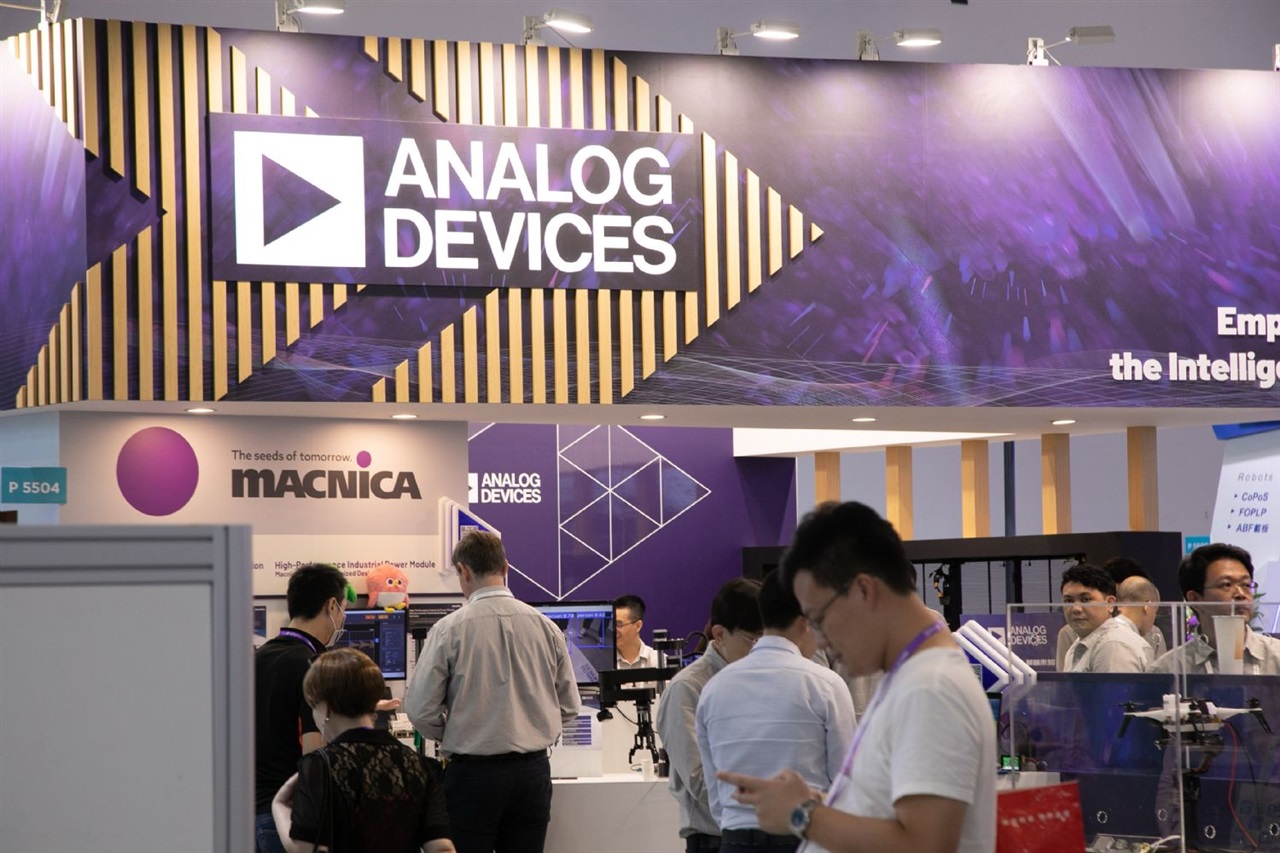
Analog Devices has agreed to buy Alif Semiconductor for US$1.35 billion in cash, a bet on microcontrollers that run AI inference locally rather than shipping data to the cloud.
The strategic logic is about physics and economics, not hype. Latency, bandwidth cost, and power draw make round-tripping every sensor reading to a data center untenable for factories, medical devices, and defense systems that need decisions in milliseconds. By pairing its dominant analog and mixed-signal franchise with Alif's neural-processing microcontrollers, ADI is trying to own the layer where the physical world meets AI: the point of sensing. This is a counterweight to the prevailing narrative that all AI margin flows to hyperscalers and Nvidia. If inference migrates to billions of low-power endpoints, the value pool fragments toward whoever controls the silicon closest to the sensor. Expect rivals like STMicroelectronics, NXP, and Infineon to accelerate their own edge-AI roadmaps, and expect an M&A wave for the small players building NPUs into commodity MCUs.
The risk is integration and timing. Edge-AI toolchains remain fragmented, developer ergonomics are weak, and enterprise adoption of on-device inference has lagged the marketing. ADI must turn Alif's technology into a coherent software and reference-design story, or the deal becomes a shelf acquisition.
For Japan, this cuts to the core of the industrial base. Renesas and Rohm compete directly in the MCU market, and a consolidating ADI raises the bar on integrated AI capability rather than raw peripheral counts. More consequential is the demand side: Japan's factory-automation leaders and its manufacturing SIers have deep expertise wiring sensors, PLCs, and robotics, but comparatively thin muscle in embedded machine learning. Edge-AI MCUs let a line integrator add predictive maintenance, visual inspection, and anomaly detection without a cloud dependency that many Japanese plants resist for security and reliability reasons.
That reframes the SIer opportunity. The next contract cycle for factory and infrastructure modernization will reward integrators who can co-design firmware and models on constrained silicon, not just install and configure. RPA vendors serving Japanese back offices should read this as the physical-world extension of their thesis: automation is moving from screen-scraping software bots to intelligence embedded in equipment. Domestic dev teams that build embedded-ML and edge-inference competency now will be positioned to capture that shift; those that stay cloud-only risk being boxed into commoditized system integration.