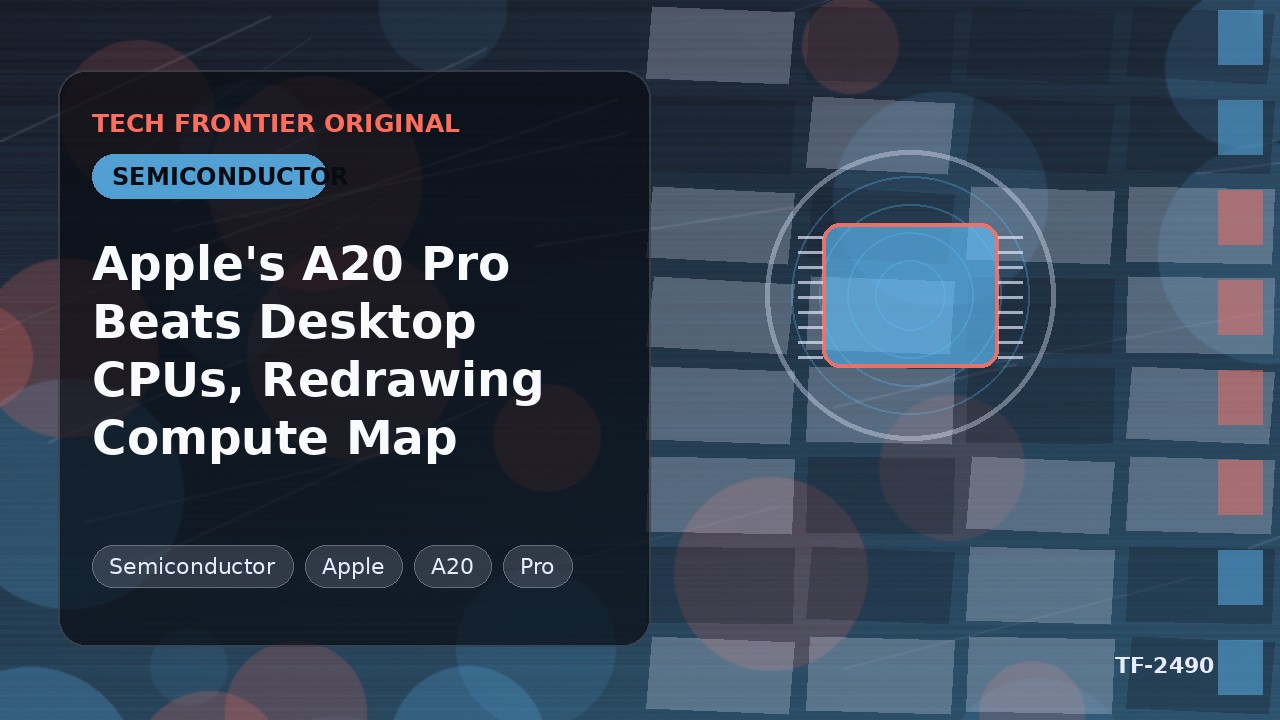
Apple's A20 Pro, a 2nm smartphone SoC, posted a record Geekbench 7 single-core result, topping desktop Intel Core i9 and AMD Ryzen 9 parts by as much as 32%. Strip away the benchmark theater and the signal is structural: the performance ceiling for personal computing is now being set in a pocket, not a tower.
The global implication is a slow inversion of the compute pyramid. For two decades the mental model was fixed—phones sip power, desktops do real work. A leading-edge mobile core beating plugged-in silicon erodes that assumption and pressures the PC roadmap. If a thermally constrained phone can win single-threaded workloads, the value of a mid-range laptop CPU narrows to sustained multi-core and I/O, which reframes how Intel and AMD defend margin. It also raises the stakes on process leadership: whoever ships mature 2nm-class yield first captures the performance narrative, and that lead compounds across every product tier that shares the node.
The more consequential shift is where inference runs. Cores this capable make on-device AI—local models, private assistants, real-time vision—economically and legally attractive versus round-tripping to a datacenter. That trims cloud inference bills, cuts latency, and sidesteps data-residency friction. Expect software vendors to start assuming a far higher on-device floor.
For Japan, the read splits in two. On the supply side, this is a tailwind for the equipment and materials layer that anchors the domestic industry—the lithography, etch, photoresist, and wafer suppliers whose tools and chemistries make advanced nodes viable. Every generational leap in mobile silicon deepens demand for that ecosystem, and it sharpens the strategic case behind Japan's own bid to stand up leading-edge fabrication at home.
On the demand side, Japanese enterprises and their SIers should treat this as a planning input, not a gadget headline. If flagship handsets can run capable models locally, the design pattern for corporate mobile fleets shifts toward on-device inference for privacy-sensitive workflows—useful in finance, healthcare, and public-sector deployments bound by strict data-handling rules. SIers building RPA and field-service tooling can move logic to the endpoint, reducing cloud dependency and network cost. The teams that rearchitect for a hybrid edge-cloud split now will avoid rebuilding once client silicon makes local AI the default rather than the exception.