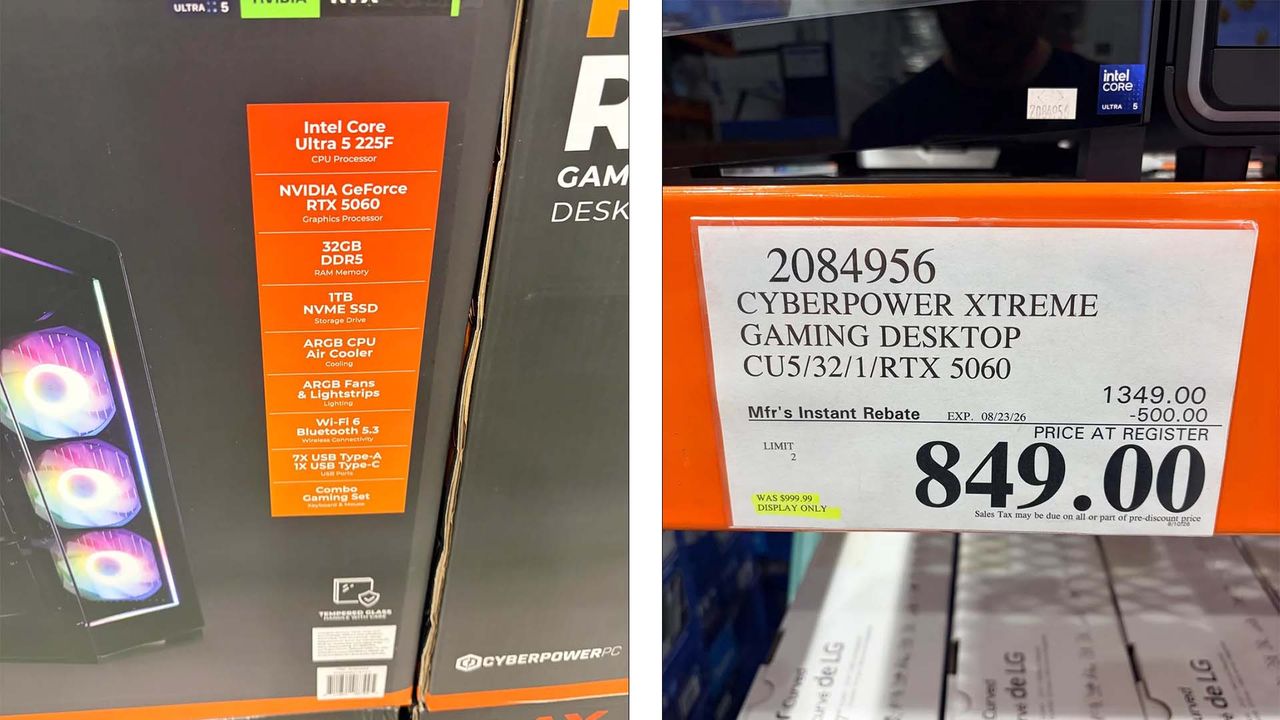
A console gamer landing a CyberPowerPC with an RTX 5060 and 32GB of RAM for $749 reads like a feel-good deal story, but the interesting signal sits underneath it: this happened mid-DRAM shortage. That single detail is the real headline.
Globally, the memory market is being reordered by AI. Hyperscalers building inference and training capacity are absorbing HBM and standard DRAM/NAND supply, and the spillover is now reaching consumer channels. When memory spot and contract prices climb, the DIY builder's traditional advantage erodes fast, because RAM and SSDs are the components an individual buys at retail markup. System integrators like CyberPowerPC, by contrast, lock in volume pricing months ahead and can absorb or hedge spikes. The counterintuitive result: in a shortage, prebuilt machines can quietly become the better value, inverting a decade of enthusiast conventional wisdom. Expect vendors to lean into bundled configurations and discretionary discounting to move inventory while shielding customers from the full sting of component inflation.
The deeper implication is that GPU scarcity is no longer the binding constraint on PC pricing — memory is. That reshapes how OEMs spec machines, and it pressures margins across the entire consumer and workstation stack heading into 2025 refresh cycles.
For Japan, this lands on two fronts. First, a weak yen compounds imported memory and GPU costs, so Japanese consumers and corporate buyers feel price increases more acutely than dollar-denominated markets. Second, and more strategically, enterprise hardware refreshes and endpoint procurement run through SIers and resellers who budget on relatively stable component assumptions. A sustained DRAM squeeze blows up those assumptions, inflating the bill of materials on everything from developer workstations to on-prem servers. SIers managing large fleet rollouts should be renegotiating supplier contracts now and considering longer procurement lead times rather than just-in-time ordering.
There is also a supply-side stake: Japan's memory ecosystem, notably Kioxia in NAND, sits directly in this demand wave. Tight supply supports pricing power for domestic component makers even as it squeezes domestic buyers — a split outcome where Japanese semiconductor suppliers benefit while Japanese IT budgets tighten. For CIOs and dev teams, the practical move is to front-load high-memory hardware purchases before contract prices reset upward, and to treat workstation and cloud-instance memory as a cost line that may only get worse before it improves.