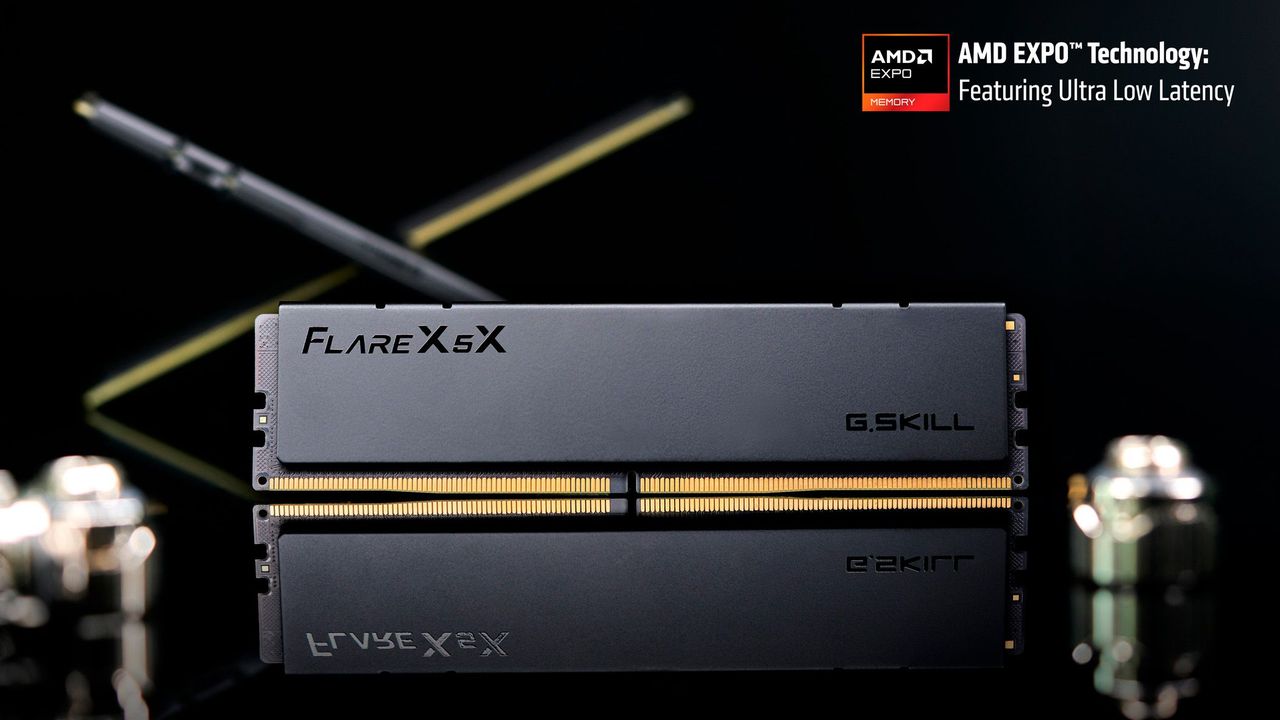
G.Skill's new Flare X5X line, built around AMD EXPO ULL (ultra-low latency) subtimings for Ryzen, is a niche but revealing move. On paper it's just another enthusiast memory kit. In practice it reflects where the PC platform battle has migrated: away from raw frequency headlines and toward latency optimization, where AMD's chiplet architecture has historically been most sensitive. Fine-tuned subtimings validated under EXPO profiles are how vendors now differentiate in a saturated DDR5 market that has largely commoditized on speed grades.
The unstated pricing is the story's real tension. Memory margins are volatile, and DDR5 spot prices have swung sharply as HBM and datacenter DRAM demand pulls fab capacity away from consumer modules. When a vendor ships a specialized SKU without a price, it usually signals either a premium positioning bet or uncertainty about component cost pass-through. Enthusiast buyers should read this as a market where consumer DRAM is increasingly the residual claimant on capacity that AI infrastructure prices first.
That is the broader global implication. Every latency-tuned gaming kit now competes for wafer allocation against server DRAM and HBM, whose buyers—hyperscalers and AI server makers—pay more and buy in volume. Enthusiast RAM is becoming a byproduct of a supply chain optimized for the datacenter. Product launches like this one are less about innovation velocity and more about vendors defending shelf presence in a shrinking-priority segment.
For the Japanese market, the effect is felt sharpest in the self-build (jisaku) PC culture concentrated around Akihabara and online retailers like Tsukumo and Ark. Japanese enthusiast buyers are highly latency-literate and EXPO/XMP tuning is a mainstream hobby, so demand for kits like this exists. But yen weakness has already pushed imported DRAM prices up, and an unpriced launch abroad typically translates into delayed, marked-up domestic SKUs. Japanese retailers will likely price conservatively to hedge FX and allocation risk.
For Japanese SIers and corporate IT, the takeaway is indirect but real: the same DRAM scarcity squeezing enthusiast kits also raises the bill of materials for workstations, edge servers, and on-prem AI inference boxes that many enterprises still procure locally. Procurement teams planning 2025 hardware refreshes should assume memory costs remain elevated and volatile, budget for longer lead times on specialized modules, and treat DRAM allocation—not CPU or GPU availability alone—as a gating factor in on-prem AI deployments.