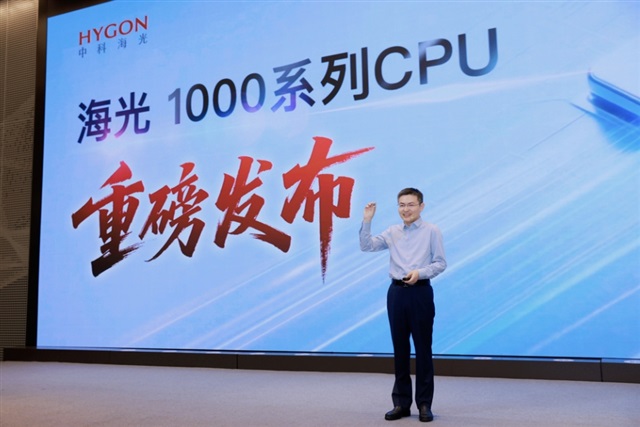
Hygon just unveiled its 1000-series embedded CPUs for robotics, machine vision, and factory controllers, pushing a company known for x86 server silicon into the edge. The strategic signal matters more than the spec sheet: China is now building a domestic compute stack for physical AI, not just data-center AI.
The global read is that the AI buildout is bifurcating. One track is the hyperscale, gigawatt-class capacity race; the other is the quieter contest for the processors that sit inside machines on the factory floor. Embedded industrial CPUs are sticky, long-lifecycle, and deeply tied to certification and toolchains, which makes them harder to displace once designed in. By seeding this layer domestically, Beijing reduces exposure to export controls on the exact workloads that power its manufacturing base. For Intel and AMD, whose embedded and industrial lines have long enjoyed default-vendor status in Chinese automation gear, this is a slow-moving share-erosion risk rather than an overnight loss.
The harder question is software maturity. Winning sockets in robotics and machine vision requires more than competitive silicon; it demands real-time OS support, vision and motion-control libraries, functional-safety certification, and a developer ecosystem. That is where incumbents still hold an edge, and where Hygon's trajectory over the next several product cycles will tell us whether this is genuine substitution or a domestic-preference play propped up by procurement policy.
For Japan, this lands directly on the factory-automation heartland. Fanuc, Mitsubishi Electric, Omron, Keyence, and Yaskawa built global leadership on tightly integrated controllers, and their China revenue is meaningful. A credible domestic CPU option accelerates the localization pressure Japanese vendors already face, potentially forcing China-specific hardware SKUs and separate supply chains. It also compresses margins in a market they cannot easily exit.
For Japanese SIers and manufacturing dev teams, the practical takeaway is architectural hedging. Teams building edge-AI and vision systems for cross-border deployment should insulate application logic from the underlying CPU and accelerator through hardware-abstraction layers and containerized runtimes, so that a China-market variant on domestic silicon does not fork the entire codebase. Treating processor choice as a swappable component, rather than a fixed foundation, is becoming a resilience requirement rather than an optimization. RPA and edge-orchestration vendors serving Japanese factories should likewise plan for a more fragmented silicon landscape in Asian deployments.