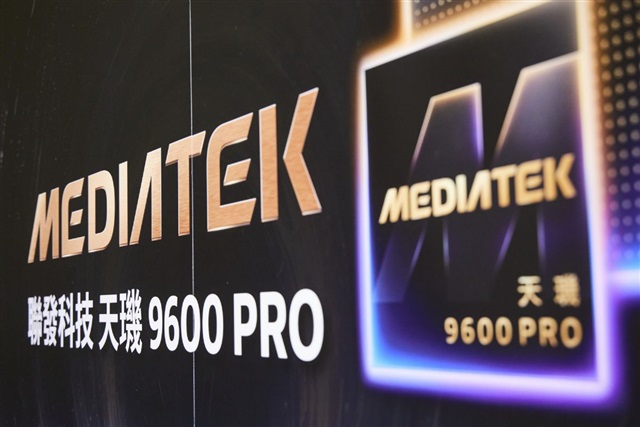
MediaTek's Dimensity 9600 Pro moves to a 2nm process with an all-big-core 2+3+3 CPU layout and a dual-NPU design aimed squarely at on-device AI. The strategic story is not the spec sheet but the sequencing: a company once branded a value player is now among the first to ship leading-edge silicon, arriving at parity with, or ahead of, the premium tier that defined the last decade.
The benchmark theater around the launch matters more than it looks. Slides that reportedly reposition the prior-generation Dimensity 9500 downward to flatter the new part are a tell. When a vendor manages the optics this carefully, it usually means the raw generational lead is real but narrower than the marketing implies, and that competitors are close enough that framing has become a weapon. For procurement teams, the lesson is to discount launch-day multi-core claims and wait for independent, thermally-constrained sustained-performance data before committing roadmaps.
Globally, this accelerates a structural shift. On-device AI capacity, not peak clocks, is becoming the axis of competition. Doubling NPU resources is a bet that inference moves to the handset for latency, privacy, and cost reasons, which reshapes how model vendors, cloud providers, and OEMs split the value chain. Every incremental TOPS on the phone is a workload that does not hit a datacenter, and that changes unit economics across the stack.
For Japan, the implications cut two ways. On the upside, a 2nm flagship deepens demand for the materials and components where Japanese suppliers hold genuine leverage: JSR and Shin-Etsu in photoresists and wafers, Murata and TDK in passives, and Sony in image sensors that increasingly pair with NPU-driven computational photography. A stronger MediaTek volume base is order flow for these firms regardless of which brand wins the handset.
The harder message is for Rapidus. MediaTek shipping commercial 2nm now, via TSMC, sharpens the gap against Japan's 2027 domestic-2nm ambition. By the time Rapidus reaches volume, the node will be mainstream, not frontier, so its business case has to rest on specialization, packaging, and trusted-supply positioning rather than raw process leadership. Japanese SIers and device-software teams should plan for on-device inference as a default assumption in enterprise mobility, rugged terminals, and factory-floor devices, designing apps that exploit dual-NPU silicon rather than treating the cloud as the only place intelligence lives.