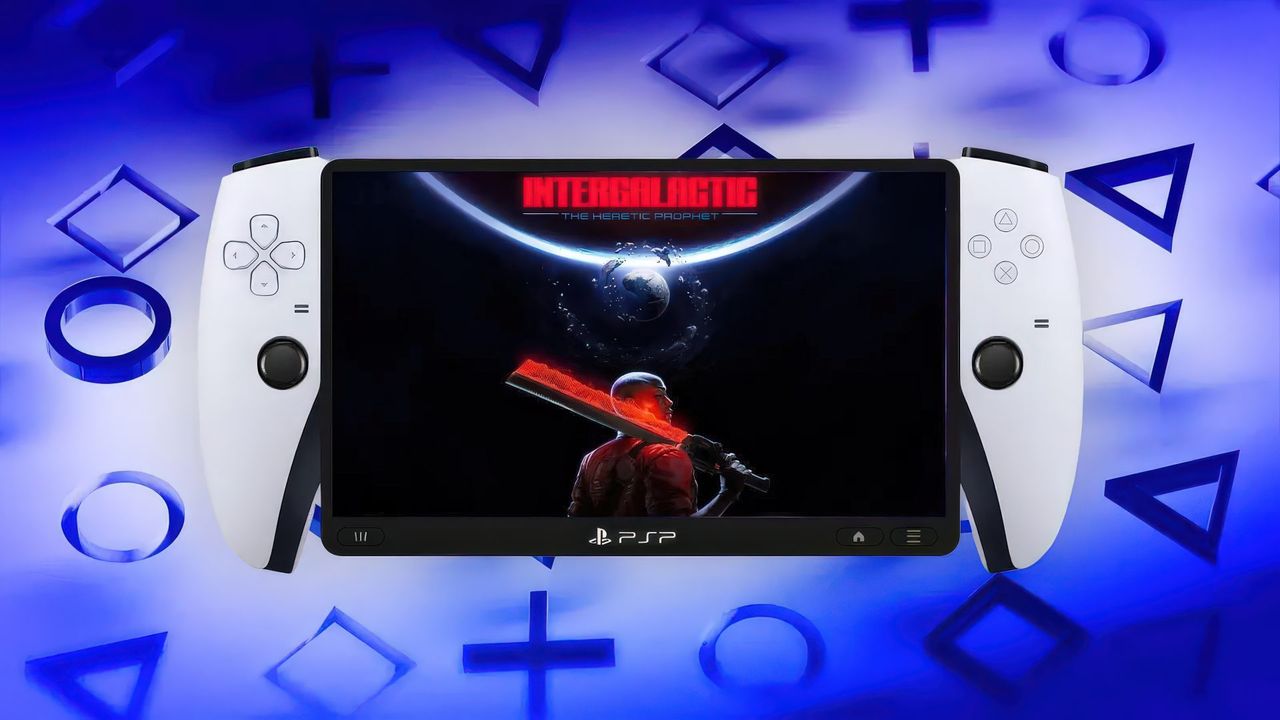
A leak attributed to GameGPU sketches Sony's handheld, codenamed Project Canis: a custom 3nm AMD part with six Zen 6 cores, 24GB LPDDR5X, 16 RDNA 5 compute units, and a 15-25W ceiling, rendering near 540p before PSSR 3.0 upscales toward PS5 Pro-class output.
The strategic signal is bigger than the spec sheet. Sony is applying the industry's dominant efficiency trick to gaming hardware: render as little as physically possible, then reconstruct the rest with machine learning. In a device where the binding constraint is watts and battery, not raw compute, the quality of the upscaler becomes the product. That reframes the entire handheld category. Steam Deck, ROG Ally, and Switch 2 are not really competing on peak throughput anymore; they are competing on how convincingly software can fake resolution the silicon never produced. Whoever owns the best proprietary upscaler owns the perceived performance lead, and Sony bringing PSSR in-house is as much a lock-in play as a technical one.
It also underscores that AMD's moat is semi-custom silicon. A bespoke 3nm Canis chip tuned to a single power envelope is something Nvidia and Qualcomm find harder to match on price and integration, and it keeps AMD embedded in the console economics that fund its roadmap.
For Japan, the stakes are unusually direct. PlayStation is one of the few globally dominant platforms Japan still controls, and a handheld would put Sony back into a category it ceded after PS Vita, this time against Nintendo's Switch 2 on home turf where portable gaming is culturally default. That is a genuine domestic collision between two Japanese champions.
For Japanese studios and dev teams, a 540p-native, upscale-to-target pipeline reshapes production. Art direction, engine tuning, and QA must validate reconstructed output rather than native frames, shifting where optimization effort and testing budget go. The transferable lesson for Japanese SIers and enterprise IT is the same pattern arriving in cloud cost work: compute less, reconstruct more with ML. Teams that learn to treat inference-based reconstruction as a cost lever, not a novelty, will carry that discipline well beyond games.