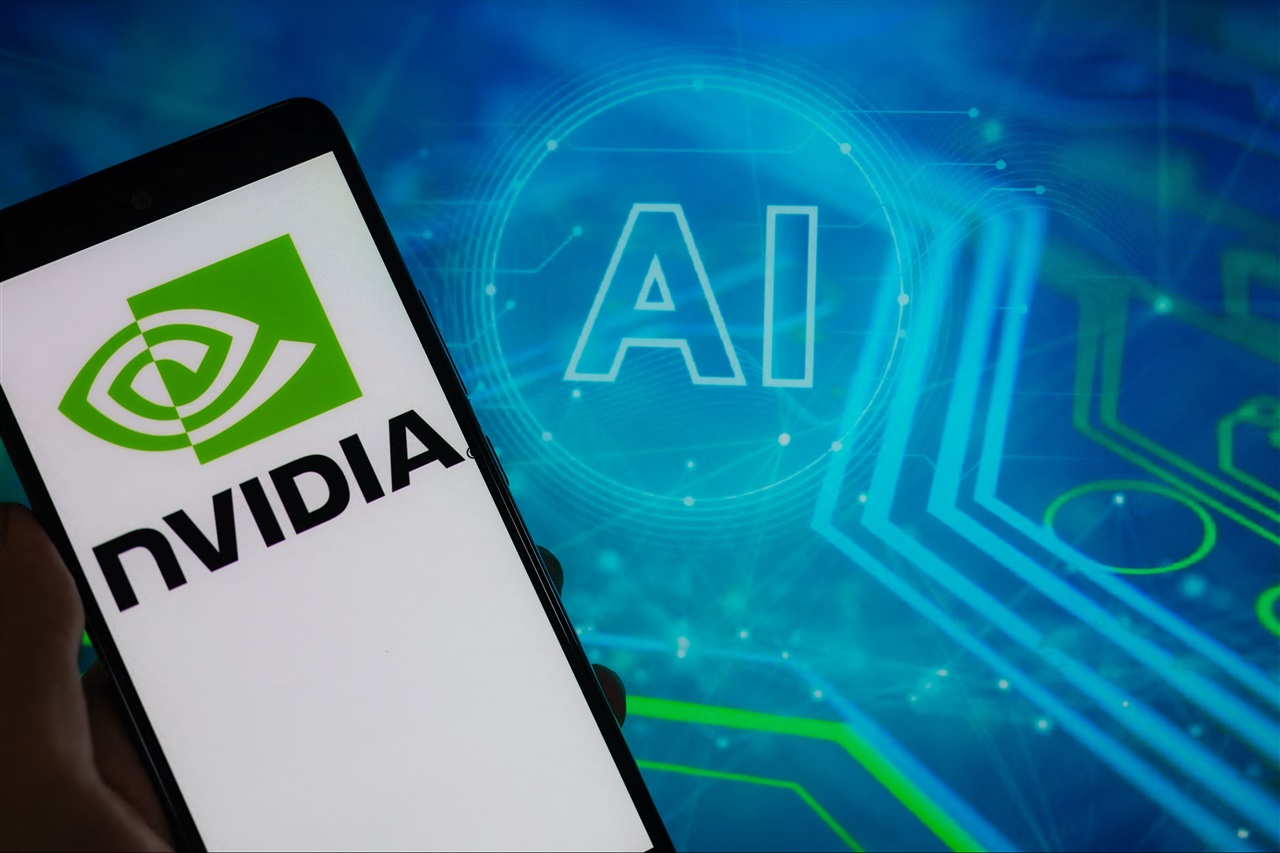
Nvidia is nearing a deal to guarantee roughly US$100 billion in credit for OpenAI's 10GW data center in Ohio, scaled back from an earlier US$250 billion figure but still its largest financial commitment to date.
Strip away the scale and what remains is a structural signal: the dominant chip supplier is now underwriting its largest customer's ability to buy those chips. This is vendor financing on a scale the industry has never attempted. It solves an immediate problem, since OpenAI lacks the cash flow to fund 10GW of compute alone, while manufacturing demand risk that would otherwise land on lenders' books. But it also compresses the AI supply chain into a single feedback loop where Nvidia's revenue, OpenAI's expansion, and the credit markets' appetite all reinforce one another. When the same balance sheet sits on both the sell side and the guarantee side, a correction in AI demand no longer stays contained to one company.
The reduction from US$250B to US$100B is the more revealing detail. It suggests either tighter internal risk limits or a cooler read from Nvidia's own advisors on how much exposure to a still-unprofitable customer is prudent. Executives should treat that markdown as a soft signal about where the smart money sees the ceiling on this cycle, not just a negotiating outcome.
For Japan, the read-through runs through SoftBank, which is deeply tied to OpenAI's infrastructure ambitions and whose own financing posture will be judged against Nvidia's more conservative line. Japanese trading houses and data center operators eyeing AI capex should note that even Nvidia is capping its downside; leveraged bets on hyperscale AI facilities carry tail risk that domestic balance sheets are far less equipped to absorb.
For SIers and enterprise IT teams, the practical lesson is dependency concentration. As global AI compute consolidates around a Nvidia-OpenAI axis financed by Nvidia itself, Japanese firms building on that stack inherit pricing and availability risk they do not control. The strategic hedge is architectural: design AI workloads for model and hardware portability now, rather than committing to a single provider whose economics increasingly depend on financial engineering rather than end-customer profitability.