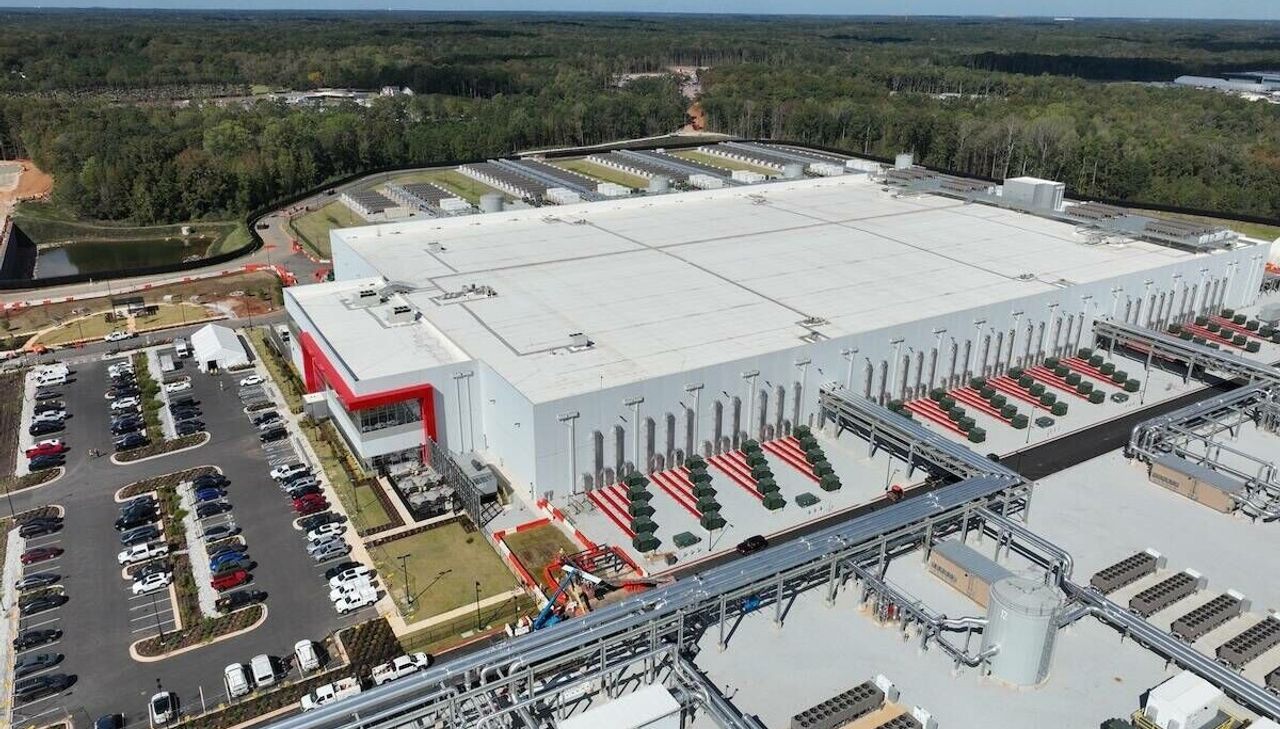
Nvidia has committed a guarantee of up to $105 billion to underpin the first phase of an Ohio data centre OpenAI will lease from SoftBank-backed SB Energy, alongside a fresh $1.5 billion equity stake in the developer. Strip away the headline number and the real story is structural: Nvidia is no longer just selling accelerators, it is underwriting the demand for them.
This is vendor financing at civilizational scale. By guaranteeing the lease obligations behind a hyperscale buildout, Nvidia converts a customer's balance-sheet risk into its own, ensuring the tenant can commit to a facility that will be filled overwhelmingly with Nvidia silicon. The loop is now explicit — Nvidia backs SB Energy, SB Energy houses OpenAI, OpenAI buys Nvidia GPUs, and SoftBank and OpenAI have already funded SB Energy's expansion. Capital, compute and demand circulate among the same handful of names. For investors, that concentration cuts both ways: it de-risks near-term GPU offtake but stacks correlated exposure, so a stumble at OpenAI or a demand air-pocket would ripple through Nvidia's guarantees, SoftBank's holdings and the debt financing the campuses. The wider signal to the market is that frontier AI capacity is becoming a financing game as much as an engineering one, and only players who can guarantee tens of billions get to sit at the table.
The Japan angle here is not incidental — it is central, and Japanese executives should read this as a SoftBank story wearing an Nvidia jersey. SoftBank's SB Energy is the vehicle absorbing the buildout, and Masayoshi Son's group is again positioned as the infrastructure landlord of the AI era, layering Ohio on top of its Stargate ambitions. That validates SoftBank's compute-landlord thesis, but it also deepens a leverage-heavy, single-tenant dependency on OpenAI's trajectory. Japanese institutional investors and Vision Fund watchers should scrutinize how much of this $105 billion sits as contingent liability versus deployed capital.
For Japanese enterprises and SIers, the takeaway is sobering. When the compute layer is being financed and locked up by a Nvidia-OpenAI-SoftBank axis, domestic firms and integrators are structurally on the demand side, renting intelligence rather than owning the stack. That raises the strategic stakes for METI-backed sovereign-AI and domestic GPU initiatives, and it should push SIers to build genuine value in the orchestration, data-governance and integration layers where proximity to Japanese enterprise workflows still matters. RPA and local dev teams gain cheaper, more abundant inference downstream, but the pricing power — and the margin — is being consolidated far upstream.