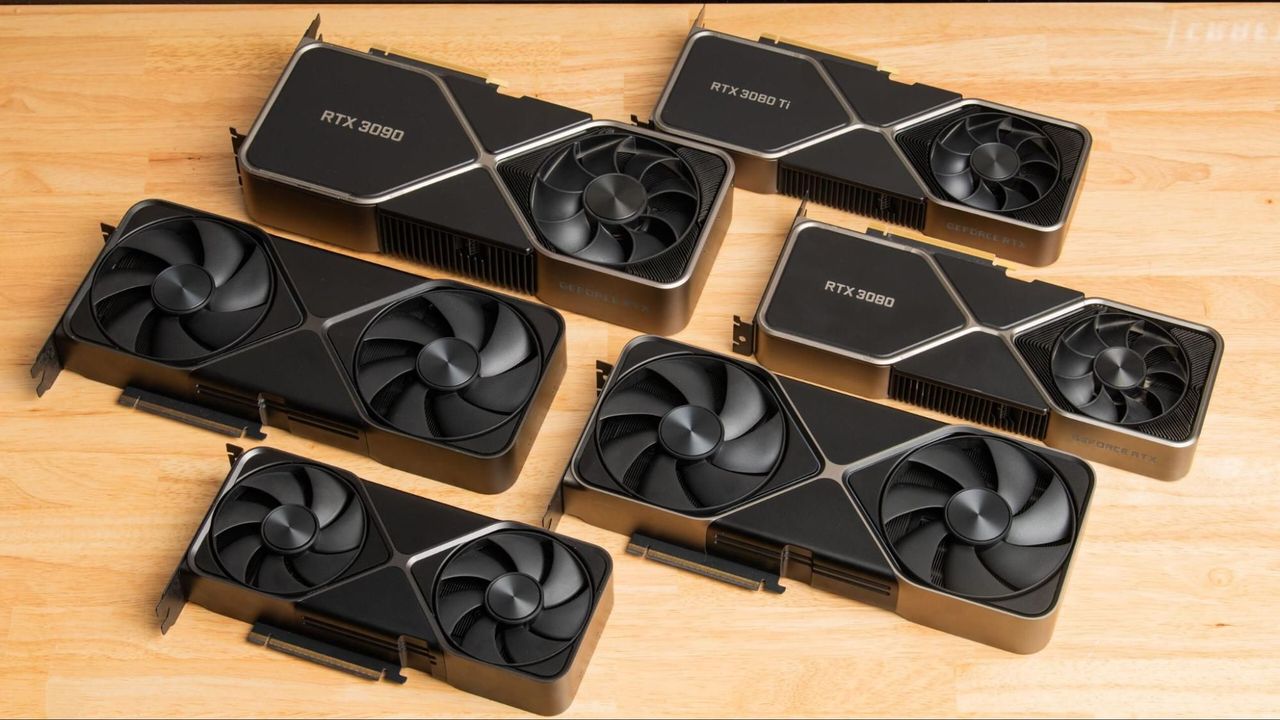
Nvidia handing over RTX 5090, 5080, and 5070 Founders Edition cards at list price to verified buyers at a gaming convention is a small logistics stunt with an outsized message: the official MSRP has become largely theoretical at retail, and the company knows it. When a vendor has to physically police a queue to guarantee that a customer pays the advertised price, it is an admission that the normal channel is saturated with markups, bots, and scalper arbitrage.
The global read is that consumer GPUs are now a byproduct of a business optimized for datacenter accelerators. Nvidia's incentives sit with H-series and Blackwell compute, where margins dwarf gaming silicon. Founders Edition allocation is thin by design, so scarcity is structural, not accidental. In-person MSRP events function as brand maintenance for the gaming base while wafer priority flows to AI. Expect this pattern to persist: symbolic list-price availability, real-world street prices well above it, and third-party board partners absorbing the pricing blame.
There is also a trust dimension. 'Verified priority access' is Nvidia experimenting with identity-gated distribution to defeat automated resale. If it works, it hints at a future where high-demand hardware is sold through account-linked, anti-bot channels rather than open retail. That has implications for every scarce-component market, from GPUs to game consoles.
For Japan, the friction is sharper. A weak yen inflates imported GPU prices well beyond dollar MSRP, so Akihabara shelf prices and BTO configurations from domestic builders already carry a currency premium on top of any scarcity markup. Japanese buyers rarely see anything resembling US list pricing, and in-person MSRP events in the US widen that perceived gap.
For Japanese SIers and development teams, the practical takeaway is procurement risk for on-premise AI and rendering workstations. Teams standardizing on RTX-class cards for local model inference, CAD, or media pipelines should assume volatile lead times and price variance, and budget accordingly. The rational hedge is leaning on cloud GPU capacity for burst workloads and reserving scarce local cards for latency-sensitive or data-residency-constrained tasks, rather than betting project timelines on consumer GPU availability at advertised prices.