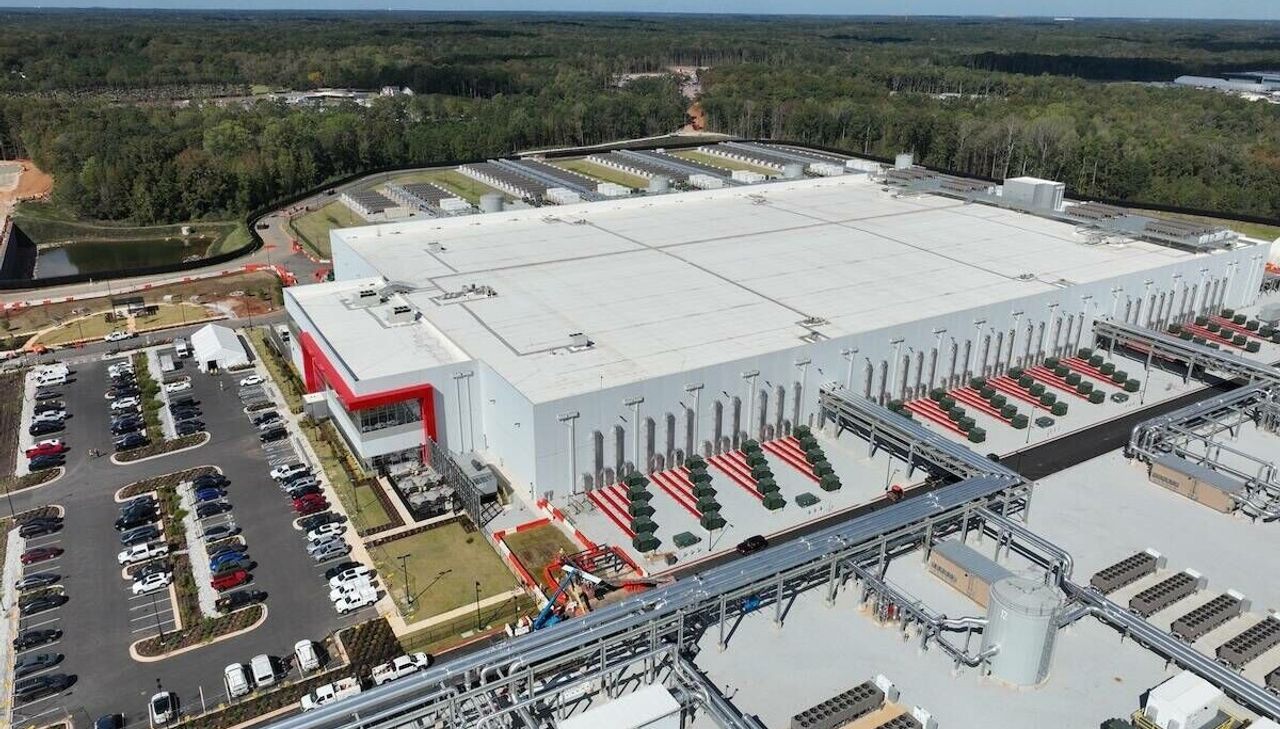
Tata Consultancy Services is committing roughly $7.4B to a one-gigawatt AI data center in southern India. The number matters less than the identity of the buyer: this is a systems integrator, not a hyperscaler, staking a claim on physical AI capacity.
Globally, this marks a shift in where the compute buildout is being financed. Until now, the gigawatt-class conversation belonged to Microsoft, Google, Amazon, and a handful of neocloud specialists chasing frontier-model demand. A services firm stepping into that tier signals that integrators no longer see their role as reselling someone else's cloud. They want the margin, the sovereignty story, and the customer lock-in that come from owning the substrate. It also intensifies the real constraint on AI: not chips alone, but power. A gigawatt is a grid-scale commitment, and India's positioning as a low-cost, high-demand power market becomes a competitive lever against saturated US and European interconnection queues.
The risk is capital intensity. Integrators historically run asset-light, high-margin services businesses. Owning depreciating GPU fleets and long-lived power infrastructure inverts that model, and the payback depends on sustained utilization that no one can yet guarantee across a multi-year AI capex cycle.
For Japan, this is a direct provocation to the domestic SIer establishment. NTT Data, Fujitsu, NEC, and the captive integrators inside the trading houses have watched AI infrastructure spend flow to overseas hyperscalers and to a few sovereign-cloud initiatives. A peer of comparable scale now demonstrates that an integrator can move upstream into capacity ownership. The question for Japanese boardrooms is whether they defend the services layer or commit balance sheet to owning AI-grade data centers domestically, backed by the government's economic-security push for onshore compute.
The deeper implication touches the labor and RPA-heavy business models that still anchor much of Japan's IT services revenue. Body-shopping and rule-based automation are being commoditized by AI agents. An infrastructure play is one way to build a defensible position as the old billable-hours economics erode. Japanese SIers and their enterprise clients should read this less as an India story and more as a preview of how the integrator business model is being rewritten around who controls compute and power.