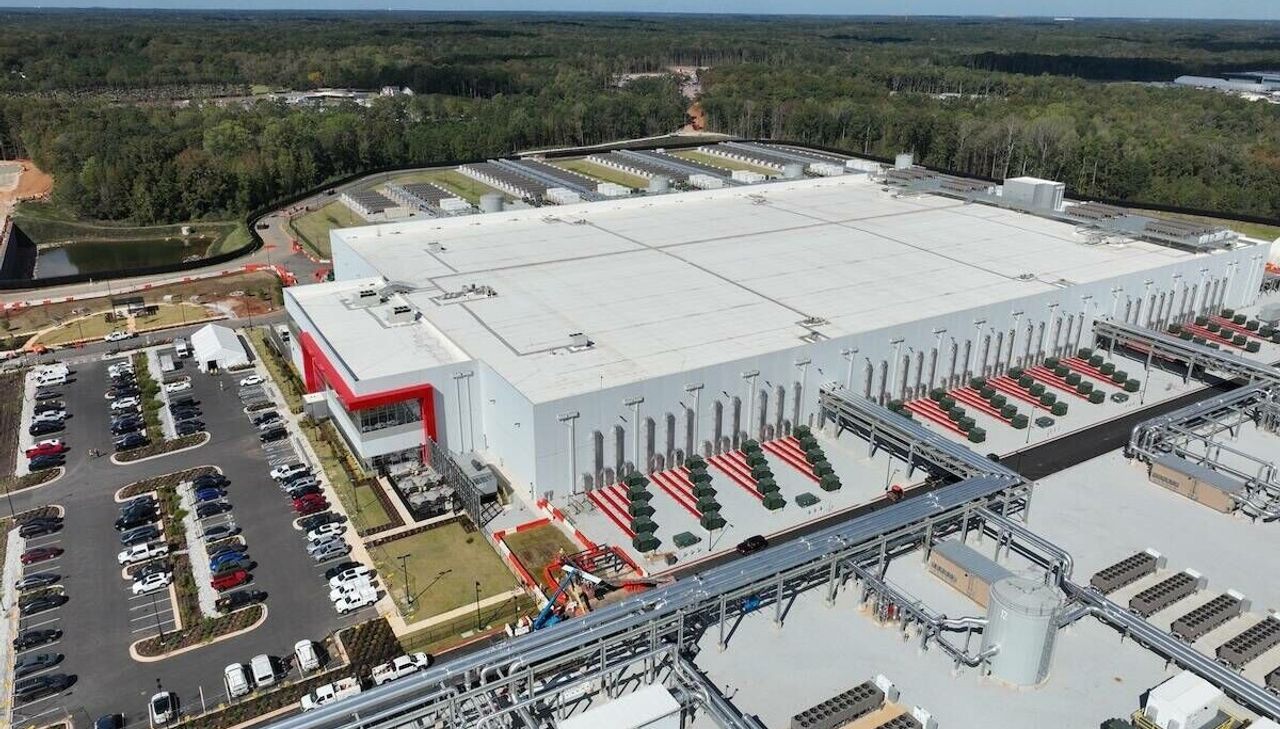
Tata Consultancy Services is committing roughly $7.4B to build a one-gigawatt AI data center in southern India. The scale matters less than the signal: a company built on selling human labor by the seat is now buying compute capacity by the gigawatt.
Globally, this reframes what an IT services firm is. For two decades the offshore majors monetized headcount arbitrage—cheap engineers billed at Western rates. That model is under pressure as generative AI compresses the value of routine coding and support work. Owning compute is the hedge. If AI erodes the billable hour, TCS wants to capture margin from the layer underneath: training, inference, and sovereign hosting for enterprises that would rather not route sensitive workloads through US hyperscalers. A gigawatt is hyperscaler territory, which tells you TCS intends to compete with cloud providers, not just resell them. The binding constraint will be power and grid interconnect, not chips—the same bottleneck now defining every frontier buildout from Virginia to the Gulf.
The risk is timing and utilization. A gigawatt of capacity is a multi-year, multi-billion bet that AI demand keeps compounding and that TCS can fill it with paying workloads rather than stranded silicon. If inference costs fall faster than volume grows, that capacity becomes a heavy fixed cost on a business that historically ran asset-light.
For Japan, this is the more urgent story than any single chip headline. TCS competes directly with Fujitsu, NTT Data, NEC, and the domestic SIer complex for large enterprise transformation deals. Those Japanese integrators still run predominantly on labor-intensive, custom-build SI and multilayer subcontracting (the 多重下請け structure). A rival that owns gigawatt-scale AI infrastructure can offer sovereign AI hosting and model operations as a bundled service—something no Japanese SIer can match without a comparable capital commitment. NTT and SoftBank are building domestic AI datacenters, but Japan's grid and land constraints make a single-site gigawatt far harder to replicate than in India.
The practical implication for Japanese enterprises and their integrators: the value is migrating from writing bespoke code toward operating AI systems on owned infrastructure. RPA vendors and traditional SI shops that treated automation as a scripting exercise face the same erosion TCS is trying to escape. The defensible position is control of data pipelines, model operations, and compliant hosting—not billable engineer-hours. Japanese firms weighing sovereign AI should watch whether TCS turns this facility into an exportable regional service, because the next competitive front for domestic SIers may be decided by who owns the datacenter, not who staffs the project.