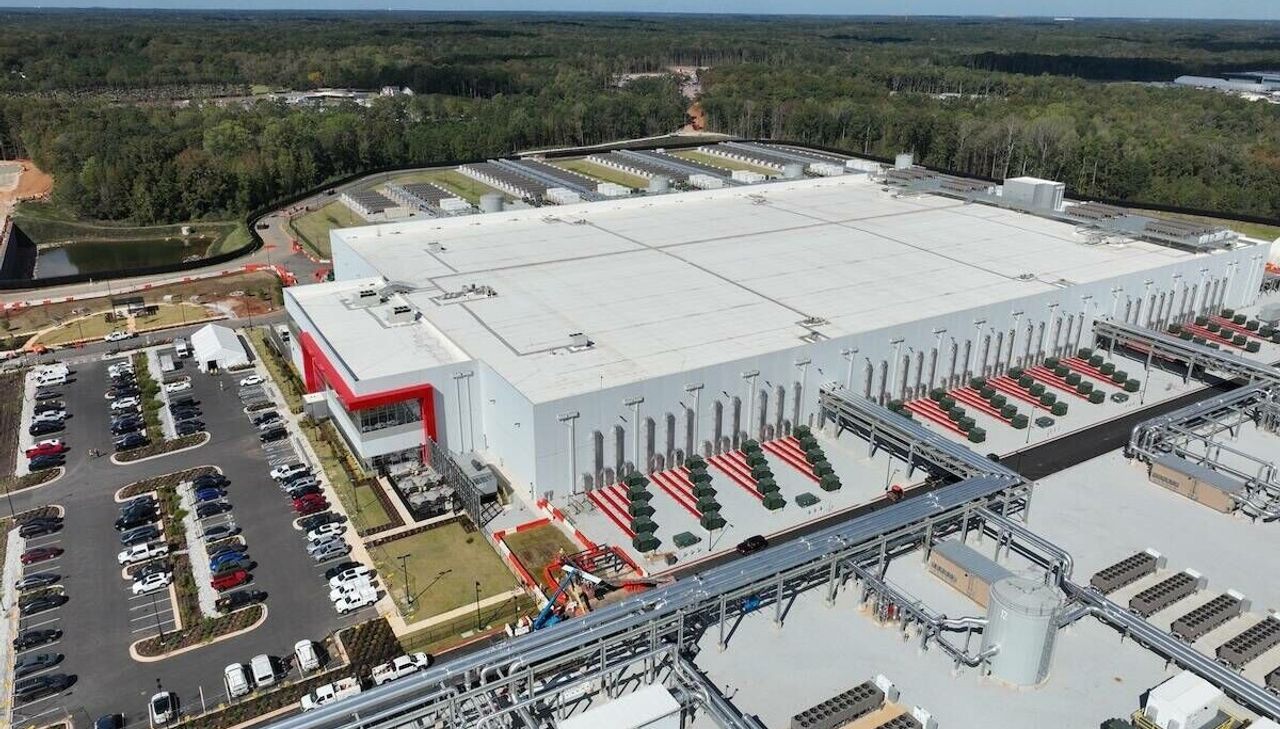
The bottleneck story for AI has quietly moved off the wafer and onto the grid. Oracle's gas pipeline for a major AI campus slipping to 2027, alongside forecasts of tripling fuel costs for hyperscalers, exposes the constraint every capacity plan now hides: you can buy GPUs faster than you can secure firm, dispatchable power to run them. Compute is elastic; megawatts and the fuel behind them are not.
Globally, this rewrites the unit economics. When power and fuel become the scarce input, the winners are operators who lock in generation, transmission rights, and long-dated energy contracts years ahead of silicon. Expect a wave of vertical integration into behind-the-meter generation, nuclear offtake, and gas as a bridge fuel. It also splits the market: incumbents with balance sheets to pre-fund energy infrastructure pull away, while smaller AI labs face rising, volatile inference costs that squeeze margins. Fuel-price exposure quietly becomes a line item in every model's gross margin.
For Japan, the signal is sharp. Japanese power is expensive, largely imported, and grid interconnection queues are long, so the same energy ceiling that constrains US hyperscalers bites harder here. Domestic AI ambitions and sovereign-model programs will collide with limited firm capacity, tilting the calculus toward nuclear restarts, LNG procurement, and siting data centers in Hokkaido or regional grids near generation rather than dense metro hubs.
SIers and enterprise IT teams should treat power availability, not GPU allocation, as the gating factor in AI roadmaps. The practical implication: hybrid strategies that route heavy training to overseas capacity while keeping latency-sensitive, data-resident inference domestic. Vendors like NTT, SoftBank, and KDDI that pair connectivity with owned or contracted generation gain structural advantage.
For local development teams and RPA operators, the near-term effect is cost, not capability. If inference pricing rises with fuel, workloads must be engineered for efficiency: smaller models, caching, batching, and clear ROI gates. The era of assuming compute is cheap and infinite is ending, and disciplined architecture is now a competitive edge rather than an optimization nicety.