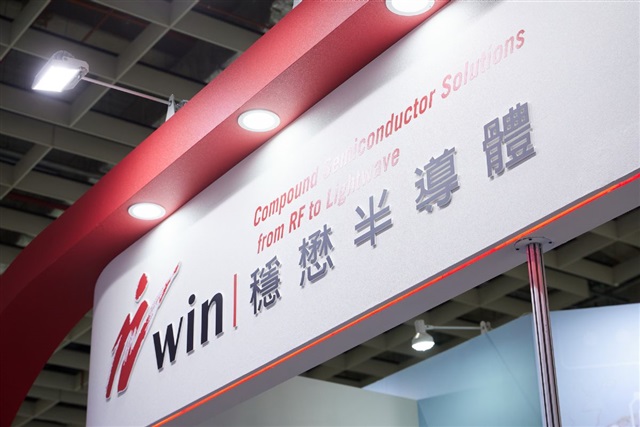
WIN Semiconductors' move to a 0.1μm gallium nitride process is less a headline product than a signal about where the bottleneck in next-generation connectivity is shifting. Silicon still dominates logic, but the physics of moving signals at millimeter-wave and beyond favors compound materials. As AI clusters strain interconnect bandwidth and low-earth-orbit constellations multiply, the RF and power front-end becomes a distinct chokepoint that raw transistor counts cannot solve.
The global implication is a bifurcation in the semiconductor stack. The AI capital cycle has trained investors to watch GPUs and HBM, but the same buildout depends on high-frequency links, phased-array antennas, and power delivery where GaN and GaAs quietly set the ceiling. A tighter gate length means higher operating frequencies and better efficiency per watt, which matters when a satellite payload or a datacenter's optical-electrical boundary is thermally constrained. Expect foundry-model economics, long normal in logic, to spread further into compound semis, pulling in fabless RF designers and squeezing vertically integrated incumbents.
There is also a supply-chain security dimension. Compound-semiconductor capacity is concentrated across Taiwan, the US, Japan, and Europe, and defense-adjacent uses in radar and satcom make it a policy-sensitive category. Nations treating AI infrastructure as strategic will increasingly view RF front-ends the way they now view leading-edge logic.
For Japan, this is a rare area of genuine structural strength rather than catch-up. Domestic players hold deep positions in GaN devices, substrates, and power electronics, and telecom architecture ambitions like NTT's IOWN push exactly the high-speed, low-power transmission that finer GaN nodes enable. Japanese satellite and mobile operators pursuing LEO connectivity gain a credible local supply story, and materials and equipment vendors sit upstream of any global GaN scale-up.
The caution for Japanese firms is commercialization speed. Technical leadership in compound semis has historically outrun business execution, with process advantages diluted by slow productization and reliance on captive demand. SIers and enterprise IT teams will not touch this layer directly, but architects planning private 5G, edge AI, and non-terrestrial network integration should track which GaN suppliers reach volume, because RF hardware roadmaps increasingly dictate what connectivity and latency assumptions their designs can safely make.